



































































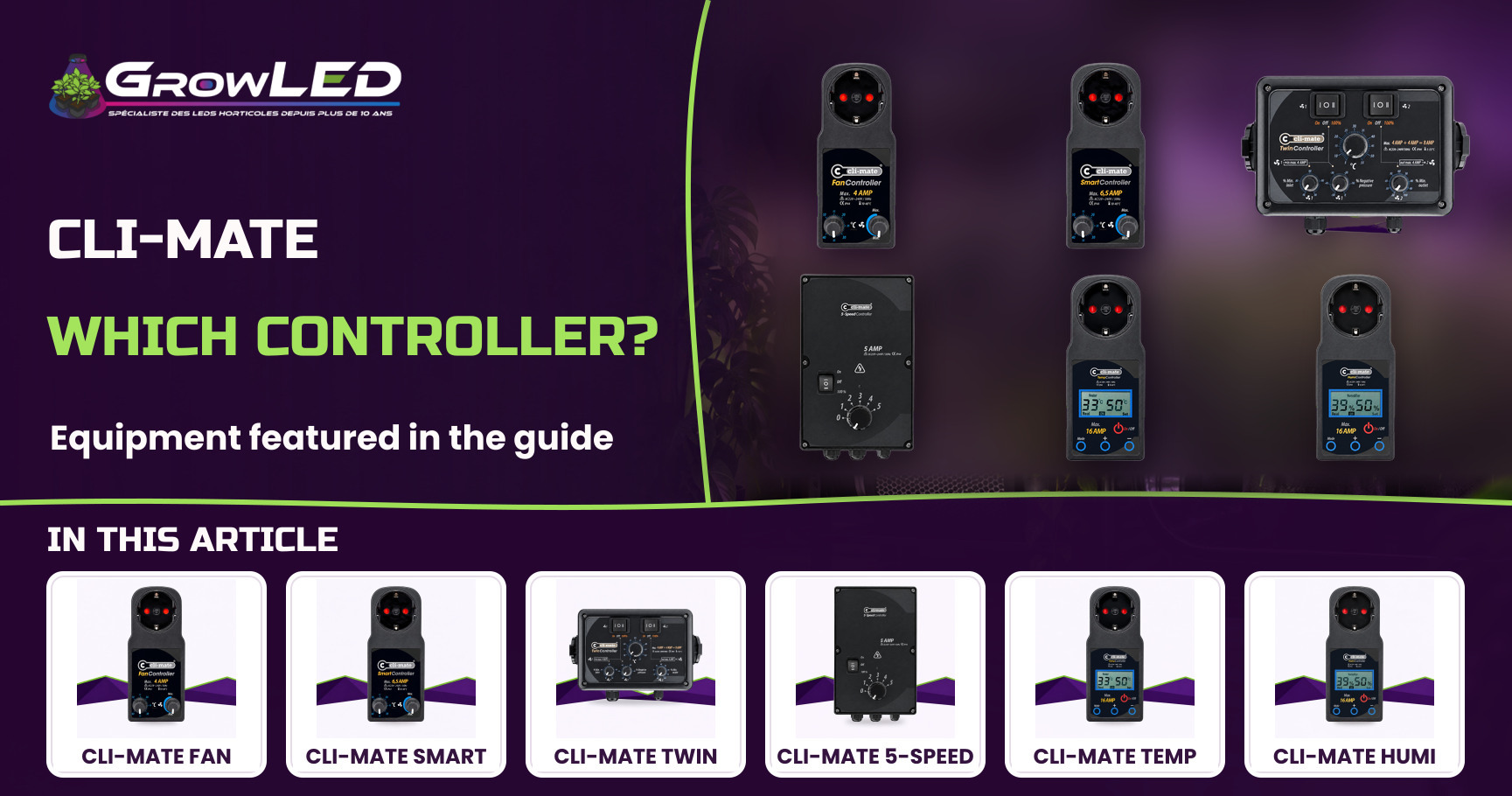
Until now our climate control aisle revolved around a single brand, and it ran out of options as soon as you stepped outside the standard case. Cli-mate joins the catalogue with fifteen references covering the full spectrum, from a simple speed controller at 50,90 € to a station that drives lighting, temperature and humidity from one box. In this article I explain what each family is for, which model goes on which Prima Klima extractor, and how these units compare with the GSE gear we have been selling for years.
Contents
1Why I brought Cli-mate into the catalogue
Our climate management aisle had a hole in the middle, and I saw it every week in the questions reaching customer service. On one side, growers looking for a simple dimmer to slow their extractor at night. On the other, those wanting to automate everything at once. In between there was almost nothing: a few thermostats, and no coherent range where you climb in functions without changing the whole logic of adjustment.
Cli-mate is a Dutch manufacturer specialised in this one niche, fan speed regulation and climate control in grow rooms. It is not a generalist brand that also happens to make controllers: it is all it does. You can see it in how the range is built, with current ratings running from 2,5 A to 16 + 16 A on the same device, rather than one model expected to suit everybody.
Fifteen references are online today, split into four families I created specifically so you can search by need rather than by model name. Here are the three I am already asked about most.
 Cli-mate Fan Controller 4 A50,90 €
 Cli-mate Smart Controller77,90 €
 Cli-mate Twin Controller140,90 €from
2The real problem: an extractor that only knows two states
An extractor wired straight into the mains runs at 100 %, all the time, or it is off. There is no third option. It is the most common setup among growers starting out, and it is also the source of half the problems reported to me: temperature crashing at night, permanent noise, humidity collapsing during veg, an electricity bill that never comes down.
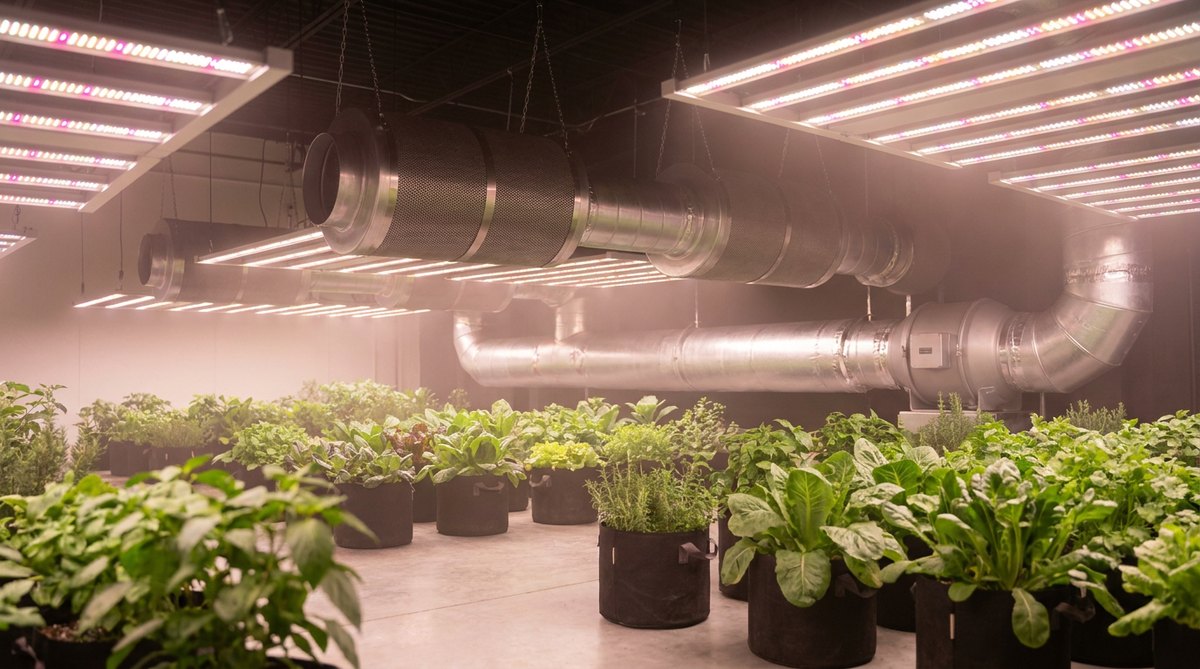
The problem is not the extractor's power, it is the absence of modulation. A Prima Klima Ø150 rated 760 m³/h renews the air of a 1.2 m × 1.2 m room several dozen times an hour. That is perfect at the heat peak, in full daylight, under 600 W of LED. It is absurd at four in the morning, lights off, when the room is already at 19 °C and you keep drawing in cold outside air.
A controller does only one thing, but it does it continuously: it sits between the wall socket and the extractor, and decides the speed according to a setpoint, usually the temperature read by a probe placed in the crop. Airflow follows real demand instead of following the clock.
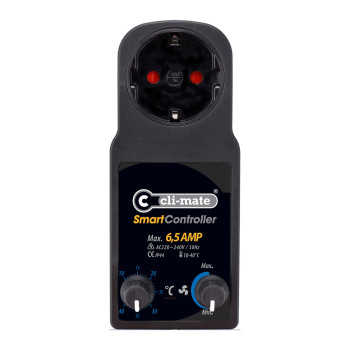
The Smart Controller at 77,90 €, two rotary knobs and a hysteresis preset at 3 °C. This is the model I recommend most often.
Joseph's tip
Always set a minimum speed, never a full stop. An extractor that stops is a carbon filter that no longer filters and a tent that goes into positive pressure the moment it restarts. Every Cli-mate model that regulates temperature has this floor speed setting, and it is the first one I dial in: enough air to keep the room turning over and hold negative pressure, not enough to chill the space.
Read next
3The four Cli-mate families, and what they actually do
Speed controllers: you decide the running speed
These devices measure nothing, they apply the speed you choose. That is their strength: the setting is repeatable and it does not drift. The Cli-mate 5-Speed controller offers five preset steps, in 5, 7, 11 or 13 A versions. You note the step that suits your room, and you come back to it without recalibrating anything.
The Trafo Controller at 213,90 € is the only one in the range designed first for silence. Its distinguishing feature is physical: a copper coil inside the housing, instead of the switching electronics found in an ordinary dimmer. Where a conventional dimmer makes the motor hum at low speed, this one lets it run smoothly. If your grow is inside a home, that criterion outweighs every other.

The whole family sits in the fan speed controllers section.
Temperature and humidity controllers: one setpoint, one action
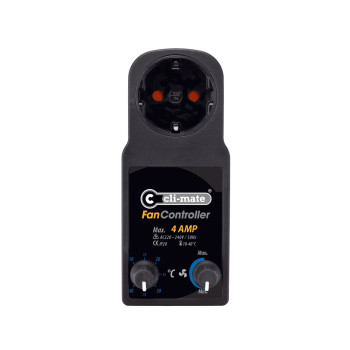
This is the widest and most affordable family, and it holds the entry point to the range. The Fan Controller at 50,90 € works in two positions on 4 A, with an IP44 rating and a 10 to 40 °C range. It does nothing sophisticated, but it turns a dumb extractor into one that reacts, for the price of a length of ducting.
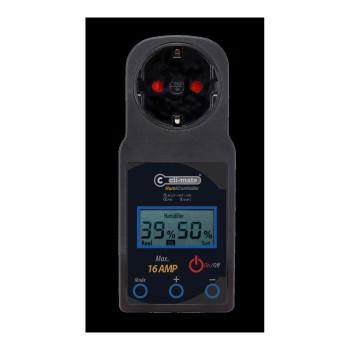
Above it, two touchscreen units rated 16 A cover needs beyond the extractor alone. The Temp Controller at 76,90 € drives either a heater or ventilation depending on which way the setpoint runs, which makes it useful all year. The Humi Controller at 91,90 € does the same job on humidity. Those 16 A are not for the extractor, which does not even draw one: they are there so you can plug in a dehumidifier or a heater without an external relay.
Two models complete the family upwards: the Climate Controller at 138,90 €, which adds a 0 to 40 °C range on an 800 W output, and the Hybrid Controller from 269,90 €, available in 7 or 12 A for setups stacking several motors on one output.
Cli-mate Fan Controller 4 A50,90 € 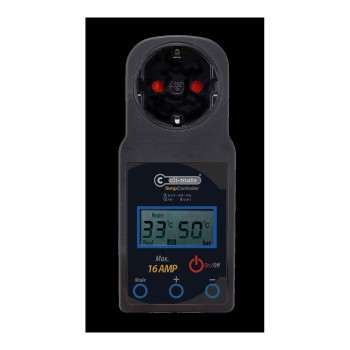 Cli-mate Temp Controller 16 A76,90 €
 Cli-mate Humi Controller 16 A91,90 €
 Cli-mate Climate Controller 4 A138,90 €
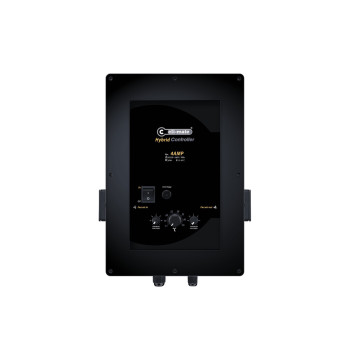 Cli-mate Hybrid Controller269,90 €from
The full section is here: temperature and humidity controllers.
Multifunction climate stations: several parameters that talk to each other
The Smart Controller at 77,90 € is the one I recommend most often, by a distance. Two rotary knobs, nothing else: minimum speed and target temperature. Its particularity is a hysteresis preset at 3 °C, meaning ventilation ramps up progressively, in proportion to the temperature gap, and only reaches maximum once that gap hits 3 °C. There is no band to configure, no menu to decode, and you get progressive regulation instead of all or nothing.
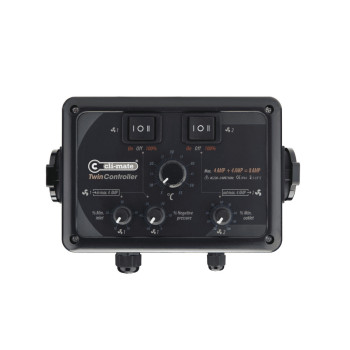
The Twin Controller from 140,90 € adds the control that matters for odours: negative pressure. It drives extraction and intake separately, and lets you set the gap between the two. By extracting slightly more than you blow in, air can only leave through the carbon filter. No leaks through zips or cable ports. Its Twin Humi version, from 192,90 € adds humidity management over a 5 to 55 °C range.
The Mini-Controller and Mini-Controller Humi introduce a timer on top of climate regulation, in 3 or 7 A. They are the first in the range to program a cycle as well as regulate airflow.
The Multi-Controller, from 321,90 € packs two fully independent regulators into one housing, each with its own probe and its own controls, driving a group of two sockets. Four sockets in total, up to 32 A. This is the unit for two-space setups.
The Total Controller at 328,90 € is the only one that also handles lighting, with a timer for two lamp groups up to 4 × 600 W, alongside humidity, daytime ventilation and night-time heating. The point is not to replace four devices with one to save space: it is to have setpoints that coordinate instead of contradicting each other. A timer, a thermostat and a hygrostat bought separately do not talk to each other, and it is not unusual to see a heater and an extraction system fight one another all night.
Cli-mate Smart Controller77,90 € Cli-mate Twin Controller140,90 €from 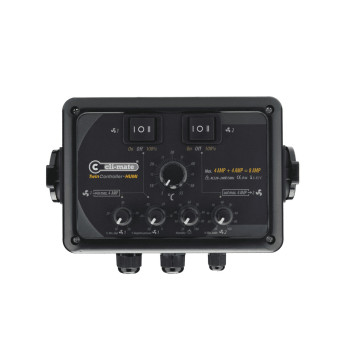 Cli-mate Twin Controller Humi192,90 €from
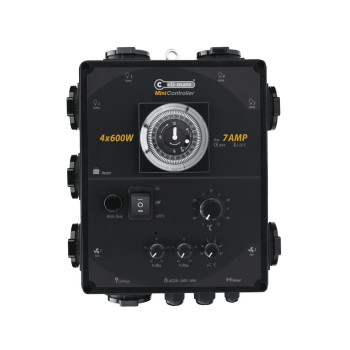 Cli-mate Mini-Controller228,90 €from
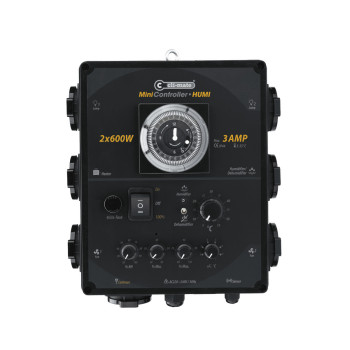 Cli-mate Mini-Controller Humi275,90 €from
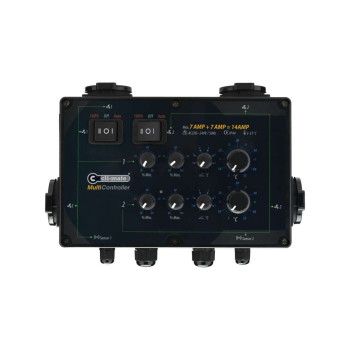 Cli-mate Multi-Controller321,90 €from
 Cli-mate Total Controller328,90 €
Frequency controllers: continuous adjustment
The Cli-mate frequency controller acts on the frequency of the motor supply, not simply on voltage. Adjustment is made hertz by hertz, without steps, with an LCD screen and automatic or manual modes, from 381,90 €. In practice the motor runs smoothly across the whole range instead of vibrating at the bottom end, and consumption genuinely tracks the airflow demanded. It is the top of the range, and it is justified when the extractor runs 24 hours a day all year.
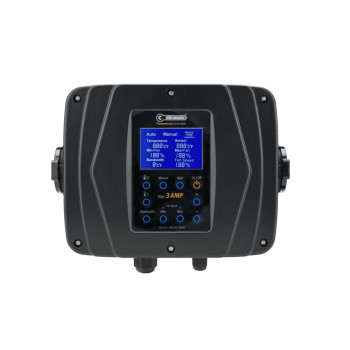
All fifteen references are sorted by need, not by model name.
See the climate aisle →4Which Cli-mate for which Prima Klima extractor?
This is the question that will decide your purchase, and one rule comes before all the others. It is not about amps, it is about motor type, and getting it wrong is expensive.
Joseph's tip
Never plug an EC motor extractor into a speed controller. The ECblue, WHSP EC and EC-TC models carry their own electronics and are driven on 0-10 V, not by dropping the mains voltage. A triac dimmer on one of those will at best do nothing, at worst damage the motor board. For these extractors the right unit is the Prima Klima ECTC 1M Digital, at 169,00 €, designed for them. Cli-mate units are for AC motor extractors, which is the vast majority of the Prima Klima range.
Here are the two cases side by side, so the distinction is visual and not just theoretical.
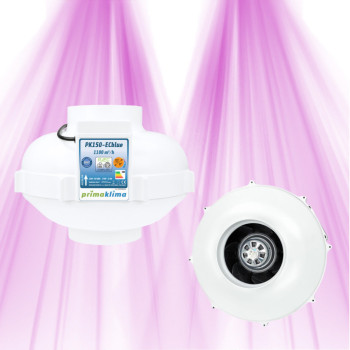
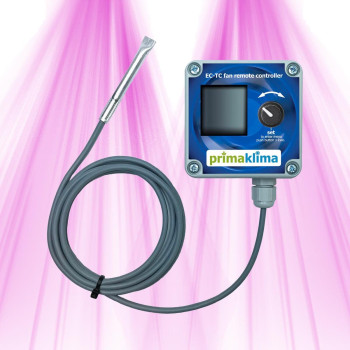
Once that point is settled, sizing is simpler than it looks, and this is where I am going to save you money. The current an extractor draws is its power divided by 230. Look at what that gives on our best-selling references.
| Prima Klima extractor | Power | Actual current | Minimum controller |
|---|---|---|---|
| Prima Klima Ø100 - 280 m³/h | 40 W | 0,17 A | Fan 4 A |
| Prima Klima Ø125 - 420 m³/h | 52 W | 0,23 A | Fan 4 A |
| Prima Klima Ø125 - 2 speeds | ~60 W | 0,26 A | Fan 4 A |
| Prima Klima WHSP2 Ø125 silent | ~75 W | 0,33 A | Fan 4 A |
| Prima Klima Ø150 - 760 m³/h | 110 W | 0,48 A | Fan 4 A |
| Prima Klima Ø150 - 2 speeds | 100-200 W | 0,43-0,87 A | Fan 4 A |
| Prima Klima Ø160 - 800 m³/h | 110 W | 0,48 A | Fan 4 A |
| Prima Klima Ø200 - 950 m³/h | 170 W | 0,74 A | Fan 4 A |
You read the last column correctly: no AC extractor in our Prima Klima catalogue exceeds 1 A, not even the Ø200 rated 950 m³/h. The entry-level 4 A controller takes four of them in parallel. Do not pay for amps you will never use.
So what are the 11, 13 and 16 A versions for? For everything that is not an extractor. A dehumidifier commonly draws 1 to 2 A, a 1,000 W supplementary heater draws 4.3, an ultrasonic humidifier far less. It is by adding these devices on one output that the total climbs. If you are only running ventilation, stay on the low current ratings and put the difference into functions.
One last point that is often forgotten: the carbon filter counts in the airflow calculation, not in the current one. A Ø125 filter rated 480 m³/h creates a resistance that drops real airflow by 20 to 30 %, but it changes nothing in electrical consumption. Size the controller on the motor, and the motor on the volume to treat, allowing for the filter.
Here are the AC motor extractors I most often see paired with a Cli-mate, all compatible without reservation.
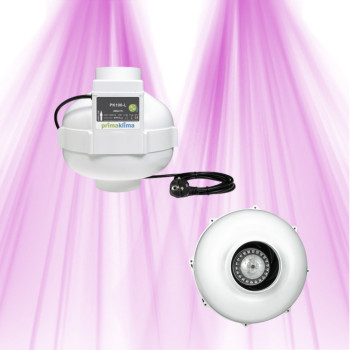 Prima Klima Ø100 - 280 m³/h98,00 €
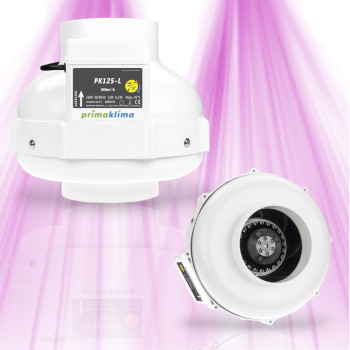 Prima Klima Ø125 - 420 m³/h96,80 €
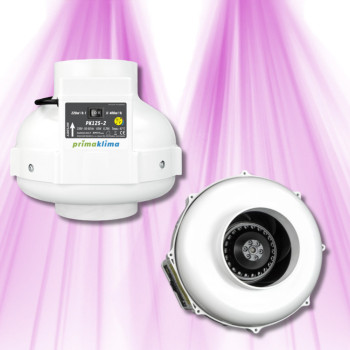 Prima Klima Ø125 - 2 speeds118,80 €
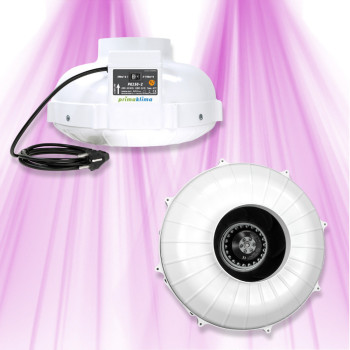 Prima Klima Ø150 - 2 speeds128,89 €
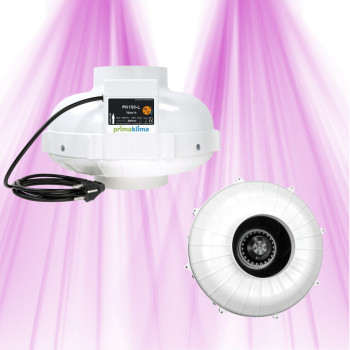 Prima Klima Ø150 - 760 m³/h125,40 €
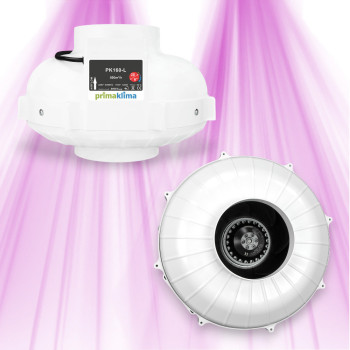 Prima Klima Ø160 - 800 m³/h126,50 €
 Prima Klima WHSP2 Ø125 silent164,00 €
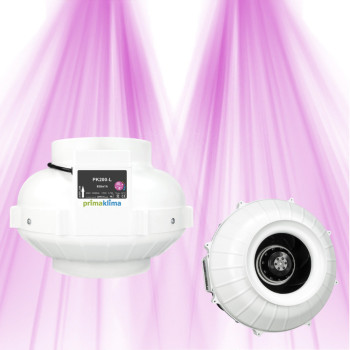 Prima Klima Ø200 - 950 m³/h170,50 €
Looking for the extractor first? The section is sorted by diameter and number of speeds.
See the extractors →Read next
5Cli-mate or GSE: the point-by-point comparison
We have sold GSE for years and I have no intention of stopping, so I might as well make this comparison honestly. GSE is an established brand, with robust units and a real track record in the field. Cli-mate arrives in the same niche with a range three times wider and a different approach to current ratings. Here is how they answer each other, need by need.
| What you are looking for | The GSE reference | The Cli-mate equivalent | What changes |
|---|---|---|---|
| Thermostat with minimum speed | Digital temperature and minimum speed controller 89,90 € - 1 A - 20 to 30 °C | Smart Controller 77,90 € - 6,5 A - 10 to 40 °C | 12 € cheaper, six times the current, wider setpoint range |
| Temperature and negative pressure | Digital temperature and vacuum controller 142,80 € | Twin Controller 140,90 € - 4 + 4 A | Almost identical price, current rated per output |
| Temperature, humidity and pressure | Digital temperature, humidity and vacuum controller 199,00 € - 2 × 5 A - 20 to 32 °C | Twin Humi 192,90 € - 4 + 4 A - 5 to 55 °C | Considerably wider setpoint range on the Cli-mate |
| Humidity alone | No reference online | Humi Controller 91,90 € - 16 A | 16 A to drive a dehumidifier without a relay |
| Silent regulation | No equivalent | Trafo Controller 213,90 € | Copper coil transformer instead of an electronic dimmer |
| Two independent spaces | No equivalent | Multi-Controller from 321,90 € - up to 32 A | Two regulators, two probes, four sockets |
| Lighting and climate in one box | No equivalent | Total Controller 328,90 € | Timer for two lamp groups up to 4 × 600 W |
| Entry price | 89,90 € | Fan Controller 50,90 € - 4 A | 39 € gap on the entry ticket |
Where GSE keeps an advantage, and I would rather say so, is on three concrete points. Protection rating first: the GSE units are rated IP54 where the Cli-mate temperature family is IP44, and in a very humid room that gap is real. Accuracy second: the three-function GSE controller claims ± 0.5 °C, a figure Cli-mate does not publish across the whole range. Service last: GSE lists its replacement probe separately at 19,80 €, which counts the day a four-metre cable gets caught in a zip.
So my verdict is nuanced and fits in one sentence: if your need lands exactly on a GSE reference and you grow in a very humid environment, stay with it. If your need falls outside the standard case, two zones, silence, lighting to drive, or simply more amps for the same budget, Cli-mate now has the answer and GSE does not.
The three Cli-mate references with no GSE equivalent at all, which on their own explain why I brought the brand in.
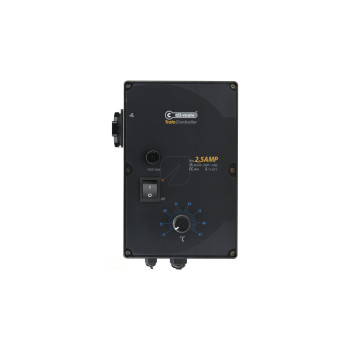 Cli-mate Trafo Controller213,90 € Cli-mate Multi-Controller321,90 €from Cli-mate Total Controller328,90 €
The multifunction stations bundle everything the competition handles in separate units.
See the climate stations →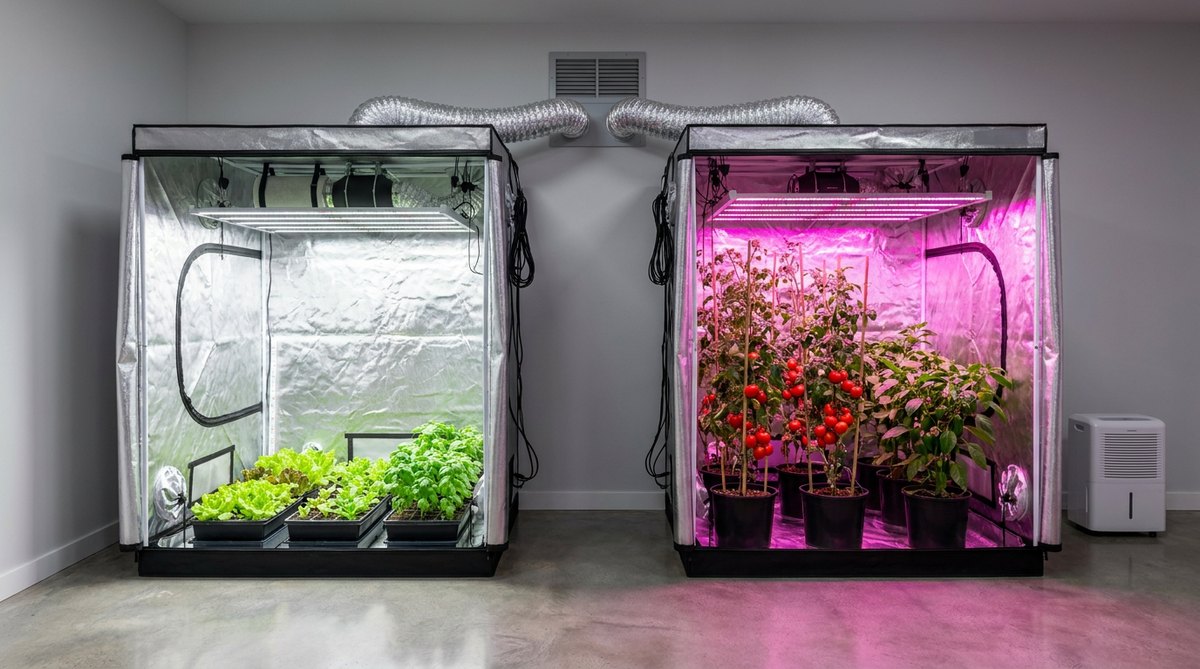
6Four setups, four choices
An 80 × 80 tent in a flat, one extractor. This is the most common case, and noise weighs more heavily than regulation accuracy. If the budget allows, the Trafo Controller at 213,90 € solves the problem at source. Otherwise the Smart Controller at 77,90 € with a well-set minimum speed already removes most of the noise, because an extractor running steadily at 40 % is far less audible than one starting at full tilt every twenty minutes. Pair it with a silent WHSP2 Ø125 and you have a complete, discreet setup.
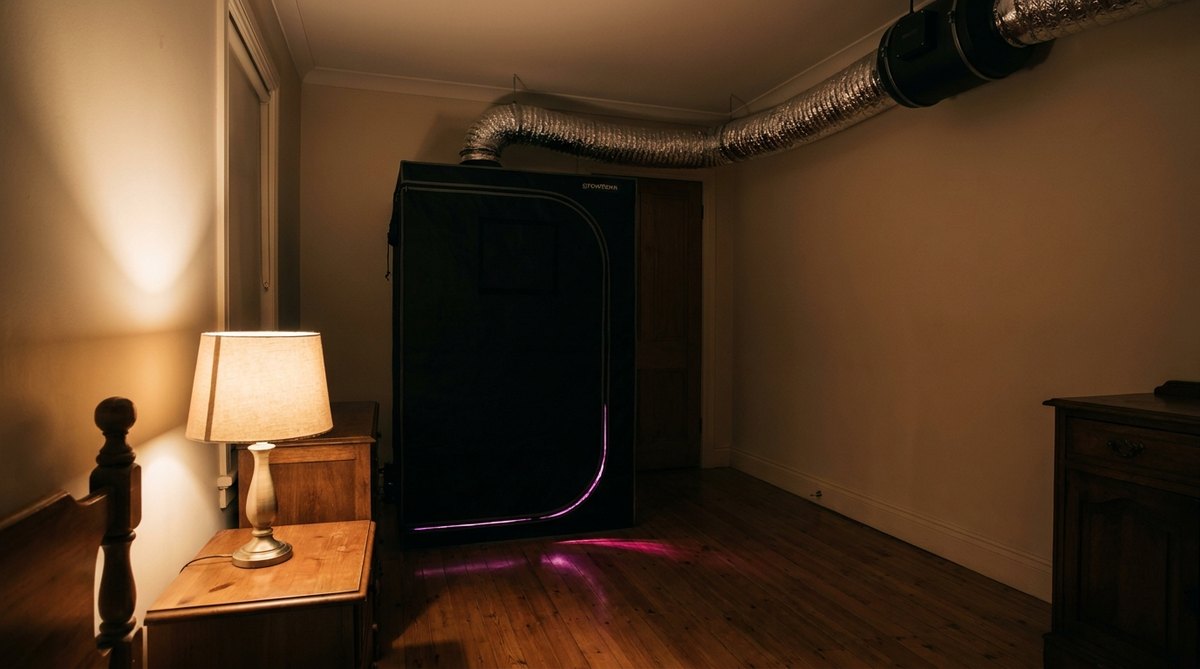
Cli-mate Trafo Controller213,90 € Cli-mate Smart Controller77,90 € Prima Klima WHSP2 Ø125 silent164,00 €A 1.2 × 1.2 room with extraction, intake and a carbon filter. Here negative pressure is not a comfort detail, it decides whether odours leave through the filter or through the seams. The Twin Controller from 140,90 € is made for it, and I prefer it to two separate controllers that have no idea the other exists. Plan for a Ø150 two-speed extractor on the outlet and a Ø125 carbon filter matched to the airflow.
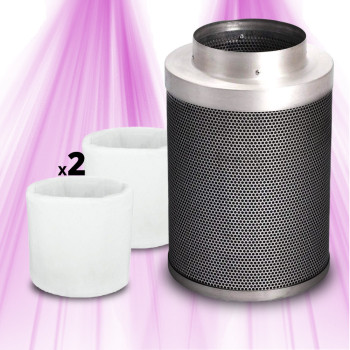
Cli-mate Twin Controller140,90 €from Prima Klima Ø150 - 2 speeds128,89 € 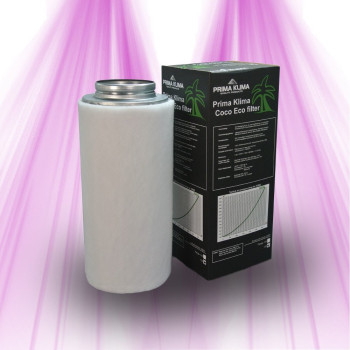 Prima Klima carbon filter Ø12556,90 €
A crop struggling with humidity in late flower. This is the scenario where a temperature controller alone no longer cuts it: ventilating to bring humidity down also drops the temperature, and you go round in circles. The Twin Humi from 192,90 € handles both parameters together, or the Humi Controller at 91,90 € if you simply want to drive an existing dehumidifier on a reliable setpoint.
Two spaces with different setpoints. A mother room at 24 °C and a flowering room at 26 °C are not driven by the same setting. The Multi-Controller from 321,90 € carries two independent regulations with two probes, which works out cheaper than two complete units and saves you watching two boxes. If you are automating lighting too, the Total Controller takes over.
Going further
Find your Cli-mate controller
Start with the family that matches your need: speed controllers if you want to decide the running speed yourself, temperature and humidity controllers for a simple setpoint, climate stations to drive several parameters, or frequency controllers for continuous adjustment. And remember to check your extractor's motor type before ordering.
See the climate aisle →If you take only one thing from this article, let it be the motor rule: check whether your extractor is AC or EC before choosing anything, because it is the one mistake in this range that costs you a unit. For the rest, I advise starting small. The Smart Controller at 77,90 € genuinely settles 80 % of the situations described to me, and I would rather see you add a good carbon filter than move up to a box whose functions you will half ignore. Cli-mate is not here to replace GSE in the aisle, but to cover everything GSE did not, and on that ground the brand currently has no competitor with us.