








































































Catalog
Textile pots
9 products




Satisfait ou remboursé
14 jours
Retour 14 jours
Frais de retour à votre charge
SAV expert FR
Conseil horticole
Paiement en 3, 4 ou 10 fois
Sans frais par CB

Product successfully added to your shopping cart
Ça pousse dans le bon sens

9 products
Help & advice
About Textile pots — click a question to see the answer.
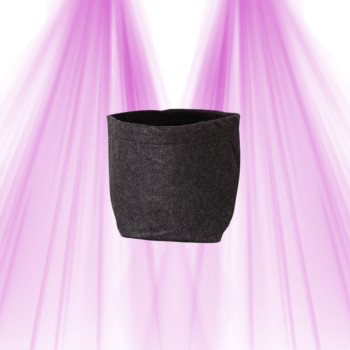
As an expert, I can tell you that a fabric pot, or geotextile pot, is a growing container made from non-woven, breathable materials. Unlike plastic pots, its porous structure allows for much better air circulation and optimal drainage, which is crucial for the health of your plants' roots in indoor cultivation. It's a revolution for root development!
The difference is fundamental and directly impacts the health of your plants. Plastic pots, rigid and non-porous, promote root circling (root bound) and can lead to aeration and drainage problems. Fabric pots, on the other hand, thanks to their air and water permeability, encourage air pruning of the roots, which stimulates the formation of new rootlets and a much denser and more efficient root system. I have also written an article on the advantages of fabric pots that you can consult here: Why choose fabric pots?
In indoor cultivation, fabric pots are primarily used to optimize the root development of your plants. Their unique design allows for better root oxygenation and prevents root spiraling. This results in more vigorous plants, better nutrient absorption, and ultimately, higher yields. It's an indispensable tool for any grower concerned about the quality of their production.
Choosing the right fabric pot size is crucial. In general, I recommend basing your choice on the plant's anticipated final size and its life cycle. A simple rule is to allow approximately 1 liter of substrate per 10 cm of final plant height. For larger plants, don't hesitate to opt for larger volumes to allow enough space for the roots to develop fully. An appropriate size ensures healthy growth and good production.
I use and recommend fabric pots for roots because they are designed to prevent 'root bound' or root circling. Thanks to their breathable walls, roots that reach the edge of the pot are naturally 'air pruned,' which stimulates the plant to produce new fine and healthy roots inside the pot. This process, called 'air pruning,' leads to a much more fibrous and efficient root system, capable of absorbing more water and nutrients.
Yes, absolutely! That's one of their great advantages. Fabric pots are generally very durable and designed to be reused multiple times. After each growing cycle, I advise you to clean them with clear water, possibly with a little mild soap, and let them dry completely before storing them. This reusability contributes to a more ecological approach to indoor cultivation, which I particularly appreciate.
The most common mistake I encounter is overwatering, especially at the beginning. Since fabric pots drain very well, one can tend to overwater. I recommend always checking the moisture of the substrate deeply before watering again. Another mistake would be not choosing a substrate suitable for growing in fabric pots, which requires a good balance between aeration and water retention. For this, I invite you to consult my article on substrates for indoor cultivation.
Cannot find your answer? 01 88 33 45 52 or by message.


