Aller au contenu principal
Fans
18 produits

Fans

Indoor Grow Fans: The Air Circulation That Changes Everything

Fans are often the overlooked yet crucial element of your indoor growing setup. Unlike extractors that remove stale air, these little champions create constant air movement that simulates natural wind. The result? Stronger stems, better plant transpiration, and homogeneous air circul...

Indoor Grow Fans: The Air Circulation That Changes Everything

Fans are often the overlooked yet crucial element of your indoor growing setup. Unlike extractors that remove stale air, these little champions create constant air movement that simulates natural wind. The result? Stronger stems, better plant transpiration, and homogeneous air circulation throughout your grow tent.

Why Install Fans in Your Grow Space

Air circulation is the difference between flimsy plants and robust specimens. When your plants experience a constant gentle breeze, they develop thicker stems to resist movement – just like in nature. This phenomenon, called thigmomorphogenesis, literally strengthens the structure of your plants.

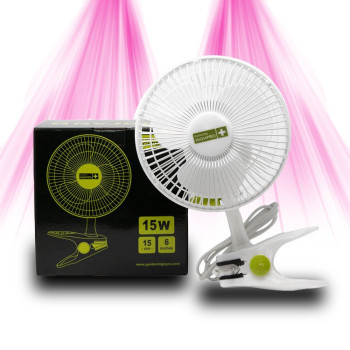
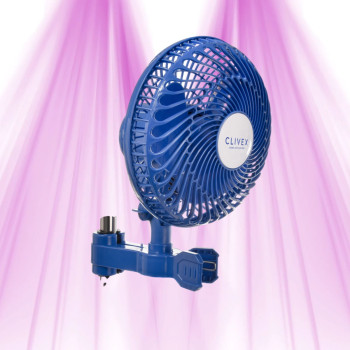
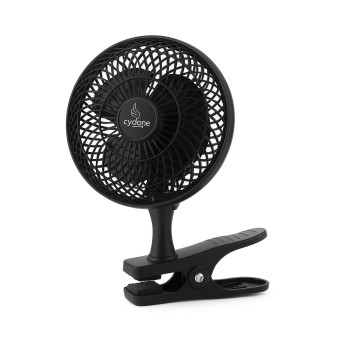
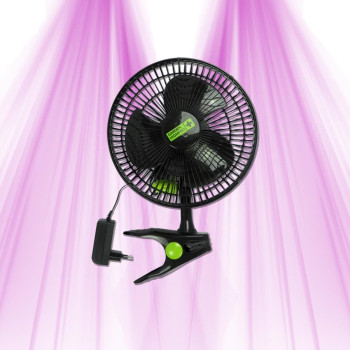
But that's not all. A good fan like the Garden High Pro Clip Fan (Ø 15 cm - 15W) - 2 speeds also prevents stagnant air zones where humidity accumulates. These pockets of humidity are breeding grounds for fungi and mold. With its 2 adjustable speeds and practical clip-on attachment, it's perfect for smaller setups.

For larger spaces, the Clivex MASTER Industrial Fan - 3 in 1 - 45cm with its 75 watts circulates an impressive volume of air. Its 3-in-1 function allows it to be used in fixed, oscillating, or even as an auxiliary extractor mode depending on your needs.

How to Choose the Right Fan for Your Setup

The size of your space determines everything. For a 60x60 cm grow tent, a 15 cm diameter fan is more than sufficient. Beyond 1m², opt for at least 20 cm, or even 30-45 cm for large installations. Power logically follows: 15W for small models, 75W and up for larger ones.

The type of mounting also matters greatly. Clip-on fans are perfect for tent structures – they attach directly to the poles without drilling. Stand-alone models are better suited for permanent grow rooms where you can place them on the floor.

In terms of features, oscillation is a real plus for uniformly covering the entire space. Multiple speeds allow you to adapt the airflow according to the growth phase: gentler for young seedlings, more intense for flowering when plants are robust.

Frequently Asked Questions

What diameter extractor should I choose for my 1m² indoor grow tent?

For 1m² with a standard height of 2m (i.e., 2m³), a 125mm extractor is largely sufficient. It should renew the air at least 30 times per hour, so look for a model that delivers at least 60 m³/h. If you use a carbon filter, allow for a margin and aim for 100-120 m³/h as the filter reduces airflow by about 20%. 100mm extractors are also suitable but offer less leeway.

Should the air extractor be installed inside or outside the grow tent?

Always outside if possible! An extractor installed inside the grow tent heats the air it evacuates, which reduces its efficiency. Moreover, it takes up valuable space and generates vibrations. The ideal is to fix it above the grow tent, connected by a duct. If you absolutely must put it inside, choose a quiet model and install it as high as possible to evacuate the hot air that naturally rises.

How to calculate the necessary CFM to properly ventilate my grow space?

The basic formula: Space Volume (L x W x H in meters) multiplied by 30 to 60 depending on your constraints. To convert to CFM (cubic feet per minute), multiply m³/h by 0.588. For example, for 2m³: 2 x 40 = 80 m³/h, or a minimum of 47 CFM. Add 25% if you use a carbon filter, and another 20% if your ducts are longer than 3 meters or have bends. It's better to slightly oversize and use a dimmer to adjust.

Is an oscillating fan sufficient for air circulation, or do I need multiple speeds?

Oscillation is excellent for uniformly distributing airflow, but multiple speeds are just as important. In early growth, your young plants need a gentle breeze (speed 1) to avoid stressing them. During flowering, you can increase (speed 2-3) as they are more robust and need more movement to prevent stagnant humidity. The ideal is therefore an oscillating model with a speed controller to adapt to each phase.

How to maintain an extractor and a carbon filter to avoid odors?

Clean the extractor every 3 months: disassemble the blades and wash them with soapy water, dust the motor with a dry brush. For the carbon filter, replace it every 12-18 months depending on use – when odors start to pass through, it's done. In the meantime, regularly vacuum dust from the external surface. Also check the airtightness of the ducts: an air leak reduces efficiency and allows odors to escape. A well-maintained extractor maintains optimal airflow and remains quieter for longer.

Showing 1 - 12 of 18 items
What is the purpose of fans in an indoor grow?
   

As an expert, I can tell you that fans are much more than just air circulators. They simulate natural wind, which has several beneficial effects. First, they strengthen your plants' stems, making them more robust and capable of supporting heavier fruits. Second, they promote plant transpiration, an essential process for their growth and nutrient absorption. Finally, they ensure homogeneous air circulation, preventing stagnant air pockets that can encourage the appearance of diseases or molds.

How to choose a fan for indoor growing?
   

Choosing the right fan depends on several factors. I advise considering the size of your grow space, the type of plants you are growing, and your budget. For small grow tents, a clip-on fan like the Garden HighPro is often sufficient. For larger spaces, I tend to opt for more powerful industrial models. Also, consider oscillation: an oscillating fan ensures better air distribution. Sound discretion can also be an important criterion for some growers.

What is the difference between a fan and an air extractor?
   

This is a common question, and the distinction is crucial. The primary role of an air extractor is to renew the air in your grow space by expelling hot, stale air and bringing in fresh air. It manages overall temperature and humidity. The fan, on the other hand, does not renew the air; it circulates it within the grow tent. It creates localized air movement that strengthens plants and prevents problems associated with stagnant air. Both are complementary and essential for good climate management.

What fan power should I choose for my grow tent?
   

For power, I recommend adapting it to the size of your grow tent. For a small grow tent (less than 0.6m²), a small clip-on fan of 5W to 15W is more than enough. For a medium grow tent (0.6m² to 1.2m²), a 20W to 30W fan, possibly oscillating, will be more effective. For large grow tents or rooms (over 1.2m²), I prefer more robust models like the Typhoon from Pure Factory or the Clivex MASTER, which offer greater power and diameter to circulate a significant volume of air.

How to install a fan in an indoor grow?
   

Installation is generally simple. I advise placing the fan so that it does not blow directly and constantly on the plants, but rather above or below, creating indirect air movement. If it's a clip-on fan, attach it to a bar in your grow tent. For floor-standing or industrial models, place them on the floor or a stable surface. The goal is to create a light, constant breeze, simulating wind, without stressing the plants with too strong and direct an airflow. Make sure cables are tidy and secure.

Oscillating or fixed fan for indoor growing?
   

If I had to choose, I would always lean towards an oscillating fan. A fixed fan, even a powerful one, will only create air movement in a limited area. Oscillation allows for covering a wider surface and ensuring better homogeneity of air circulation throughout the grow tent. This reduces the risk of hot or cold spots and ensures that all your plants benefit from the advantages of air circulation. I also explain the benefits of oscillating fans in this blog post.

What mistakes to avoid with fans in indoor growing?
   

What I often see are a few classic mistakes. The first is to point the fan directly at the plants at full power, which can cause water stress or burns. The second is not to use one at all, which leads to humidity problems and weak stems. Another mistake is choosing a fan that is too small for the size of the grow tent, or conversely, a model that is too powerful and creates excessive airflow. Finally, remember to clean it regularly to prevent dust accumulation.

Which fan to choose among Typhoon, Garden HighPro, or Clivex MASTER?
   

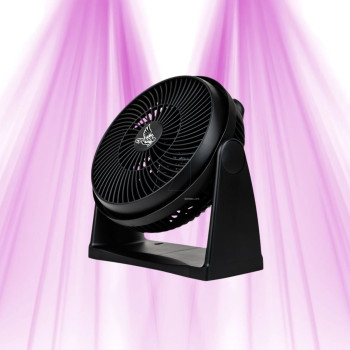
These three brands offer excellent products, but I would direct them towards different uses. The Garden HighPro clip-on fan is perfect for small spaces or as a supplement in a larger grow tent, thanks to its compactness and low consumption. The Typhoon from Pure Factory and the Clivex MASTER are robust industrial fans, ideal for large grow tents or grow rooms. They offer superior air circulation power and are often versatile (floor, wall, stand). My choice would really depend on the size of your setup and your power needs.

Blog navigation

Latest posts

VIVOSUN Grow Cam 6mm 2K QHD WiFi Grow Camera

Tired of anxiety when you're away from your grow? The VIVOSUN Grow Cam 6mm 2K QHD WiFi Grow Camera lets you keep an...

Read more
STOP à la Tourbe ! Découvrez les 4 Meilleurs Substrats Écologiques pour une Culture Indoor Explosive

Le monde du jardinage connaît une transformation silencieuse mais profonde. Face à l'urgence climatique et à la prise...

Read more
Master Pack PRO Advanced Nutrients: Created by GrowLED for demanding growers!

When you're starting out or looking to optimize your indoor growing, the hardest part is often choosing the right...

Read more