






































































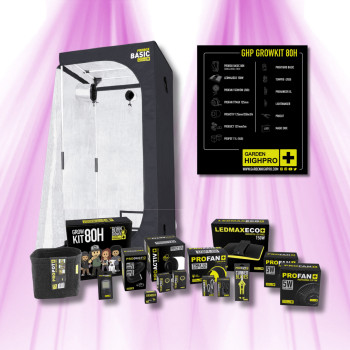


Silent Pack - Extractor M 150mm 550m3/h - ProActiv carbon filter 150mm 840m3/h
Available in 2 models
Ships within 2 weeks
420,82 € 442,97 € or 3× 140,27 €

Product successfully added to your shopping cart
Ça pousse dans le bon sens

21 products
Silent extractors are revolutionizing climate control in indoor growing. Say goodbye to noisy disturbances that give away your setup! These specially designed fans incorporate insulating materials and anti-vibration technologies to drastically reduce noise, while maintaining optimal airflow for your plants.
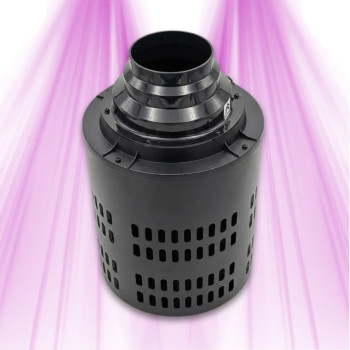
Noise is the number one enemy of the discreet grower. A classic extractor can easily exceed 50 dB, the level of a normal conversation. With a silent model, you often drop below 35 dB, comparable to the sound of a library. The TT Silent M Extractor - 150mm - 405/550m3/h - 2 Silent Speeds perfectly illustrates this approach: its double insulated wall and high-quality bearings guarantee almost silent operation even at full power.
Beyond acoustic comfort, these extractors retain all their efficiency. Airflows remain high - up to 870m3/h for the ISO-MAX 200mm - CAN FILTER - 870m3/h - allowing for optimal air renewal. The two-speed technology offers perfect modulation depending on the growth phases. During the night or flowering period, you can reduce the speed without compromising ventilation.
Diameter is key: 125mm for spaces from 60x60cm to 100x100cm, 150mm for 120x120cm tents, and 200mm for larger installations. Airflow is calculated simply: volume of your space x 60 for complete hourly renewal. For a 1.2x1.2x2m tent (2.88m3), aim for a minimum of 170m3/h. The TT Silent M Extractor - 125mm - 230/340m3/h - 2 Silent Speeds is perfectly suited for this type of setup.
Static pressure matters greatly. If you add a carbon filter and several meters of ducting, your extractor loses efficiency. Plan for a 20 to 30% margin on the theoretical airflow. Two-speed models offer this valuable flexibility to adapt to variations in circuit resistance.
For a 1.2x1.2x2m (2.88m3) tent, the TT Silent M 125mm extractor with its maximum 340m3/h is perfectly suitable. This airflow allows for air renewal approximately every 30 seconds, ideal for maintaining stable temperature and humidity. Its dual speed allows you to adapt the flow according to needs: reduced speed at night to limit noise, maximum speed during the day to evacuate heat from the lamps. The 125mm diameter adapts to standard ducts and facilitates installation with most carbon filters on the market.
The basic formula: space volume (L x W x H) multiplied by 60 for complete renewal per minute. For a 3m3 space, count a minimum of 180m3/h. Add 20-30% if you use a carbon filter, and another 10-15% for each duct bend. During hot periods or with powerful HPS lamps, do not hesitate to double this airflow. Variable speed extractors like the TT Silent M allow for this modulation without changing equipment.
The main difference lies in sound insulation and bearings. TT Silent models incorporate a double wall with insulating material that reduces vibrations and absorbs noise. Their high-quality ball bearings generate less friction and therefore less noise pollution. In terms of performance, airflows remain identical or even superior thanks to better internal aerodynamics. The extra cost is quickly justified if you are growing in an apartment or in an environment where acoustic discretion is paramount.
Mount the extractor high up, ideally suspended by elastic straps to prevent vibration transmission. Connect the ducting on the intake side (inside the tent) and the exhaust side (external discharge). Use airtight clamps and avoid sharp bends that create noisy turbulence. If possible, place the extractor outside the tent to further reduce perceived noise. Acoustic ducts provide an additional gain of 3-5 dB across the entire circuit.
Dust the blades every 2-3 months with a brush or dry cloth. Check the condition of the bearings: abnormal noise indicates premature wear. Clean the outer casing with a damp cloth, without aggressive chemicals. Check the fixings and suspension straps, which can loosen over time. If the airflow decreases despite regular cleaning, check the condition of the carbon filter and ducts, which can become clogged. Preventive maintenance every 6 months guarantees optimal lifespan and maintains acoustic performance.
Available in 2 models
Available in 2 models
Available in 2 models
Available in 2 models
Available in 2 models
Available in 4 models
Available in 4 models
Available in 4 models
Help & advice
About Silent extractors — click a question to see the answer.
A silent extractor is essential for maintaining an optimal environment in your grow space. Its primary role is to renew the air, which allows for the evacuation of hot, stale air, regulation of humidity, and provision of fresh CO2 to your plants. The unique feature of the silent model, as its name suggests, is to do all of this with minimal noise pollution, which I find particularly valuable for a discreet setup.
To calculate the necessary airflow, I advise you to multiply the volume of your grow space (Length x Width x Height) by a renewal factor. Generally, I recommend an air exchange rate of 30 to 60 times per hour. For example, for a 1m x 1m x 2m tent (i.e., 2m³), you would need an extractor delivering between 60 and 120 m³/h. Don't forget that the presence of a carbon filter or long ducts can reduce the actual flow rate, so it's often better to allow for a slight margin.
The power depends directly on the volume of your tent. If you have a small tent (for example, 60x60x160cm), a model like the TT Silent M Extractor - 125mm - 230/340m3/h might suffice. For larger spaces, such as a 120x120x200cm tent, I would lean towards an ISO-MAX 150mm - CAN FILTER - 410m3/h or even an ISO-MAX 200mm - CAN FILTER - 870m3/h to ensure optimal air exchange, especially if you are using a carbon filter.
The main difference, as the name suggests, lies in the noise level. Silent extractors are designed with acoustic insulating materials, low-vibration motors, and sometimes specific casings to minimize noise. A standard extractor, while functional, can generate a constant hum or whoosh that, over time, can become very annoying. In practice, I find that the investment in a silent model quickly pays for itself through the comfort it provides.
I generally recommend installing the extractor outside the tent if space permits. This frees up valuable space inside for your plants and lighting. However, if you are using a carbon filter, it is often more practical to hang it inside the tent and connect it directly to the extractor, which can then be placed right next to it or suspended outside. The important thing is to ensure good sealing of the connections.
The most common mistake I see is undersizing the extractor out of fear of noise. An extractor that is too weak will have to run at full speed constantly, which can negate its silent advantage and reduce its lifespan. I always recommend choosing a slightly oversized model for your space, so you can run it at a lower power and thus maximize its silence and efficiency. Also, don't forget to regularly clean the blades to prevent dust accumulation, which can generate noise and reduce performance.
Cannot find your answer? 01 88 33 45 52 or by message.


