



































































GreenVisuaLED
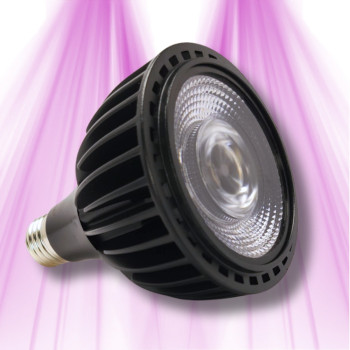
GU10 LED horticultural bulb - Ideal for green plants, bonsai or frames
In stock · Shipped within 24 h
13,90 €

Product successfully added to your shopping cart
Ça pousse dans le bon sens

20 products
Supplemental lighting consists of those little extras that make all the difference in an indoor growing setup. Mylar reflectors, green lights for nocturnal inspection, programmable timers, or reflective panels – each element plays a specific role in maximizing the light output of your grow space. Unlike primary lighting, these accessories optimize the distribution and use of existing light.
Frankly, this is often where the difference lies between a decent grow and a truly efficient one. A good reflector can increase light intensity by 30 to 40% without consuming an extra watt. Mylar panels reflect up to 95% of light compared to only 60% for matte white. And when you know that a 600W HPS costs about €0.15 per hour in electricity, optimizing every photon quickly becomes profitable.
Green lights allow you to inspect plants during the dark period without disturbing their photoperiodic cycle. Chlorophyll absorbs very little green light (520-570nm), making these lights invisible to plants. Handy for checking substrate moisture or detecting problems without stressing the crop.
Programmable timers, meanwhile, ensure perfect regularity of light cycles. A shift of a few minutes per day can be enough to trigger premature flowering or hermaphrodites. Digital models offer minute-by-minute precision over several weeks.
For reflectors, it all depends on your setup. A parabolic reflector concentrates light on a small area (ideal for 80x80cm), while a wing reflector spreads light over a larger surface (up to 120x120cm). The material also matters: anodized aluminum reflects better than simple aluminum, but textured Mylar remains the best with 98% reflection.
For reflective panels, avoid kitchen aluminum foil, which creates hot spots. 125-micron Mylar in a roll offers the best value for money. Allow about 2m² of reflective surface per m² of cultivation to effectively cover the walls.
As for timers, mechanical models (15 minutes precision) are sufficient for primary lighting, but digital versions become essential for programming complex cycles or managing multiple zones. Check the maximum supported load: 2000W minimum for a serious setup.
The distance depends on the type of supplement used. For a green inspection light, you can go down to 30-40cm without risk as it emits very little heat and remains invisible to plants. Reflectors do not generate additional heat; they merely redistribute existing light – so your primary lighting determines the height. However, if you add supplemental LED spots, maintain a minimum of 40-50cm to avoid leaf bleaching. Always monitor the temperature at the apexes: it should not exceed 28°C.
Reflectors are universally compatible – they simply redirect light without interfering with your ballast or HPS bulb. Just check that the dimensions match your grow space. For green lights, there's no compatibility issue either: they operate independently of your main lighting. You can even use them while your HPS lights are off. The only point of attention concerns the electrical supply: ensure your installation can handle the additional load, even if minimal (5-15W for a green light).
During vegetative growth, supplemental lighting generally follows the same cycle as your main lighting: 18 hours on, 6 hours off. This is the case for auxiliary LED spots that boost light intensity. However, green lights can remain on continuously if needed – they do not influence the photoperiod. For reflectors or Mylar panels, no programming is necessary as they work passively. If you use supplemental UV-B LEDs, limit yourself to 2-3 hours per day maximum during the last weeks of growth to harden the plants without stressing them.
Fix the Mylar tightly on all walls, avoiding creases that create shaded areas. Use special double-sided tape or plastic clips to avoid piercing the material. Leave 2-3cm of space between the Mylar and the tent wall to prevent condensation. Position it with the shiny side facing the plants, of course. For corners, cut V-shaped notches rather than folding – this avoids excess thickness. Don't forget the floor: a reflective mat can recover an additional 10-15% of light. Replace the Mylar as soon as it yellows or tears, as it quickly loses its effectiveness.
Absolutely, dust can reduce efficiency by 20-30% in a few weeks. For Mylar, use a slightly damp microfiber cloth with demineralized water – never chemical products that dull the surface. Clean gently without pressing to avoid micro-scratches. Aluminum reflectors can be cleaned with 70% isopropyl alcohol. For green lights, a simple dusting is sufficient. Schedule this cleaning every 2-3 weeks during cultivation, more often if you use foliar products. Clean Mylar can make the difference between 400 and 500 µmol/m²/s at the lower plants.
Available in 3 models
Available in 3 models
Available in 2 models
Available in 2 models
Available in 2 models
Available in 2 models
Available in 2 models
Help & advice
About Complement — click a question to see the answer.
To choose supplemental lighting, I advise you to first assess the specific needs of your plants and the shortcomings of your main lighting. If you lack intensity, an efficient reflector will be useful. If light distribution is the problem, reflective panels can help. Also consider the growth phase: some supplements are better suited for flowering, others for vegetative growth.
The main difference is their role and shape. Mylar reflectors are generally integrated directly into your main light fixture to direct and concentrate light towards the plants. They are designed to maximize the efficiency of the light source. Reflective panels, such as those made of Mylar or white film, are placed on the walls of your grow space to reflect diffuse light and prevent losses. They ensure better light uniformity across the entire canopy.
Green lights are a valuable tool for nocturnal inspection of your crops. What I often see is that plants do not perceive the green spectrum in the same way as other colors. By using green light, you can observe your plants, detect potential problems (diseases, pests, deficiencies) without disturbing their sleep cycle (photoperiod). This is crucial for not stressing your crops and maintaining a healthy circadian rhythm.
Installing a programmable timer is quite simple and it's a must-have for any indoor setup. I recommend plugging it between your wall outlet and your lighting system. Then, simply program the on and off times according to the light cycle your plants need (for example, 18 hours of light / 6 hours of darkness for growth or 12h/12h for flowering). Make sure the timer is suitable for the power of your lighting to avoid any overload.
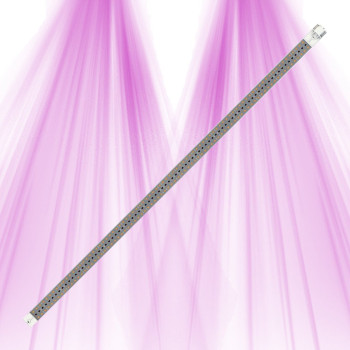
The power of supplemental lighting really depends on your main lighting and the size of your space. If I had to choose, I'd say you first need to assess the area to cover and the type of crop. For reflectors, the power is that of your main lamp. For supplemental LED bars, it will depend on shaded areas or specific spectrum needs. The goal is to fill in the gaps, not to over-light, which could stress the plants.
With LED supplemental lighting, the first mistake to avoid is not optimizing the distance. An LED too close can burn plants; too far, it loses efficiency. I also often see mistakes in spectrum choice: make sure the supplement provides what your main lighting lacks. Finally, don't neglect ventilation, because even if LEDs heat up less than other technologies, good air circulation remains essential.
To know if a reflector is suitable, I advise you to look at its reflection rate and its ability to distribute light uniformly. A good reflector should have a high reflection rate (often over 90% for quality Mylar) and a shape that effectively directs light towards the canopy, without creating hot spots or excessive shadows. The size of the reflector must also match the size of your lamp and the grow area for maximum efficiency.
To maximize light output, I strongly recommend investing in good reflectors and quality reflective panels. A well-designed reflector, such as those made of hammered aluminum or high-end Mylar, can significantly increase the amount of light reaching your plants. Reflective panels on the walls of your grow space are also crucial for recovering diffuse light and reflecting it back to the plants, ensuring more uniform coverage and reducing losses.
Optimizing the distance is essential. For supplemental lighting, such as side LED bars or spotlights, I recommend placing them so that they illuminate shaded areas or lower parts of the canopy that do not receive enough light from the main lighting. The exact distance will depend on the power of the supplement and the sensitivity of your plants, but the goal is to ensure homogeneous light distribution without causing direct thermal or light stress. Don't hesitate to observe your plants' reaction and adjust accordingly.
Cannot find your answer? 01 88 33 45 52 or by message.