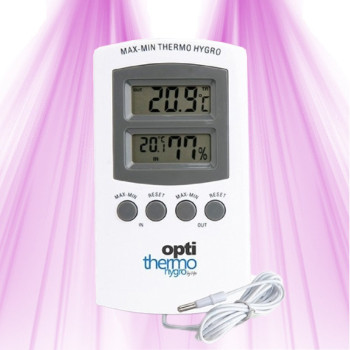




































































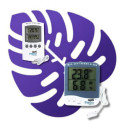

Hydro Digital Thermometer - Probe for temperature and humidity
In stock · Shipped within 24 h
21,89 €

Product successfully added to your shopping cart
Ça pousse dans le bon sens

23 products
Help & advice
About Environmental Control — click a question to see the answer.
The ideal humidity level varies considerably depending on your plants' development stage. Generally, young seedlings and cuttings prefer high humidity (60-80%), while plants in vegetative growth thrive around 50-70%. During flowering, I reduce humidity to 40-50% to prevent mold. A humidifier or dehumidifier may be necessary to adjust these levels.
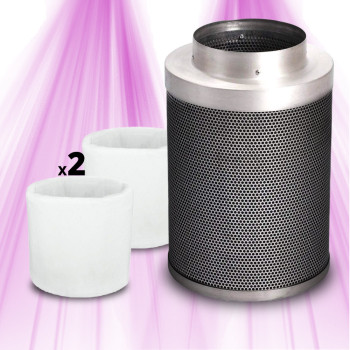
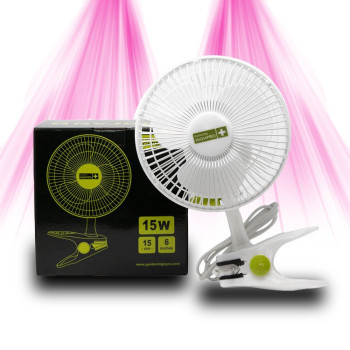
Choosing a ventilation system depends on the size of your grow space. You need to calculate the air volume to be renewed to ensure a complete air change every 1 to 3 minutes. I recommend a powerful air extractor for evacuating hot and stale air, and a fan to circulate the air inside and strengthen your plants' stems. Don't forget carbon filters if you're growing odorous plants.
The most common mistake I see is not regularly monitoring parameters. An unstable environment is much worse than a non-optimal but constant one. Also, avoid undersizing your equipment: an extractor that's too weak or insufficient heating will definitely cause you problems. Neglecting air circulation is also a common mistake that can lead to fungal issues.
A hygrometer is an essential tool used to measure the relative humidity level in your grow space. Without it, it's impossible to know if the air is too dry or too humid for your plants. I consider it a minimal but crucial investment for adjusting the use of your humidifier or dehumidifier and preventing many humidity-related problems.
That's an excellent question! The primary role of an air extractor is to renew the air in your grow space by expelling hot, stale, or humid air to the outside, and drawing in fresh air. The fan, on the other hand, circulates the air within the space, which helps to homogenize temperature and humidity, and to strengthen plant stems by simulating natural wind. They are complementary and not interchangeable.
To know if your environment is suitable, I advise you to carefully monitor your plants. Yellowing leaves, burnt tips, slowed growth, or the appearance of mold are signs that something is wrong. In parallel, a thermometer/hygrometer will give you precise figures to adjust your equipment. Don't hesitate to refer to the specific needs of each species you are cultivating.
In a grow cabinet, air renewal is essential. I always install an air extractor at the top of the cabinet to expel hot air, as heat rises. A passive air intake (an opening at the bottom) or active air intake (an intake fan) is necessary to bring in fresh air. The goal is to create a constant airflow that prevents the accumulation of heat and CO2, and ensures a supply of fresh air essential for photosynthesis. You can learn more about setup in this article.
Cannot find your answer? 01 88 33 45 52 or by message.