Humidifiers for Green Plants: Perfect Humidity for Your Indoor Crops
Humidifiers for green plants are essential equipment for maintaining optimal humidity levels in your indoor growing spaces. Whether you're cultivating tropical plants, herbs, or vegetables indoors, these devices precisely regulate air humidity to promote healthy and vigorous growth. In an enclosed environment like a grow tent or grow room, the air can quickly become too dry, especially with artificial lighting that generates heat.
Why choose a humidifier for your green plants
Relative humidity plays a crucial role in plant development. Most tropical species need a humidity level between 60% and 80% to thrive. Without a humidifier, your plants may show signs of water stress: browning leaf edges, stunted growth, or, worse, complete drying out of young shoots. A good humidifier helps create a stable microclimate that mimics natural growing conditions.
Modern humidifiers also offer precise control thanks to their integrated humidistats. You can set the desired humidity level to the nearest degree, and the device will automatically turn on as soon as the air becomes too dry. This automation prevents sudden humidity variations that can stress your crops. Furthermore, properly humidified air facilitates nutrient absorption by the roots and improves gas exchange at the stomata.
How to choose the right humidifier for your green plants
The choice of a humidifier primarily depends on the size of your growing space. For a 1m² tent, a 2 to 3-liter capacity humidifier is more than sufficient. For larger spaces (4m² and up), opt for 5 to 8-liter models with a higher mist output, generally expressed in ml/h. Also check the autonomy: a 6-liter tank can operate 12 to 15 hours continuously depending on the setting.
The technology used directly influences performance. Ultrasonic humidifiers produce a fine, cool mist through high-frequency vibrations. They are quiet and energy-efficient, perfect for noise-sensitive crops. Evaporative models use a fan to diffuse humidity through a soaked filter. They consume more energy but offer more homogeneous diffusion throughout the space.
Also consider practical features: mist intensity adjustment, automatic shut-off when the tank is empty, remote control to adjust settings without opening the tent. An integrated digital hygrometer allows you to monitor ambient humidity levels in real-time. Some models even offer time-slot programming, which is very useful for adapting humidity to your plants' day/night cycles.
Frequently Asked Questions
Which humidifier should I choose for a 1m² indoor grow tent with tropical plants?
For a 1m² tent, a 2 to 3-liter ultrasonic humidifier with a flow rate of 200 to 300 ml/h is perfectly suitable. Tropical plants require 60 to 80% relative humidity, so opt for a model with an integrated humidistat to automatically maintain this level. Place the humidifier in a corner of the tent, about 50 cm from the plants to prevent droplets from settling directly on the foliage. A model with intensity adjustment will allow you to fine-tune according to your crops' needs.
How to install a humidifier near my green plants without risking mold?
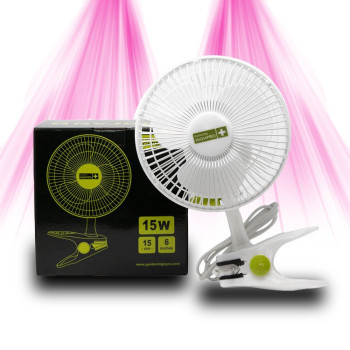
Correct humidifier installation requires good air circulation to avoid stagnant humid areas. Always place the device away from plants (minimum 40-50 cm) and direct the mist upwards or to the side, never directly onto the leaves. Ensure you have active ventilation with an extractor that renews the air regularly. An oscillating fan helps homogenize humidity throughout the space. Monitor humidity daily with a thermo-hygrometer: if it exceeds 85%, reduce intensity or increase ventilation.
What is the difference between an ultrasonic and an evaporative humidifier for indoor humidity control?
An ultrasonic humidifier uses high-frequency vibrations (1.7 MHz) to transform water into micro-droplets, creating a very fine cool mist. It is quiet (less than 35 dB), energy-efficient, and produces rapid and precise humidification. An evaporative humidifier works with a fan that draws dry air through a wet filter, creating natural evaporation. It consumes more energy but offers more gradual and homogeneous diffusion, without the risk of mineral deposits. For indoor crops, ultrasonic is generally preferred for its discretion and immediate effectiveness.
Should I use tap water or demineralized water in the humidifier to avoid deposits on the leaves?
Demineralized or distilled water is highly recommended, especially with ultrasonic humidifiers. Tap water contains minerals (calcium, magnesium) that turn into white powder when the water evaporates, settling on leaves and potentially clogging stomata. This mineral powder can also damage the humidifier mechanism in the long term. Demineralized water costs about 1€ per liter in supermarkets, a minimal investment compared to the benefits for your plants. If you use tap water, clean the humidifier more frequently and monitor for white deposits on the foliage.
How to regularly maintain and clean my plant humidifier so it lasts a long time?
Weekly cleaning significantly extends the life of your humidifier. Completely empty the tank and clean it with a mixture of hot water and white vinegar (3:1 ratio) to dissolve limescale deposits. Let it sit for 15 minutes, then rinse thoroughly. The ultrasonic membrane requires delicate cleaning with a soft brush and diluted vinegar. Replace filters according to the manufacturer's recommendations, generally every 3 to 6 months depending on usage. Between prolonged uses, completely dry all components to prevent bacterial growth. Rigorous maintenance ensures optimal operation and healthy mist for your crops.