




































































GrowLED Essentials
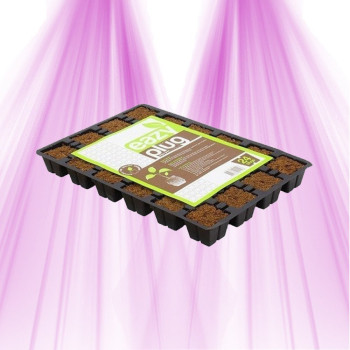
Seedling pots - Pots 7 x 7 x 8cm (Pack of 10)
In stock · Shipped within 24 h
4,75 € 5,00 €

Product successfully added to your shopping cart
Ça pousse dans le bon sens

9 products
Plastic pots have become essential for indoor growing. Lightweight, durable, and economical, they offer a practical solution for all stages of your plants' growth. From seedling trays to 11L pots for flowering, each size meets a specific need in your grow space.
Honestly, plastic pots have revolutionized indoor cultivation. Their main advantage? Weight. When you're handling dozens of pots in your grow tent, the difference is immediately noticeable. The Seedling Trays - Pots 7 x 7 x 8cm (Pack of 10) weigh a fraction of their terracotta equivalents, while maintaining excellent stability.
Drainage is where it all changes. Modern plastic pots incorporate optimized drainage systems. The 2L Pot - 13cm x 13cm - Draining Bottom perfectly illustrates this evolution: its perforations allow for perfect evacuation of excess water, preventing stagnation that kills roots. No need for clay pebbles at the bottom, the system does the work.
Hygiene also plays a crucial role. Plastic is easy to clean between two crops, unlike porous pots that retain bacteria and fungi. A quick wash with diluted bleach and you're ready for a new cycle.
Size is the primary criterion. For seedlings, 7x7x8cm trays are more than sufficient. The Seedling Tray - 7 x 7 x 8cm (unit) allows you to test before investing in a full pack. For vegetative growth, you generally move to 2L, then finish in 7L or 11L depending on the available space.
Shape also matters. Square pots like the 11L Grow Pot - Black Square - 25 x 25 x 25.5 cm optimize space in your grow tent. No wasted space between pots, unlike round formats. For a 120x120cm tent, you can easily fit 16 pots of 25x25cm.
The thickness of the plastic determines durability. Plastic that is too thin deforms with the weight of wet substrate. Quality pots retain their shape even after several grow cycles. The black color also limits the development of algae in the substrate exposed to light.
Volume directly influences root development. As a general rule: 1L per month of cultivation. For a 3-4 month cycle, the 7L Grow Pot - 20 x 20 x 25cm offers a good compromise between development and footprint.
For seedlings, 7x7x8cm trays are sufficient for 2-3 weeks. Then, repotting into 2L allows for 4-6 weeks of growth. For flowering, count on a minimum of 7L for optimal development, 11L if you have the space. This progression avoids the stress of late repotting while optimizing grow space in the early stages.
No, if they are well designed. Modern pots incorporate efficient drainage systems with holes of different sizes. The plastic itself does not absorb water, unlike terracotta, which allows for better watering control. The important thing is to ensure that excess water drains well through the drainage holes.
Absolutely, it's even one of their big economic advantages. Cleaning with diluted bleach (10%) between each crop eliminates pathogens and residues. Quality pots easily withstand 5-10 grow cycles. Just check that they don't have cracks that could harbor bacteria.
The phenomenon of "root bound" occurs when roots reach the sides and circle around. To avoid this, repot as soon as roots emerge from the drainage holes. Some growers also practice "air-pruning" by slightly elevating the pots so that the air naturally dries out any protruding root tips.
Square pots optimize grow space: in a 120x120cm tent, you can fit 16 25x25cm pots compared to only 9 equivalent round pots. However, round pots slightly promote root circulation because there are no corners where roots can get trapped. The choice depends on your priority: space optimization or maximum root development.
Available in 3 models
Available in 2 models
Available in 3 models
Available in 2 models
Available in 3 models
Help & advice
About Plastic pots — click a question to see the answer.
To choose the ideal pot size, I base my recommendation on your plant's growth stage. For seedlings and young sprouts, a small seed pot is sufficient. Then, I advise repotting gradually. For example, for vegetative growth, a 3 to 7-liter pot is often appropriate, and for flowering, an 11-liter pot or larger will offer enough root space for optimal development. The idea is to avoid over-sizing the pot too early to prevent excess moisture.
Using plastic pots with drainage holes is absolutely essential. These holes allow excess water to drain away, thus preventing stagnation and root rot, which is known as root asphyxiation. Without good drainage, your plants risk suffering from diseases and stunted growth. It's the foundation for good health for your crops.
For indoor growing, I recommend robust and opaque plastic pots. Black pots are very common because they block light, which is important to prevent algae development in the substrate. If you are concerned about root temperature, a white pot can be interesting as it reflects light better and limits heating. The important thing is that they are stable and easy to handle for repotting.
To repot, I advise you to first lightly water the plant in its old pot a few hours before. Prepare your new plastic pot with a layer of fresh substrate at the bottom. Gently grasp the plant by the base of the stem, turn the pot over, and tap to release the root ball. Place the plant in the new pot, add substrate around it, and tamp lightly. Water well after repotting to help root establishment. The goal is to minimize stress for the plant.
The most common mistake I see is a lack of drainage or using a pot that is too large for a young plant, which leads to excess moisture. Another mistake is not cleaning pots between crops, which can spread diseases. Finally, not regularly checking the condition of the roots by lifting the plant is a missed opportunity to detect a need for repotting or a problem.
In indoor growing, the choice between white or black plastic pots depends on the environment. Black pots are excellent for blocking light and preventing algae from developing, which is often my default choice. However, if your grow space tends to be hot and you fear root overheating, white pots may be preferable as they reflect heat better. I would say that for most setups, black is a safe choice.
To ensure good drainage, the first thing is to make sure your plastic pot has sufficient and well-distributed drainage holes at the bottom. I also advise using a quality, light, and airy substrate that doesn't compact too much. Avoid putting a layer of clay pebbles at the bottom of the pot; this can actually create a water retention zone. A good substrate and adequate drainage holes are more than enough.
Plastic pots are very practical for their lightness, durability, and cost. However, there are alternatives like fabric pots, which offer better root aeration and prevent root circling. I explain the advantages of fabric pots in more detail in this article. Terracotta pots are also an option, but they are heavier and dry out the substrate more quickly. The choice will depend on your priorities: practicality and economy for plastic, or superior aeration for fabric pots.
Cannot find your answer? 01 88 33 45 52 or by message.


