



































































Secret Jardin
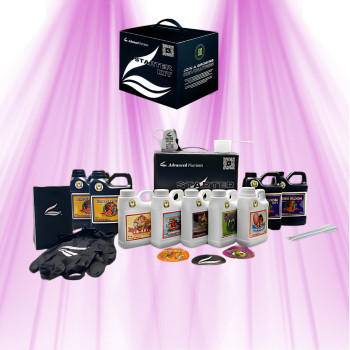
Cosmorrow 280W kits for flowering
Available in 4 models
In stock · Shipped within 24 h
529,99 € or 3× 176,66 €

Product successfully added to your shopping cart
Ça pousse dans le bon sens

28 products
A 100cm x 100cm - 1m² lighting area represents the most popular growing surface for both beginner and experienced indoor growers. This dimension perfectly matches standard grow tents and allows for optimizing space while maintaining precise control over the environment. Choosing the right lighting for this surface is crucial: too weak, your plants will stretch; too powerful, you risk light stress and overheating.
Horticultural LEDs have revolutionized indoor lighting, especially for surfaces like 1m². Unlike HPS, which generate a lot of heat (often 400W to heat as much as they illuminate), modern LEDs offer a luminous efficacy of 2.5 to 3 µmol/J. In practical terms, a well-designed 240W LED easily replaces a 400W HPS while halving your electricity bill. Thermal management becomes a breeze: no more oversized extractors and temperature problems soaring to 32°C in summer.
The other major advantage is the precision of the light spectrum. Modern full-spectrum LEDs integrate 660nm diodes for flowering, warm white 3000K for maturation, and even UV-A to stimulate resin production. On 1m², this spectral homogeneity makes all the difference: each plant receives exactly what it needs, without the typical shadow areas of poorly positioned HPS reflectors.
For a 1m² area, aim for between 35 and 50 actual watts per square foot, or 350 to 500W in total. Be careful with advertised watts versus actual watts: a "1000W LED" that only consumes 180W will never properly cover your space. Always check the actual consumption on the technical sheet. The PPFD (photosynthetic photon flux density) should reach 400-600 µmol/m²/s during vegetative growth and 600-900 µmol/m²/s during flowering.
Suspension height also plays a key role. For 1m², a quantum board LED is generally placed between 30 and 50cm from the canopy depending on power. COB LEDs require more distance (50-70cm) while LED bars can go down to 25cm thanks to their better distribution. Invest in a PAR meter or use a smartphone app to measure precisely: it's the only way to know if your plants are truly getting what they need.
Regarding cooling, even LEDs generate heat. For 1m², plan for an extractor of at least 150-200 m³/h with an intake fan of 100 m³/h. Quality LEDs integrate aluminum heatsinks and silent fans, but hot air extraction remains essential to maintain 24-26°C during the day.
For 1m², count between 350 and 500 actual watts depending on your goals. A 350W LED is perfectly suitable for growth and decent flowering, while 450-500W maximizes yields during flowering. Beyond 500W on this surface, you risk light stress: leaves yellow, curl, and growth slows down. Always start by hanging your lamp high (60-70cm) then gradually bring it closer while observing the plants' reactions. If new shoots whiten or upper leaves fold, you are too close or too powerful.
For 1m², LEDs are clearly superior to HPS today. A 400W HPS emits 1200-1400 BTU/h of heat compared to 800 BTU/h for an equivalent 350W LED. In a confined space like a 100x100cm tent, this difference is crucial: you save on air conditioning and extraction. LEDs also offer a lifespan of 50,000h compared to 10,000h for HPS, and their full spectrum better stimulates photosynthesis. The only advantage of HPS remains their lower initial purchase price, but over 2-3 years, LEDs pay for themselves through electricity savings.
The height depends on the type of LED and its power. For a 350W quantum board, start at 50cm from seedlings then lower to 30-35cm during vegetative growth and 25-30cm during flowering. LED bars can go lower thanks to their uniform distribution: 40cm initially, then 20-25cm at the end of the cycle. COB LEDs require more distance: 60-70cm minimum to avoid hot spots. Use the back-of-the-hand rule: if you feel heat by placing your hand under the lamp for 10 seconds, it's too close. The ideal is to measure the PPFD with a PAR meter for precise adjustment.
The 18/6 cycle (18h light, 6h darkness) is indeed the standard for vegetative growth on 1m². Program the light to turn on around 6-7 AM to take advantage of off-peak electricity hours and turn off around midnight-1 AM. This programming avoids electricity consumption peaks from 6-8 PM and optimizes your bill. Ensure that the 6 hours of darkness are continuous and total: even a small blue LED can disrupt the cycle. Use a reliable mechanical or digital timer, and regularly check that it is working correctly. Some growers prefer 20/4 to accelerate growth, but 18/6 remains the best compromise between growth and energy savings.
Yes, cleaning LEDs is essential to maintain their efficiency. Dust and residues can reduce light intensity by 10-15% in a few months. For 1m², clean your LEDs every 2-3 months with a slightly damp microfiber cloth (demineralized water only). Always turn off the lamp and wait for it to cool before cleaning. Avoid chemical products that can damage the diodes or optics. For quantum boards, gently dust between the heatsinks with a soft brush. If your setup generates a lot of humidity, install a dust filter on the intake fan to limit deposits on the LEDs. Regular cleaning extends lifespan and maintains optimal performance.
Available in 4 models
Available in 4 models
Available in 3 models
Available in 3 models
Available in 2 models
Available in 7 models
Available in 7 models
Available in 3 models
Available in 4 models
Available in 7 models
Available in 3 models
Help & advice
About 100cm x 100cm - 1m² — click a question to see the answer.
For a 1m² (100cm x 100cm) area, I generally recommend a true LED wattage of about 250 to 400 watts. This provides sufficient light coverage for most crops, from growth to flowering. The precise choice will depend on your objectives: a more intensive cultivation might benefit from higher wattages.
The ideal distance varies greatly depending on your LED's power and your plants' growth stage. For young seedlings, I often start at 60-75 cm. During the vegetative growth phase, I lower it to 45-60 cm, and for flowering, I can go down to 30-45 cm, or even less for very high-performance LEDs and robust plants. Observing your plants is your best guide: if leaves yellow or curl, the light is too intense or too close.
For flowering, I favor LEDs that have an accentuated red and far-red component in their spectrum. These wavelengths are crucial for stimulating flower and fruit production. I also look for good luminous efficacy (PPF/W) to maximize production without excessively increasing power consumption. A good balance between power and spectrum is key for successful flowering.
The most common mistakes I see are placing the LED too close to the plants, causing burns, or conversely too far away, which leads to etiolation. Another mistake is not adjusting the lighting schedule to the plant's needs (photoperiod). Finally, neglecting ventilation of the grow space can be detrimental, because even if LEDs generate less heat than HPS, good air circulation remains essential.
A good quality horticultural LED light has an impressive lifespan, often estimated at 50,000 to 100,000 hours. In practice, this means you can use it for many years without significant performance degradation. It's a higher initial investment than other technologies, but the longevity and energy efficiency largely compensate in the long run.
Cannot find your answer? 01 88 33 45 52 or by message.