





































































Garden HighPro
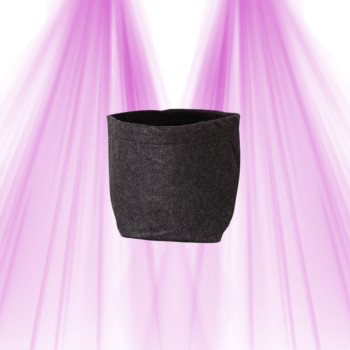
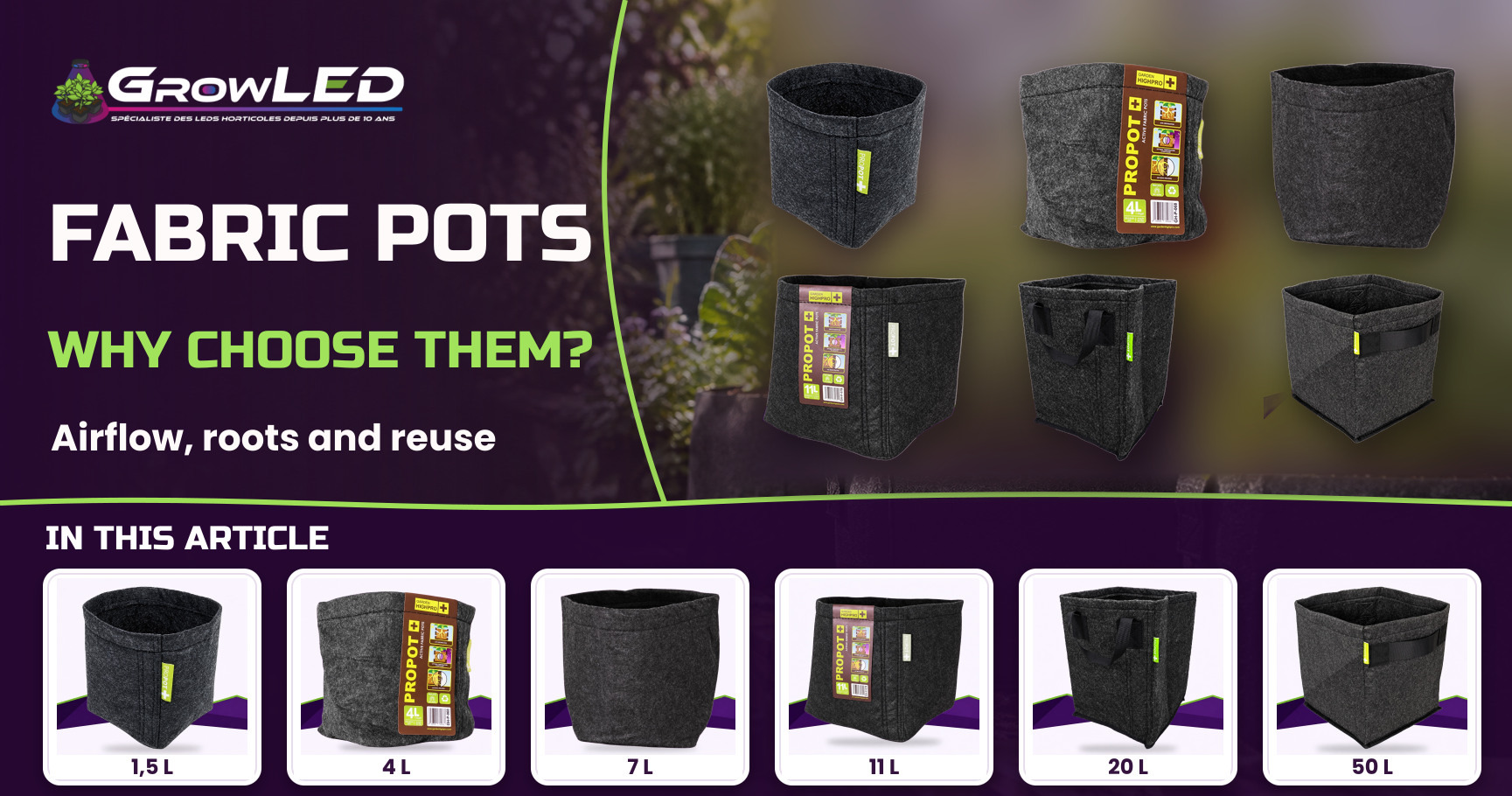
Textile pot 11L - 23 x 23 x 25cm
Available in 8 models
In stock · Shipped within 24 h
3,85 €

Product successfully added to your shopping cart
Ça pousse dans le bon sens

9 products
Fabric pots, also known as geotextile pots or smart pots, completely transform the way your plants develop their root system. Unlike traditional plastic pots, these breathable containers allow for natural "air-pruning" of roots, which prevents circling and boosts nutrient absorption. Honestly, once you've tried them, it's hard to go back.
The principle is simple yet brilliant: the porous fabric allows air to reach the roots. When a root reaches the wall, it naturally dries out upon contact with the air, stimulating the growth of new rootlets inside the pot. The result? A denser, more efficient root system, and plants that grow faster with better stress resistance.
Root aeration is where it all changes. With a plastic pot, roots circle around the walls and eventually strangle themselves. Geotextile fabric breaks this cycle by allowing constant gas exchange. Oxygen reaches the roots directly, CO2 exits, and the root zone remains healthy.
Thermal regulation is another huge advantage. The fabric dissipates heat much better than black plastic, which can reach 40°C under the lights. Your roots stay cool, even with powerful HPS or LED lights. And in terms of drainage, it's impossible to do better: excess water drains naturally without risk of rot.
On the practical side, these pots fold and store easily when empty. No more clutter from rigid plastic pots in the closet. And contrary to what you might think, they are quite durable and can last several cycles if properly maintained.
Size is the number one criterion. For plants that will grow to 80cm to 1m, count on a minimum of 15-20 liters. For large plants of 1m20 and more, go for 30-40 liters. The larger the pot, the more the root system can develop, and the more stable and productive the plant will be.
Fabric thickness also matters. Thin models (200-300 GSM) are economical but less durable. Thicker versions (400-500 GSM) last longer and offer better thermal insulation. For intensive use, it's better to invest in sturdy ones from the start.
Pay attention to handles: they greatly facilitate handling, especially with large volumes. Moving a 40-liter pot full of substrate without handles is guaranteed hell. Also, check that the seams are well reinforced, otherwise you risk an unpleasant surprise during growth.
For a plant that will reach 1m20, you need a minimum of 30 liters, ideally 40-50 liters if you have the space. This size allows the root system to develop properly without limitation. With a pot that is too small, the plant will quickly become cramped and its growth will slow down. The larger the root volume, the more nutrients and water the plant can draw, which translates into better final production.
After harvesting, completely empty the substrate and shake the pot well to remove any residue. Rinse with clear water to remove fertilizer salts, then wash with a diluted bleach solution (1 part bleach to 10 parts water) to disinfect. Soak for 15 minutes, rinse thoroughly, and let dry completely before storage. Avoid using a washing machine, which can damage the fibers and seams. With this treatment, your pots can easily last 3-4 cycles.
Yes, it's essential indoors! The fabric allows water to pass through, so without a saucer, you will flood your floor or tent. Choose saucers that are wide enough because water can flow out the sides of the pot. Be careful not to leave stagnant water in the saucers for more than 24 hours, as this promotes mold and pests. Empty regularly or use saucers with drainage if you have an automated system.
No, absolutely not! These roots that grow through the fabric will naturally dry out upon contact with the air; this is the very principle of air-pruning. This drying stimulates the formation of new rootlets inside the pot, creating a denser and more efficient root system. If you cut these roots, you break this natural process and risk stressing the plant. Let nature take its course; it does its job very well.
The difference is huge! In a plastic pot, roots circle around the impermeable walls and end up coiling around themselves (root circling). This limits nutrient absorption and weakens the plant. The fabric pot allows roots to "breathe": air passes through the fabric, root tips naturally dry out, and stimulate the growth of new rootlets. The result: a root system 2 to 3 times denser, better absorption, and more vigorous plants. It's like comparing a sponge to a concrete block for aeration.
Available in 8 models
Available in 8 models
Available in 8 models
Available in 8 models
Available in 8 models
Available in 8 models
Available in 8 models
Available in 8 models
Help & advice
About Textile pots — click a question to see the answer.
There are many benefits! I would say the main one is air-pruning, which promotes a dense and fibrous root system, without circling. This significantly improves nutrient and water absorption. Furthermore, these pots offer better substrate aeration, preventing root asphyxiation and reducing the risk of diseases. It's truly a game changer for your plants' health.
The fundamental difference lies in the breathability of the material. Plastic pots are closed containers that can lead to root circling and poor aeration. Fabric pots, on the other hand, allow air to circulate through their walls, which triggers air-pruning and encourages much healthier and more efficient root development. This is what makes all the difference in terms of plant vigor.
Choosing the right size is crucial! I recommend considering the expected final size of your plant and the type of cultivation. For small to medium-sized plants, a 3 to 10-liter pot is often sufficient. For larger plants or a longer growth cycle, I advise opting for 15, 20-liter pots, or even larger. Don't hesitate to consult specific guides for your varieties for more precise recommendations. I explain in more detail why choose fabric pots in this article.
Air-pruning is a natural and very beneficial process. When roots reach the walls of the fabric pot, they are exposed to air and lower humidity, which prevents them from continuing to lengthen and circle. Instead, the plant develops new secondary roots inside the pot, creating a much denser, fibrous, and more efficient root system for absorption. It's a natural method to optimize root mass.
The main mistake I often see is overwatering at the beginning. Since fabric pots drain and aerate better, the substrate can dry out faster, but it's important not to overcompensate by watering too frequently initially. Learn to know the weight of the pot when watered and when dry. Another mistake would be not using a quality substrate that retains moisture well while being aerated. Finally, make sure your saucer is large enough to collect drainage.
Absolutely! I would even say they are particularly well-suited for indoor cultivation, and even more so under LED lighting. The controlled indoor environment, combined with the efficiency of LEDs, is ideal for maximizing the benefits of fabric pots. Better aeration and optimized root development allow your plants to better utilize light and nutrients, resulting in more vigorous growth and potentially higher yields.
I recommend fabric pots for practically all potted crops, whether it's vegetables, herbs, flowers, or ornamental plants. They are particularly effective for plants that need a healthy and well-developed root system, such as tomatoes, peppers, strawberries, or even citrus fruits. In indoor cultivation, they are, in my opinion, a superior choice for most species.
Cannot find your answer? 01 88 33 45 52 or by message.