



































































Lumatek
Lumatek Zeus 600W PRO 3.1 - Multi-Bar System by Lumatek - Sold complete
Available in 5 models
In stock · Shipped within 24 h
1 089,00 € or 3× 363,00 €

Product successfully added to your shopping cart
Ça pousse dans le bon sens

102 products
A grow tent is your enclosed and controlled growing space for cultivating your plants indoors all year round. No more hassle with light spilling everywhere or odors escaping: everything is confined within a controlled environment. Whether you have 1m² or 10m² available, there's definitely a grow tent suited to your setup.
These reflective fabric structures create a perfect microclimate where you control temperature, humidity, ventilation, and lighting. This is the foundation of any serious indoor growing setup.
First, light isolation. With an enclosed tent, your LED or HPS lighting remains confined inside – no light pollution disturbing neighbors or disrupting your plants' day/night cycle. The Mylar walls reflect 95% of the light, which truly optimizes the efficiency of your lamps.
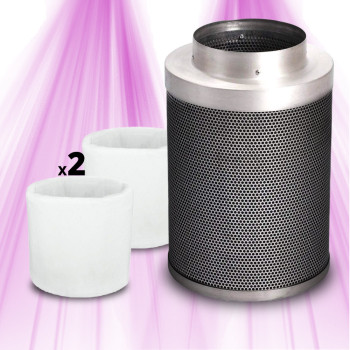
Next, odor control. Thanks to the openings provided for extraction, you can easily install a carbon filter that completely neutralizes odors. No more stress about smells escaping into your apartment or house.
Climate regulation is also a huge advantage. In an enclosed space, your ventilation system works much more efficiently. You can easily maintain 22-26°C and 50-60% humidity, the perfect parameters for growth.
Size is the number one criterion. To start, a 60x60x160cm tent is ample for 2-4 plants. If you have more space, 80x80x160cm or 100x100x200cm models allow for larger yields. Measure your room carefully beforehand, including space to open the doors!
The fabric thickness also matters. Entry-level models use 210D, which is decent but fragile. Pro versions go up to 600D or 1680D – much more tear-resistant and better insulated thermally.
Check the openings: you need at least one fresh air intake at the bottom, an extraction outlet at the top, and sealed passages for electrical cables. Recent models often include observation windows, which are very practical for monitoring without opening.
Double zippers with Velcro flaps ensure perfect light sealing. This is crucial during the flowering phase where the slightest stray ray can disrupt the cycle.
Allow at least 20cm of clearance around the tent for ventilation and door opening. For an 80cm wide closet, opt for a maximum 60x60cm. In a dedicated room, you can go bigger: 120x120cm or even 150x150cm. Don't forget the ceiling height – you need at least 200cm to install lighting and allow plants to grow. A tent that's too large in a small space quickly becomes unmanageable.
Square tents optimize light distribution better – your lamp illuminates uniformly from the center. Rectangular models are suitable for confined spaces like hallways or sloped ceilings. However, with an elongated shape, you may need to install two light sources to cover it properly. 60x60, 80x80, and 100x100cm remain the most versatile formats for beginners.
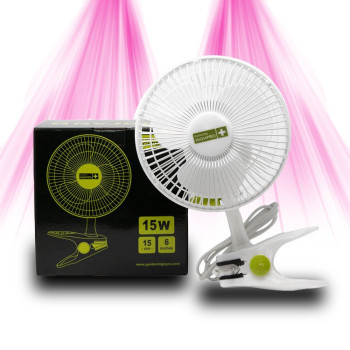
Plan for an extractor of 100 to 150m3/h for a 60x60cm tent, 200-300m3/h for an 80x80cm. Passive intake is usually sufficient – a simple opening with a light-proof sock at the bottom of the tent. Add a carbon filter to the extraction if odors are an issue. A 15-20cm oscillating fan improves air circulation and strengthens stems. Control everything with a thermostat to maintain 24-26°C.
First, assemble the metal frame, then slide on the fabric, ensuring all corners are taut. Close all openings with the provided Velcro, except those used for ventilation. Test the seal by turning on the lighting and turning off the room light – no rays should filter through. Zippers must be perfectly aligned and the Velcro flap securely pressed down. Also check cable passages with the sealed sleeves.
Monitor with a digital hygrometer: 60-70% during growth, 40-50% during flowering. If it's too dry, place a humidifier or water trays. Too humid? Increase extraction or add a dehumidifier. Clean extraction filters every 2-3 months depending on usage. Check that oscillating fans spin freely – dust accumulates quickly on the blades. Complete air exchange every 2-3 minutes maintains a healthy environment.
Available in 5 models
Available in 4 models
Available in 4 models
Available in 2 models
Available in 3 models
Available in 2 models
Available in 2 models
Help & advice
About Culture box — click a question to see the answer.
An indoor grow tent is, above all, a dedicated space optimized for the growth of your plants indoors. I see it as a protective bubble where you can control all essential parameters: light, temperature, humidity, and ventilation. It allows for light confinement, prevents olfactory nuisances, and creates an ideal microclimate, regardless of external conditions. It's the key to successful and consistent harvests.
To choose your tent, I advise you to start by evaluating the available space in your home and the number of plants you wish to cultivate. Then, consider the quality of the materials: a thick reflective fabric (Mylar or Diamond) is essential for good light diffusion and insulation. Don't forget to check the sturdiness of the structure, the quality of the zippers, and the presence of openings for ventilation ducts and electrical cables. It's an investment that should last!
The size of your tent directly depends on your ambitions and the space you have available. For a beginner or a small space, I often recommend a 60x60cm or 80x80cm tent, perfect for 1 to 4 plants. If you're aiming for larger production, a 100x100cm or 120x120cm will be more suitable. What's crucial is not to overcrowd: it's better to have fewer well-developed plants than too many cramped ones. Also, consider the height, especially if you plan for tall-growing plants or specific cultivation systems.
This is a frequent and essential question! The power of your LED lighting must be adapted to the surface area of your tent. As a general rule, I recommend about 200 to 300 watts of LED for a 60x60cm tent, and 300 to 450 watts for an 80x80cm. For a 100x100cm tent, aim for 450 to 600 watts. These are averages, as the actual performance also depends on the type of LED (COB, Quantum Board, etc.) and their luminous efficacy. The goal is to ensure uniform coverage and sufficient light intensity for your plants' photosynthesis.
Ventilation is a pillar of grow tent cultivation, I can't stress it enough! You need an air extractor to remove hot, stale air, and an intake fan (passive or active) to bring in fresh air. The extractor's flow rate must be sufficient to renew the air in your tent every 1 to 3 minutes. I always add a carbon filter to the extractor to neutralize odors, which is essential. Finally, a small fan inside the tent is excellent for circulating air and strengthening your plants' stems. Good ventilation also helps regulate temperature and humidity, and prevents diseases.
In my experience, the most common mistakes are often related to excess or deficiency. Avoid overwatering; it's the primary cause of plant mortality. Don't neglect ventilation; poor air circulation can lead to mold or pest problems. Another mistake is not adapting the lighting to the plant's growth phase, or placing it too close/far. Finally, I often see growers who don't measure key parameters (temperature, humidity, pH); these data are crucial for adjusting your environment. To reduce your electricity consumption, I invite you to read this article.
For a beginner, I recommend a modest-sized tent, such as a 60x60cm or 80x80cm. They are easier to manage in terms of climate and maintenance. The important thing is to choose a tent with good quality fabric and zippers, as this ensures light impermeability and durability. Don't hesitate to opt for a complete kit if your budget allows, as this greatly simplifies the initial setup. The idea is to start simply to familiarize yourself with the basics before moving on to more complex installations.
Cannot find your answer? 01 88 33 45 52 or by message.