Post-harvest accessories: essential equipment to finalize your indoor cultivation
Post-harvest accessories are crucial for preserving the quality of your production. Between drying, curing, and storage, each step requires specific tools. Ventilated dryers, precision scales, humidity regulators... These pieces of equipment make the difference between a decent harvest and a perfectly preserved one.
Why invest in quality post-harvest accessories
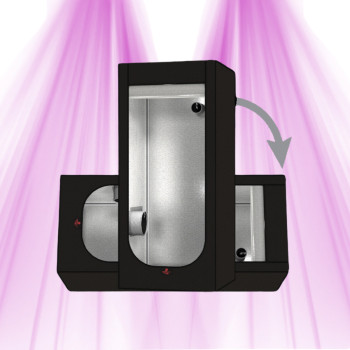
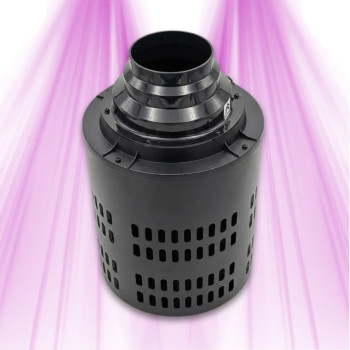
Drying is the most delicate step. Poor drying can ruin months of work in just a few days. Passive dryers are suitable for small quantities, but as soon as the volume increases, a ventilated system becomes essential. The Ventilated drying net with odor filter - 60cm diameter - 4 tiers combines efficiency and discretion thanks to its integrated filter.
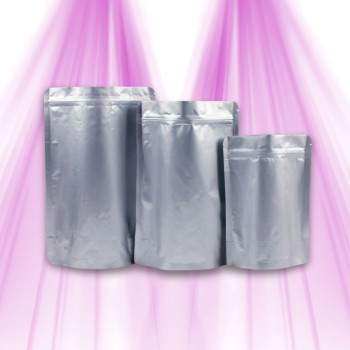
Curing requires precise humidity control. Between 58% and 62% RH is the ideal zone to develop aromas without risking mold. Regulator packets like Boveda or Integra Boost automatically maintain this level, even in airtight jars. Honestly, it's complete peace of mind.
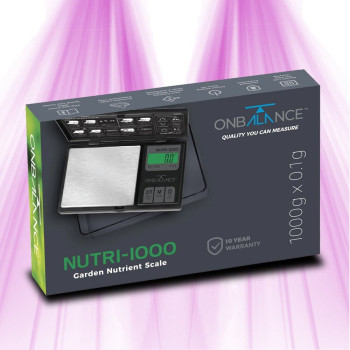
Precision scales allow you to accurately dose your preparations and monitor the drying process. A scale accurate to 0.01g changes everything when working with extracts or concentrates.
How to choose your post-harvest accessories
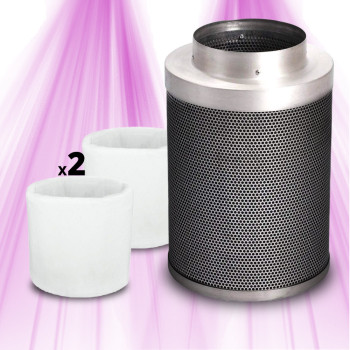
For drying, the size of your harvest determines the type of equipment. Up to 200g dry, a 60cm passive net is sufficient. Beyond that, opt for a ventilated system that speeds up the process while homogenizing the temperature. Models with carbon filters eliminate odors, a significant plus.
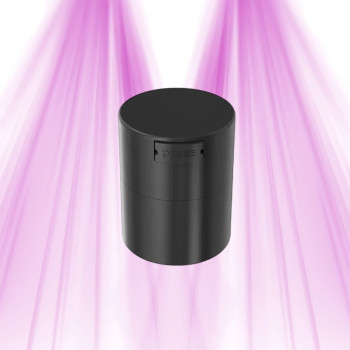
For storage, glass jars remain the benchmark. Airtight and neutral, they preserve aromas long-term. Combined with humidity regulator packets, they create a stable environment. Count 1 x 8g packet for 30g of material in a 500ml jar.
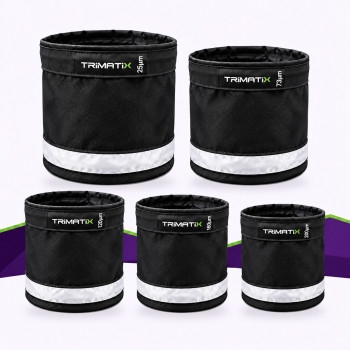
Manual trimmers are suitable for small productions. Fast and precise, they preserve trichomes. Automatic versions handle large volumes but require more investment. It's up to you to decide based on your production scale.
Frequently asked questions
Which dryer to choose between a passive dryer and a dryer with controlled ventilation?
A passive dryer is suitable for small harvests (less than 100g) in a stable environment at 18-20°C and 50-60% RH. A ventilated dryer becomes essential for larger volumes or difficult-to-control environments. Ventilation homogenizes the temperature, speeds up drying by 2-3 days, and reduces the risk of mold. Models with filters also eliminate odors during the process.
How to maintain the ideal humidity level during curing and storage?
Optimal curing is between 58% and 62% relative humidity. Bidirectional regulator packets (Boveda, Integra Boost) automatically maintain this level in airtight containers. An 8g packet treats approximately 30g of material in a 500ml jar. Replace them when they become rigid, usually after 2-6 months depending on conditions. A digital hygrometer allows you to check stability.
What precision scale do I need to accurately weigh my harvest?
For harvest monitoring, gram accuracy is sufficient for a range of 2-5kg. For extracts and concentrates, aim for 0.01g accuracy with a range of 100-500g. Scales with a tare function and removable tray facilitate repeated weighings. Avoid models that are too sensitive to vibrations if your grow space is nearby. Regular calibration with calibration weights ensures measurement reliability.
How to properly use humidity regulation packets (Boveda, Integra Boost)?
Place the packet directly in the container with your harvest, without prolonged direct contact with the material. An 8g packet treats 30g of product, 67g for 450g of material. Bidirectional packets add or remove humidity as needed. Replace them when they become completely hard. Boveda can be partially regenerated in an oven at 200°C for 1 hour, Integra Boost with distilled water for 1-2 days.
Should I use a manual or automatic trimmer, and what are the differences?
A manual trimmer offers more control and better preserves fragile trichomes. It is suitable for small productions and delicate varieties. An automatic trimmer processes large volumes quickly but can be more aggressive. Rotary drum models give good results on well-dried material. For beginners, start with a manual version to learn the techniques before investing in an automatic one.