Aller au contenu principal
8 produits

pH - or pH +

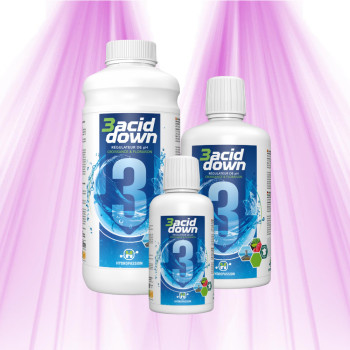
pH - and pH + Regulators: Master Your Nutrient Solution's Balance

pH - and pH + correctors are essential for maintaining the optimal pH of your nutrient solution in hydroponic cultivation. These regulators allow you to precisely adjust the acidity or alkalinity of your irrigation water, ensuring maximum nutrient absorption by your plants. An im...

pH - and pH + Regulators: Master Your Nutrient Solution's Balance

pH - and pH + correctors are essential for maintaining the optimal pH of your nutrient solution in hydroponic cultivation. These regulators allow you to precisely adjust the acidity or alkalinity of your irrigation water, ensuring maximum nutrient absorption by your plants. An imbalanced pH can block the assimilation of nutrients, even with the best fertilizers.

Why use pH correctors in indoor cultivation

pH control is crucial because each nutrient is assimilated within a specific pH range. In hydroponics, the ideal pH is between 5.5 and 6.5, while in soil, it ranges between 6.0 and 7.0. pH - correctors (generally phosphoric acid) lower a pH that is too high, while pH + (potassium hydroxide) raise a pH that is too low. This precision helps prevent nutritional deficiencies and root lockouts that can ruin a crop. Modern formulations are buffered to prevent sudden pH drops that stress roots.

How to choose and dose your pH correctors

The choice depends on your system and the quality of your starting water. Hard water will require more pH - than soft water. Always start with small doses: a few drops per liter are often enough. Measure with a calibrated digital pH meter, never with imprecise strips. Concentrated correctors are more economical but require more caution in dosing. Some growers prefer diluted versions to start, which are more forgiving of handling errors.

Frequently asked questions about pH regulators

Which pH - or pH + should I choose for my hydroponic indoor cultivation system?

For hydroponics, opt for a pH - based on phosphoric acid and a pH + based on potassium hydroxide. These formulations are specifically designed for soilless systems. Phosphoric acid provides assimilable phosphorus, while potassium hydroxide enriches with potassium. Avoid pool correctors that contain stabilizers toxic to plants. The "Hydro" versions from major brands are formulated not to disrupt the electrical conductivity of your solution.

How do I dose pH + or pH - to adjust the pH of my nutrient solution without risking burning the roots?

Always dose drop by drop, mixing well between each addition. Start with 0.5 ml per liter, mix for 30 seconds, then measure. Repeat until you reach the target value. Never pour directly onto roots or into a reservoir without prior dilution. Prepare your solution in a separate container before adding it to the main reservoir. Overdosing can cause irreversible chemical burns to the root system.

What is the difference between pH - and pH + from brands like Canna or Platinium, and which is the most effective?

The differences lie in concentration and formulation. Canna offers buffered correctors that limit sudden variations, ideal for beginners. Platinium offers more concentrated versions, economical for large volumes. "Pro" correctors often contain stabilizing agents that maintain pH longer. Effectiveness primarily depends on your starting water: very hard water will react better with certain formulations than with others.

How do I set up and use a pH meter to check the pH before adding fertilizer or booster?

Calibrate your pH meter with pH 4.0 and pH 7.0 standard solutions before each significant use. Dip the electrode into the solution, wait for stabilization (30-60 seconds), then read the value. Rinse the electrode with distilled water between each measurement. Store the electrode in a specific storage solution, never in pure water, which damages the membrane. Replace the electrode every 12-18 months depending on usage to maintain accuracy.

How often should I maintain my reservoir and rinse after using pH - or pH + to prevent salt buildup?

Drain and clean your reservoir every 2-3 weeks in hydroponics, or whenever the conductivity exceeds 2.5 EC. pH correctors leave saline residues that accumulate and disrupt the nutritional balance. Use a clear water rinsing solution for 24 hours before refilling with a new solution. Clean the walls with a soft brush and rinse thoroughly. This preventive maintenance avoids pump blockages and nutritional imbalances that slow growth.

Showing 1 - 8 of 8 items
What is the ideal pH for hydroponics?
   

As an expert, I would tell you that the ideal pH for most hydroponic crops is generally between 5.5 and 6.5. It is within this range that the majority of nutrients are most readily absorbed by plants. However, this is not a strict rule; some plants may prefer a slightly more acidic or alkaline pH, but it's an excellent starting point.

What are pH- and pH+ regulators used for?
   

pH- and pH+ regulators are essential tools for any hydroponic grower. Their role is to adjust the acidity or alkalinity of your nutrient solution. pH- (pH down) is used to lower the pH when it is too high, while pH+ (pH up) is used to increase it if it is too low. Without these adjustments, your plants would not be able to absorb nutrients properly, even with the best fertilizers.

How do I adjust the pH of my nutrient solution?
   

To adjust the pH, I advise you to proceed in steps. First, measure the pH of your solution. If the pH is too high, add a small amount of pH-; if it's too low, add pH+. Mix well and wait a few minutes before re-measuring. Repeat the process until you reach the desired range. It is crucial to go gradually to avoid shocking your plants.

How do I measure pH in hydroponics?
   

To measure pH in hydroponics, I recommend using a good quality electronic pH tester. This is the most accurate and reliable tool. You can also use test strips or liquid test kits, but their accuracy is lower. Remember to calibrate your electronic tester regularly to ensure accurate measurements.

What mistakes should I avoid with pH regulators?
   

What I often see is the mistake of trying to adjust the pH too quickly. You should avoid adding large quantities of regulator at once, as this can create extreme fluctuations and stress your plants. Another mistake is not measuring the pH regularly. Finally, make sure to mix the solution well after each addition and let it stabilize before re-measuring.

How often should I check the pH per day?
   

In practice, I advise checking the pH at least once a day, especially if you are a beginner or if your plants are in a rapid growth phase. The pH can fluctuate depending on nutrient absorption by plants, temperature, and even evaporation. Regular monitoring will allow you to quickly correct any imbalance and ensure the health of your crops.

What pH for which plants in hydroponics?
   

While the general range of 5.5 to 6.5 is an excellent starting point, some plants have specific preferences. For example, tomatoes and peppers prefer a pH around 6.0-6.5, while lettuces and herbs can tolerate a slightly lower pH, around 5.5-6.0. I recommend you research the specific needs of your crops for optimal adjustment. For more general advice on fertilizers, you can consult this article on Advanced Nutrients which discusses the importance of good nutrition.

Perfect pH Torus Hydro vs chemical regulators, what's the difference?
   

The main difference lies in the mode of action. Chemical regulators (pH- and pH+) are acids and bases that are manually added to modify the pH. The Perfect pH Torus Hydro, on the other hand, is a passive and autonomous pH regulation system. It uses ion-exchange resins to continuously stabilize the pH of your nutrient solution, thereby reducing the need for manual interventions. It's an interesting solution for those seeking more stability and less maintenance.

Blog navigation

Latest posts

VIVOSUN Grow Cam 6mm 2K QHD WiFi Grow Camera

Tired of anxiety when you're away from your grow? The VIVOSUN Grow Cam 6mm 2K QHD WiFi Grow Camera lets you keep an...

Read more
STOP à la Tourbe ! Découvrez les 4 Meilleurs Substrats Écologiques pour une Culture Indoor Explosive

Le monde du jardinage connaît une transformation silencieuse mais profonde. Face à l'urgence climatique et à la prise...

Read more
Master Pack PRO Advanced Nutrients: Created by GrowLED for demanding growers!

When you're starting out or looking to optimize your indoor growing, the hardest part is often choosing the right...

Read more