






































































Prima Klima
Extraction Pack PK125 -L - PrimaKlima 125 Extractor - 360 m3/h - Combi sheath…
Available in 3 models
Ships within 2 weeks
107,43 € 113,08 € or 3× 35,81 €

Product successfully added to your shopping cart
Ça pousse dans le bon sens

3 products
A duct extractor pack is the turnkey solution for efficiently ventilating your growing space. These kits include everything you need: extractor, exhaust ducting, and connection accessories. No more separate purchases and compatibility issues; you get a functional system right away.
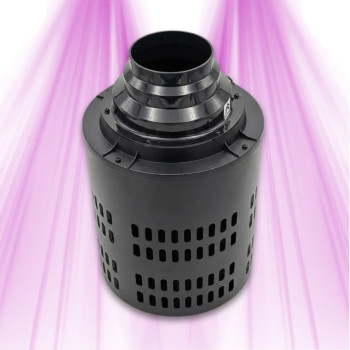
The main advantage is the ease of installation. All components are sized to work together perfectly. The Extraction Pack PK125 -L - PrimaKlima Extractor 125 - 360 m3/h - Combi Duct 127mm - 3m - Clamp 125-175mm perfectly illustrates this approach: 360 m3/h extractor, adapted ducting, and clamps included. No need to calculate diameters or search for the right fittings.
These packs also prevent beginner mistakes. How many growers end up with ducting that's too small or unsuitable clamps? With a kit, manufacturers have already done the compatibility work. The PrimaKlima 125mm extractor, for example, only develops its nominal power with the correct duct diameter and proper installation.
In terms of savings, it's often more advantageous than buying separately. Brands offer these packs to build loyalty and simplify the purchase process. The result: you pay less for a coherent and tested setup.
The extraction power directly depends on the volume of your space. For a 1m³ grow tent, aim for a minimum of 150-200 m3/h. For 2m³, go for 300-400 m3/h. The basic calculation: volume × 20 to 30 for effective air exchange. But be aware of pressure losses with ducting and elbows.
The duct diameter directly influences performance. 100mm is suitable for small spaces, 125mm remains the standard for most installations, and 150mm for larger volumes. Ducting that's too small restricts the extractor, while ducting that's too large creates turbulence. Manufacturers size their packs to avoid these pitfalls.
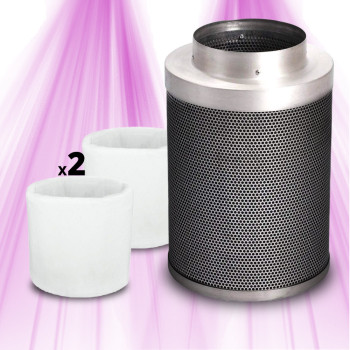
Also, check what's included in the pack. Some, like the Prima Klima Extractor Pack 125mm 1 speed + carbon filter, directly integrate the odor filter. Others only include the extractor and ducting. Define your needs before purchasing.
The length of ducting provided also matters. 3 meters are usually sufficient for a standard installation, but check according to your setup. It's better to plan generously than to have to buy additional ducting.
For a 2m³ tent, aim for a minimum 300-400 m3/h extractor. This power ensures air exchange every 3-4 minutes, essential for maintaining stable temperature and humidity. Take into account pressure losses: ducting, elbows, and filters reduce the actual flow rate by 20-30%. A 360 m3/h extractor like the one in the PrimaKlima pack is perfectly suited for this volume.
External installation is preferable for several reasons. First, you save space inside the tent for your plants. Second, the extractor heats up slightly during operation, and this heat does not dissipate into the growing space. Finally, access for maintenance is easier. Mount the extractor on the wall or a stable support, connect it with the ducting provided in the pack.
Use the clamps provided in the pack for a sealed connection. Push the ducting at least 5-8 cm onto the extractor outlet, then tighten the clamp firmly. Avoid sharp bends that create turbulence and reduce flow. If you need to bend the ducting, do it gradually over a long length. Check for leaks by running your hand around the connections during operation.
It depends on the chosen pack. Some kits, like the Prima Klima pack, directly include the carbon filter, while others are limited to the extractor and ducting. Carefully check the contents before purchasing if odor filtration is important to you. A carbon filter reduces the flow rate by about 20-25%, so consider this in your power calculation. If your pack doesn't include one, you can always add it separately.
Clean the extractor every 2-3 months to maintain its performance. First, unplug the device, remove the protective grille, and vacuum the blades with a soft brush. Avoid direct water on the motor. For the ducting, shake it regularly to remove accumulated dust. If it's heavily soiled, replace it rather than washing it. A clean extractor consumes less energy and lasts longer.
Available in 3 models
Available in 3 models
Help & advice
About Sheath extractor pack — click a question to see the answer.
A duct extractor kit is primarily the solution for renewing the air in your grow space. I recommend it for expelling hot, stale air, as well as for controlling humidity and odors. It's a key element for maintaining a healthy environment conducive to your plants' growth.
Installation is generally simple with a kit! I always start by fixing the extractor at height, inside or outside the tent, then I connect the ducting to the inlet and outlet. I make sure the connections are airtight to prevent air leaks. Then, simply plug in the device and check its proper functioning.
The power depends directly on the size of your grow. If you have a small tent, an extractor of 150 to 250 m³/h may suffice. For larger spaces or powerful lighting, I often go up to 400 m³/h and more. The goal is to renew the air every 2 to 5 minutes for optimal ventilation.
The ducting size must match the outlet diameter of your extractor. The most common diameters are 100mm, 125mm, 150mm, and 200mm. I recommend not using ducting smaller than the extractor's outlet, as this would significantly reduce its efficiency and increase noise.
The main difference lies in their design and pressure. A duct extractor (centrifugal) is designed to overcome air resistance, especially that of a carbon filter or a long duct, and offers a constant flow rate. An axial fan is simpler, less powerful in terms of pressure, and I reserve it more for circulating air inside the tent or for extractions without constraints.
The most frequent mistake I see is undersizing the extractor relative to the tent's volume or the heat generated. You should also avoid ducts that are too long or have too many bends, as they drastically reduce the flow rate. Finally, never neglect regular maintenance of the carbon filter if you use one, to maintain good air quality.
Cannot find your answer? 01 88 33 45 52 or by message.


