


































































BloomLED
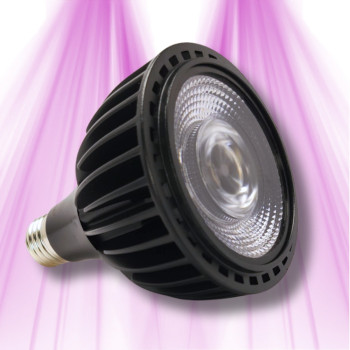
E27 LED horticultural bulb for plants SpectraBULB X30 - 35W
Available in 3 models
In stock · Shipped within 24 h
85,90 € or 3× 28,63 €

Product successfully added to your shopping cart
Ça pousse dans le bon sens

7 products
Intensive cultivation in a 40x40cm space represents the art of getting the most out of a small 0.2m² area. This technique pushes optimization to its peak: every square centimeter counts, every watt of lighting must be utilized. Unlike larger setups, here the focus is on density and precision to achieve impressive yields despite the limited surface area.
The main advantage? Total control over a small environment. With only 0.16m² of floor space, you can adjust temperature, humidity, and lighting to the precise degree. Energy costs remain under control: a 100-150W LED panel is more than enough, whereas a traditional setup would require a minimum of 400W. Ventilation is also simplified – a 100m³/h extractor fan does the job perfectly.
This approach is ideal for beginners who want to learn without breaking the bank, but also for experienced growers testing new varieties. The full cycle can be managed in 8-12 weeks depending on the genetics, with often surprising results when parameters are mastered.
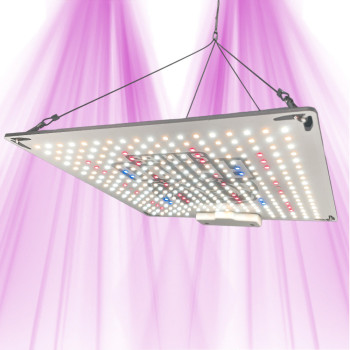
Lighting remains the key. For 0.16m², aim for 600-800 µmol/m²/s in PPFD. A 120-150W full spectrum LED panel placed 30-40cm high usually does the trick. Avoid older HPS technologies, which generate too much heat in such a small volume.
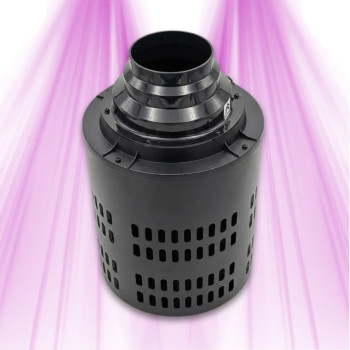
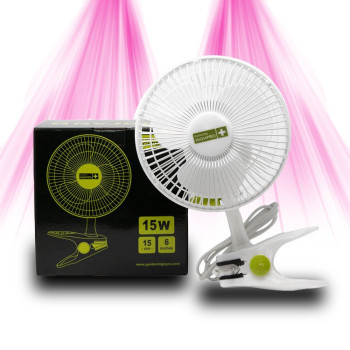
Ventilation requires finesse. A 100-150m³/h extractor fan with a dimmer allows you to adjust air exchange according to the growth phases. Passive intake is often sufficient, but be careful of hot spots that quickly form in the corners. A small 15cm oscillating fan helps to homogenize the atmosphere.
For the substrate, opt for pots of 3-5L maximum. Beyond that, you're wasting space. Hydroponic systems like DWC or NFT work very well on this surface, but require more monitoring than good aerated soil.
For a 0.16m² area, a 100-150W LED panel is ample. Look for a full spectrum (3000K-6500K) with Samsung LM301B diodes or equivalent. The optimal distance is between 30-40cm from the top of the plants. Avoid overly powerful panels that would create light stress and hot spots difficult to manage in such a confined space. A good panel should have at least 2.5 µmol/J efficiency to be cost-effective in the long run.
In intensive cultivation in 40x40cm, count 1-2 plants maximum depending on the technique used. A single plant using SCROG (Screen of Green) with a trellising net optimizes horizontal space. Two plants using SOG (Sea of Green) with a short vegetative period (2-3 weeks) also works very well. Beyond that, you create competition for light and root space, which reduces overall yield. The goal is to uniformly fill the canopy 20-30cm under the light.
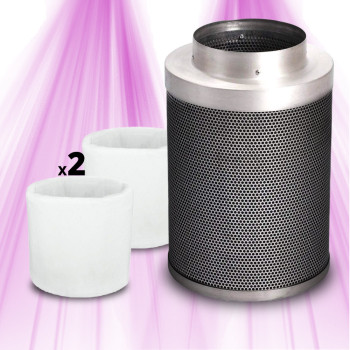
Ventilation in such a compact space requires precision. Install a 100-150m³/h extractor fan at the top with a dimmer to adjust according to growth phases. Passive intake at the bottom is usually sufficient, but ensure it's 20% more than the extraction. Add a small 15cm oscillating fan to circulate the air and prevent stagnant zones. Maintain humidity between 40-60% with an accurate digital hygrometer, and don't hesitate to increase extraction if it exceeds 65%.
In intensive cultivation in 0.16m², maintain 22-26°C during the light period and 18-22°C during the dark period. Humidity varies by phase: 60-70% during vegetative growth, then gradually decrease to 40-50% during flowering to prevent mold. In such a small volume, variations are more abrupt than in a large setup. Use a thermo-hygrometer with remote probes to monitor multiple points. A small 500ml/day dehumidifier can be useful at the end of flowering if extraction is not enough.
Cleaning between cycles is crucial in intensive cultivation where pathogens spread quickly. Remove all substrate and plant residues, then disinfect the walls with 70% alcohol or a diluted bleach solution (10%). Clean the ventilation system, change filters if necessary, and check the condition of the ducts. Allow to dry for 24-48 hours before restarting. Take the opportunity to calibrate your measuring instruments and check for light leaks. A rigorous cleaning cycle every 3-4 months ensures optimal sanitary conditions for your next grows.
Available in 3 models
Available in 3 models
Available in 3 models
Help & advice
About Intensive Culture — click a question to see the answer.
For intensive cultivation in a 40x40cm area, I generally recommend an LED power of approximately 60 to 100 actual Watts. The goal is to ensure good light penetration and effectively cover the entire surface. If you're aiming for very high yields, you can even go a bit higher, but be mindful of heat management. The important thing is to find the right balance between power and efficiency to avoid wasting energy.
The ideal distance really depends on the power of your LED and the growth stage of your plants. For seedlings or young sprouts, I often start around 40-50 cm. During the vegetative growth phase, I generally lower it to 30-40 cm. And for flowering, where plants need more intensity, I can go down to 20-30 cm, always monitoring for signs of light stress. Observation is key; if leaves yellow or curl, the light is too strong or too close.
For versatile cultivation in a 40x40cm area, I favor a "full-cycle" or "full-spectrum". These lamps emit light that covers all plant phases, from germination to flowering. They contain a good balance of blue for vegetative growth and red to stimulate flowering and fruiting. If I had to choose, I'd say a spectrum with a warm white dominance and some peaks in red and blue is very effective for this type of intensive cultivation.
The light cycle is crucial and varies according to your plants' stage. For vegetative growth, I recommend a cycle of 18 hours of light to 6 hours of darkness. This promotes rapid and robust development. For flowering, you need to switch to a cycle of 12 hours of light to 12 hours of darkness. This change is what will trigger flowering in most plants. Total darkness is as important as light, don't forget that!
In horticulture, cool white LEDs (around 5000-6500K) are rich in blue spectrum, which I primarily use for vegetative growth. They promote compact development and broad leaves. Warm white LEDs (around 2700-3500K), on the other hand, are richer in red spectrum and are ideal for flowering and fruiting, stimulating the production of flowers and fruits. For intensive cultivation in a 40x40cm area, a mix of both or a "full-spectrum" is often the best approach to cover all plant needs.
For a beginner starting a 40x40cm grow, I recommend choosing a "plug-and-play" full-spectrum LED lamp, with an actual power of about 60 to 100W. The important thing is that it's easy to install, offers good value for money, and has a good reputation. Don't get overwhelmed by complex technical terms. Focus on actual power, full spectrum, and ease of use. Don't hesitate to check other users' reviews; they are often a good indicator.
The most common mistake I see is placing the lamp too close or too far. Too close, you risk burning your plants; too far, they will stretch. Another mistake is neglecting ventilation: even if LEDs generate less heat than other systems, good air circulation is essential for plant health and heat dissipation. Finally, remember that plants also need a period of total darkness; don't let light leaks disrupt their cycle.
Absolutely! A timer is essential for successful indoor cultivation, especially in a small area like 40x40cm where precision is key. It allows you to automate and maintain perfectly regular light and dark cycles, which is crucial for your plants' development. I always use a timer; it's a minimal investment that makes a huge difference in terms of stability and performance of your grow. It's like the conductor of your lighting!
Cannot find your answer? 01 88 33 45 52 or by message.