









































































GrowLED Essentials
Clamp 25 - 375mm - Ideal for air extractor
Available in 3 models
In stock · Shipped within 24 h
4,79 €

Product successfully added to your shopping cart
Ça pousse dans le bon sens

30 products
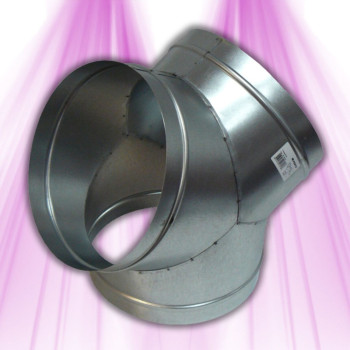
Ducting for extractors is essential for connecting your ventilation equipment and efficiently evacuating air from your grow space. Whether it's connecting your extractor to the carbon filter or directing air outdoors, choosing the right ducting largely determines your system's performance. Poorly suited ducting guarantees airflow losses and a sluggish ventilation system.
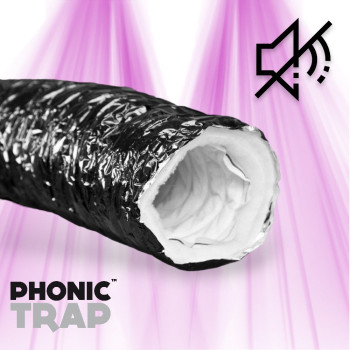
Frankly, we too often see makeshift setups with salvaged or unsuitable ducting. The result? Air leaks everywhere, noise bleeding through walls, and performance drops of 30% or more. Ducting specifically designed for indoor growing solves these problems with materials that resist humidity and temperature variations. Aluminum remains the standard for its lightness and ease of installation, while soundproof versions incorporate insulation that drastically reduces noise pollution.
The difference also lies in airtightness. Quality ducting with well-designed connections maintains the negative pressure necessary for your extractor to function properly. This is particularly crucial when dealing with high airflow rates from extractors of 400 m3/h and more. Not to mention, flexible ducting allows you to bypass obstacles and adapt to all space configurations, even the most intricate.
The diameter is fundamental: it must exactly match that of your extractor. A 125mm extractor with 100mm ducting guarantees a massive loss of airflow. Conversely, ducting that is too wide creates turbulence that also harms performance. Standard diameters range from 100mm for small spaces up to 315mm for industrial installations.
For length, every meter counts. Beyond 3 meters of ducting, you lose approximately 10% of airflow per additional meter, especially with flexible models. If you need to run it far, opt for rigid or semi-rigid ducting which offers less air resistance. And consider elbows: each 90° bend is equivalent to approximately 1 meter of straight ducting in terms of pressure loss.
The choice of material depends on your budget and constraints. Simple aluminum is suitable for most installations, but if noise is an issue, soundproof ducting with integrated insulation is definitely worth it. For very humid environments, versions with anti-condensation coating prevent the formation of droplets that can fall onto your plants.
For a 160mm extractor, you absolutely must use 160mm diameter ducting. Using a smaller diameter would create a bottleneck that would drastically reduce your extractor's airflow, potentially dropping performance by 40 to 50%. A larger diameter would offer no advantage and complicate connections. 160mm extractors are powerful enough to handle 3 to 4 meters of ducting without significant loss, provided elbows are limited and the installation remains airtight.
Ideally, the carbon filter is connected directly to the extractor without intermediate ducting to avoid any unnecessary pressure loss. This "pull" configuration (suction) is the most efficient because the extractor draws air directly through the filter. If your space configuration forces you to use ducting between the two, limit it to the strict minimum, 50cm maximum, and use rigid rather than flexible ducting. Every additional meter of ducting between the filter and the extractor reduces filtration efficiency and increases power consumption.
The general rule is not to exceed 3 meters of flexible ducting to maintain correct performance. Beyond that, you lose approximately 10 to 15% of airflow per additional meter due to internal undulations that create turbulence. If you absolutely must run it further, switch to rigid or semi-rigid ducting which can go up to 6-8 meters with acceptable losses. For very long distances, it may sometimes be necessary to consider a more powerful extractor or a two-stage ventilation system with an intermediate extractor.
Airtightness depends on the connections: use metal hose clamps rather than tape, which always eventually fails with humidity and vibrations. Push the ducting firmly onto the connectors (at least 5cm overlap) and tighten the clamps securely. For flexible ducting, avoid kinks and overly tight bends that create weak points. If you need to drill through a wall, use an airtight wall pass-through and caulk around it with a suitable sealant. Regularly check the connections as extractor vibrations can loosen them over time.
A minimum annual cleaning is necessary, especially in very humid environments where spores can accumulate in the undulations of flexible ducting. Disassemble the ducting and clean it with lukewarm water and a mild detergent, then rinse thoroughly and let it dry completely before reassembly. For rigid ducting, a simple wipe with a damp cloth is usually sufficient. Take advantage of maintenance to check the condition of the connections and replace any clamps showing signs of corrosion. Good permanent ventilation remains the best prevention against mold: avoid stagnant air areas and maintain constant air renewal.
Available in 3 models
Available in 8 models
Available in 12 models
Available in 2 models
Available in 12 models
Available in 8 models
Available in 12 models
Available in 12 models
Help & advice
About Extractor sheaths — click a question to see the answer.
As an expert, I can tell you that the extractor duct is the vital channel that allows your ventilation system to function correctly. It connects your air extractor, your carbon filter (if you use one), and the outside of your grow space. Its role is to carry stale and hot air outside, while ensuring a constant airflow and good climate management. Without it, your extractor would be ineffective.
The choice of duct diameter is paramount and must absolutely match the dimensions of your extractor and your carbon filter. A diameter that is too small would restrict airflow, reducing the efficiency of your ventilation, while a diameter that is too large would make installation difficult and potentially less airtight. In practice, I often see diameters like 125mm or 150mm for standard installations, but this really depends on the power of your extractor and the volume of your space.
The main difference, as its name suggests, lies in sound and thermal insulation. An insulated duct, often lined with sound-absorbing material like glass wool, is ideal if sound discretion is a priority for you. It also helps maintain a more stable temperature in the duct, which can be an advantage. Non-insulated ducts are simpler, cheaper, and perfectly suitable if noise and temperature variations are not major concerns for your installation.
Installing a duct is relatively simple but requires rigor. I always start by cutting the duct to the correct length, leaving a little margin. Then, I securely attach it to the extractor and carbon filter outlets using clamps. It is crucial to avoid overly sharp bends or twists that would reduce airflow. I also make sure that the duct's path is as direct as possible to the outside to optimize extraction efficiency.
There is no absolute maximum length, but I advise you to always aim for the shortest possible length. Every meter of duct, every bend, every connection creates a pressure drop that reduces the efficiency of your extractor. Beyond 3 to 5 meters, you will start to notice a significant drop in performance, especially if the duct is not perfectly taut or if it has many angles. If you absolutely must use a long duct, I recommend slightly oversizing your extractor to compensate.
The most common mistakes I observe are choosing an inappropriate diameter, using ducts that are too long or have too many bends, which hinders airflow. Another mistake is not tightening the clamps properly, creating air leaks and a loss of efficiency. Finally, neglecting maintenance and allowing the duct to become clogged can also significantly reduce the performance of your ventilation system. Always think about airtightness and smooth airflow!
Cannot find your answer? 01 88 33 45 52 or by message.