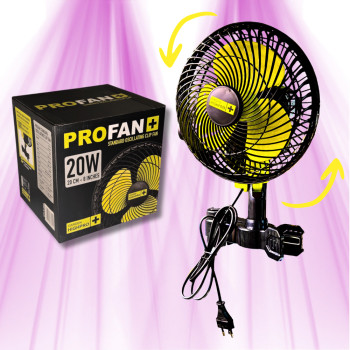
Fans for Indoor Plants: The Air Circulation That Changes Everything
Fans for indoor plants are the key element for successful indoor cultivation. Without proper air circulation, your plants risk developing mold, lacking root-level oxygen, and experiencing slowed growth. A well-designed ventilation system guarantees a healthy environment where your plants can thrive.
Whether it's to circulate air in your grow space, extract stale air, or simply create a gentle movement that strengthens stems, each type of fan has its role. The difference between a stagnant crop and one that flourishes is often just a matter of controlled air circulation.
Why Choose Fans Adapted for Indoor Plants
The first advantage is the prevention of fungal diseases. Stagnant air around the leaves creates a humid microclimate perfect for the development of fungi and mold. An oscillating fan that continuously circulates the air breaks up this stagnant humidity and drastically reduces risks.
Then there's the physiological aspect: air movement stimulates plant transpiration, which improves nutrient absorption by the roots. It's a virtuous cycle. Stems also strengthen thanks to this gentle mechanical stress – exactly how wind strengthens trees in nature.
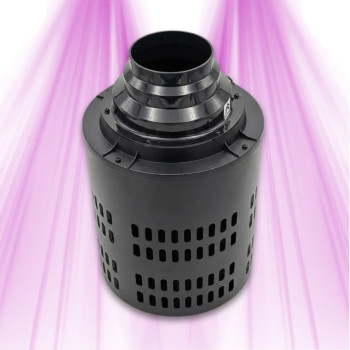
For extraction, it's even more critical. Air laden with humidity and consumed CO2 must be expelled to make way for fresh air. A properly sized extractor renews the atmosphere of your grow space several times per hour, maintaining optimal conditions constantly.
How to Choose Your Fans for Indoor Plants
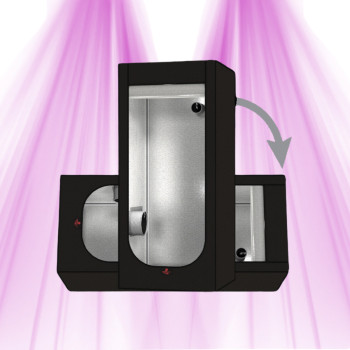
Power is calculated based on the volume of your space. For an extraction fan, aim for air renewal every 3 to 5 minutes maximum. Specifically, for a 1m x 1m x 2m (2m³) grow tent, you need an extractor of at least 24 to 40 m³/h. But be aware of pressure losses if you add a carbon filter.
Noise level matters greatly, especially for apartment growing. Recent models go below 30 dB for lower powers, which is the level of a whisper. Prioritize ball-bearing motors over friction motors – they last longer and remain quiet.
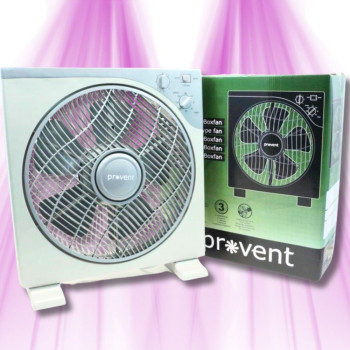
For circulation fans, oscillation is an undeniable plus. Rather than a constant airflow over the same area, the sweeping motion distributes circulation across the entire grow surface. Models with timers also allow you to adapt operation to your plants' day/night cycles.
Frequently Asked Questions
Which oscillating fan should I choose for my 1m² indoor plant grow tent?
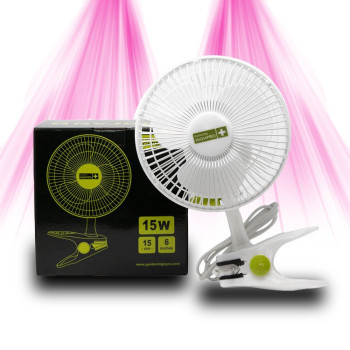
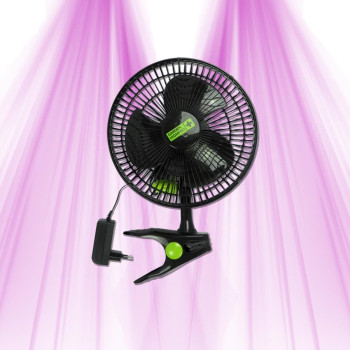
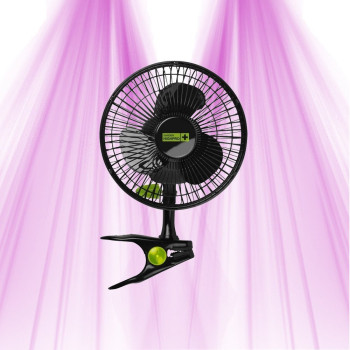
For a 1m² surface, a fan with a diameter of 15 to 20 cm is more than sufficient. Opt for an oscillating model with a minimum 90° amplitude to cover the entire area. The ideal power is between 20 and 35 watts – enough to create constant air movement without drying out your plants. Check that the base is stable or that the model can be clipped onto your tent's poles. Oscillation should be smooth and quiet, especially if your grow is in a living area.
How should I position the fan to circulate air effectively without damaging my plants' leaves?
The fan should never blow directly onto the plants, but rather create indirect air movement. Place it higher up, aimed towards a wall or the ceiling so that the air bounces and circulates gently. The minimum distance is 50 cm between the fan and your closest plants. If the leaves move slightly, that's perfect – if they bend or shake, it's too strong. The goal is constant but gentle air movement, like a natural breeze.
Should I choose a powerful or quiet fan for a small indoor plant grow box?
For a small box, silence takes precedence over power. A fan that's too powerful in a small space will create turbulence and stress for your plants. Aim for a 15-25 watt model with a noise level below 35 dB. Brushless motors are quieter than conventional motors, even if they cost a little more. Also consider speed controllers that allow you to adjust the flow as needed. A fan running continuously at 50% capacity will be quieter than an undersized model that's straining.
How do I install an extraction fan with passive air inlets in my grow room?
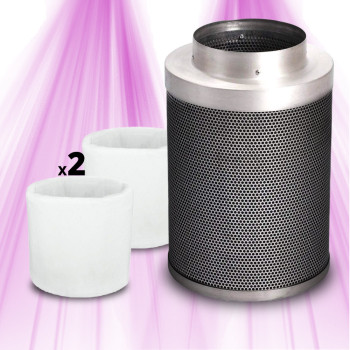
The extractor should always be placed at the top of the space (hot air rises), while passive air inlets are positioned at the bottom, on the opposite side. The basic rule: the surface area of the air inlets must be 1.5 to 2 times greater than that of the extraction to avoid negative pressure. Use rigid or semi-rigid ducts to limit pressure losses. If you add a carbon filter, increase the extractor's power by 20 to 30% to compensate for resistance. Check the airtightness of connections with aluminum tape – air leaks reduce efficiency.
How often should I clean my fan to prevent mold around my indoor plants?
A minimum monthly cleaning is essential to maintain efficiency and hygiene. Always unplug the device before cleaning. For the blades, use a slightly damp cloth with 70° alcohol – effective against spores without leaving residue. Grilles should be cleaned with soapy water, then rinsed and dried completely. Be careful with motors: never use direct water, just a dry brush to remove dust. Bearings can be greased once a year with special electric motor oil. A clean fan means 15% more airflow and zero risk of contamination.