Aller au contenu principal
12 produits

Sowing / Cutting / Germination

Equipment for seedlings, cuttings, and germination in indoor cultivation

Starting your crops is where it all begins. Whether you want to germinate seeds or take cuttings from your favorite plants, you need the right equipment to create the perfect conditions. Stable temperature between 20-25°C, high humidity around 70-80%, and a suitable substr...

Equipment for seedlings, cuttings, and germination in indoor cultivation

Starting your crops is where it all begins. Whether you want to germinate seeds or take cuttings from your favorite plants, you need the right equipment to create the perfect conditions. Stable temperature between 20-25°C, high humidity around 70-80%, and a suitable substrate – these are the keys to success for your seedlings and cuttings.

Why invest in specialized germination equipment

Frankly, germinating seeds in a glass of water or on cotton works... sometimes. But with a real heated propagator, you go from 60% to 95% success. The difference? Precise control of the substrate temperature (constant 22-24°C) and stable humidity under the transparent dome.

Mini-greenhouses with shelves allow you to start several varieties at once, each with its specific needs. You can adjust the height according to growth and create a real little germination laboratory. For cuttings, it's even more critical: without the constant humidity of a propagator, your stems will dry out before they even develop their roots.

How to choose your seedling and cutting equipment

For propagators, first look at the size: a 38x24cm model can accommodate about 40 5cm pots. If you're just starting, begin there. Heated versions with integrated thermostats are worth it – they maintain 3-5°C more than the ambient temperature, which makes all the difference in winter.

As for substrate, forget classic garden soil. A special seedling potting mix has a finer granulometry (0.5-2mm particles) and retains moisture better without rotting young roots. For cuttings, rock wool or coco cubes give better results because they drain excess water while maintaining the necessary humidity.

Lighting is crucial as soon as your seeds sprout. A growth-specific LED lamp 30-40cm away prevents your seedlings from stretching towards the light. Count 20-30 watts per m² for this delicate phase.

Frequently Asked Questions

Which mini-greenhouse or seedling shelf to choose for a small indoor space?

For a small space, opt for a multi-tiered mini-greenhouse of maximum 60x40cm. These compact models can accommodate 2-3 cultivation levels with about 20-30 pots per level. Prioritize those with height-adjustable shelves to adapt the space according to your plants' growth. Versions with wheels are practical if you need to move your greenhouse near a window or under a lamp. Avoid models that are too tall (over 120cm) in a small space as they become unstable and difficult to manage daily.

How to use a propagator for germinating tomato seeds?

Place your tomato seeds in pots filled with seedling potting mix, at a maximum depth of 0.5cm. Moisten the substrate well before placing the propagator dome. Set the thermostat to 22-24°C – this is the ideal temperature for tomatoes. Germination takes 5-10 days depending on the variety. As soon as the first shoots appear, slightly open the dome to avoid excessive condensation. After 2 weeks, when the cotyledons are well developed, you can completely remove the dome and place your plants under suitable lighting.

What is the difference between seedling potting mix and regular potting mix?

Seedling potting mix has a much finer texture than classic potting mix – particles are 0.5 to 2mm compared to 5-10mm for standard potting mix. This fineness allows small roots to develop without obstruction. It also contains less fertilizer (EC around 0.8-1.2) because young plants are sensitive to nutrient excesses. Its water retention capacity is optimized: it retains the necessary moisture without causing root asphyxiation. Finally, it is often sterilized to prevent pathogenic fungi that love to attack fragile young shoots.

How to set up a nursery with LED lights to prevent seedlings from stretching?

Place your LED lights 30-40cm above the seedlings as soon as they emerge from the soil. Too close (less than 20cm), you risk burning them; too far (more than 50cm), they will stretch out looking for light. Use a full spectrum with dominant blue (400-500nm) to promote compact growth. Program 14-16 hours of light per day for the first 2-3 weeks. Adjust the height of the lamps as your plants grow to maintain this optimal distance. A light oscillating fan also helps strengthen stems by simulating natural wind.

How to maintain humidity and temperature under a dome for cuttings?

Maintain 80-90% humidity under the dome by misting the interior walls 1-2 times a day with lukewarm water. Avoid directly wetting the leaves to prevent mold. The temperature should remain stable between 22-25°C – use a heating mat under the propagator if necessary. Ventilate daily for 10-15 minutes by lifting a corner of the dome to refresh the air and prevent stagnation. As soon as you see the first roots appear (7-14 days depending on the species), gradually start reducing humidity by opening the dome for longer periods each day.


Showing 1 - 12 of 12 items
What is the specialized equipment for seedlings and germination used for in indoor cultivation?
   

Specialized equipment is crucial for creating an optimal environment from the start. It allows for precise control of temperature, humidity, and light, which are essential factors for maximizing the success rate of your seedlings and cuttings. Without it, you risk losing many young plants.

How to choose an LED lamp for seedlings and germination in indoor cultivation?
   

For seedlings and germination, I recommend prioritizing LED lights specifically designed for this phase. They offer a suitable light spectrum, often dominated by blue and cool white, which promotes healthy root growth and compact seedling development. High power is not necessary at this stage.

What light spectrum is most suitable for the germination phase and young seedlings?
   

For germination and young seedlings, the blue and cool white spectrum is ideal. It stimulates vegetative growth, promotes robust stems, and prevents etiolation. What I often see is that lamps with a good balance of cool white and some blue peaks yield the best results for a healthy start. I explain in more detail in this blog post.

What distance between the LED and seedlings to avoid burns or etiolation?
   

This is a very important question! I recommend starting with a distance of 20 to 30 cm between the LED and the top of the seedlings. You need to observe the plants carefully: if they stretch (etiolation), move the lamp a little closer; if the leaves yellow or show signs of stress, move it further away. LEDs emit less heat than HPS, which allows them to be placed closer without risk of burning.

How to maintain ideal humidity and temperature for indoor germination?
   

For humidity, a propagation dome or a mini-greenhouse is perfect, as it maintains high humidity (70-80%). For temperature, I recommend using a heating mat under your seedlings to reach the required 20-25°C at the substrate level. This is a winning combination for rapid and uniform germination.

What are the common mistakes to avoid with LEDs for indoor seedling cultivation?
   

The most common mistake is placing the LED too far away, which causes seedlings to stretch. Another mistake is using light that is too intense or an unsuitable spectrum, which can stress young plants. Finally, don't forget to ensure good ventilation even for seedlings, to avoid fungal problems. A good starter kit can help you avoid these pitfalls.

How to choose an LED lamp for seedlings and cuttings?
   

For seedlings and cuttings, I recommend prioritizing LEDs with a light spectrum oriented towards blue and cool white. These wavelengths promote vegetative development and the robustness of young shoots. The power does not need to be very high; what I look for is a soft and constant light. You can find suitable options in our category LED Lighting for Seedlings / Cuttings / Germination.

What is the difference between warm white and cool white LED for germination?
   

In practice, the main difference lies in the emitted light spectrum. Cool white (around 6000-6500K) is rich in blue, which is excellent for germination and vegetative growth, encouraging compact and robust plants. Warm white (around 2700-3000K) contains more red, which is more suitable for flowering. For starting your crops, I clearly recommend cool white.

What LED power to choose for indoor seedlings?
   

For seedlings and cuttings, you don't need colossal power. What I recommend is moderate power, often between 10 and 50 actual Watts per module, depending on the area to be covered. The goal is to provide enough light without stressing the young shoots. Low power also helps maintain a stable ambient temperature, which is crucial at this stage.

What distance should I install between the LED lamp and germinating plants?
   

This is a very important question! For seedlings and cuttings, I generally position the LED at a distance of 15 to 30 centimeters from the young plants. The idea is to provide sufficient light without burning them. If I see that the plants are stretching ('etiolation' phenomenon), it means the light is too far away or not intense enough. Conversely, if the leaves yellow or curl, the light is too close.

What mistakes to avoid with LEDs for cuttings and seedlings?
   

The first mistake I often see is placing the LED too far away, which causes the plants to stretch. Another is not respecting the light cycle: young plants need a period of darkness. Also, avoid spectra too rich in red at this stage, which are not optimal for vegetative growth. Finally, ensure good ventilation to avoid heat accumulation, even if LEDs produce little.

What light spectrum for the germination phase?
   

For the germination phase and the first stages of growth, I favor a light spectrum dominated by blue and cool white. This spectrum promotes root development, compact growth, and robust leaves. This is what you generally find in lamps specifically designed for seedlings and cuttings, like those you can find in our selection of dedicated LED lighting.

How do I know if an LED is suitable for my indoor seedlings?
   

To know if an LED is suitable, I look at several indicators. First, the light spectrum must be oriented towards blue/cool white. Then, the power must be sufficient for the surface, without being excessive. Finally, I check the quality of the components and the manufacturer's reputation. A good sign is also the presence of low heat emission, allowing for stable temperature maintenance. I explain in more detail how to choose well in this blog article.

What LED product to choose to start growing cuttings?
   

To start, I recommend a low to medium power LED panel, specifically designed for the seedling and cutting phases. Look for models with a cool white or 'full spectrum' spectrum suitable for vegetative growth. Often, a small panel or a linear LED bar will be more than enough for a small area. Feel free to consult our Seedling / Cutting / Germination packs which often include suitable lighting solutions.

Blog navigation

Latest posts

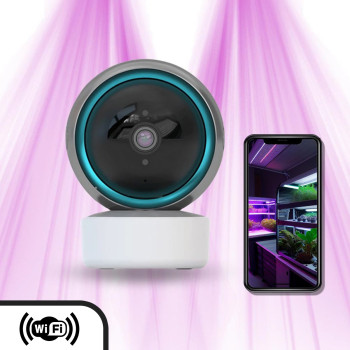
VIVOSUN Grow Cam 6mm 2K QHD WiFi Grow Camera

Tired of anxiety when you're away from your grow? The VIVOSUN Grow Cam 6mm 2K QHD WiFi Grow Camera lets you keep an...

Read more
STOP à la Tourbe ! Découvrez les 4 Meilleurs Substrats Écologiques pour une Culture Indoor Explosive

Le monde du jardinage connaît une transformation silencieuse mais profonde. Face à l'urgence climatique et à la prise...

Read more
Master Pack PRO Advanced Nutrients: Created by GrowLED for demanding growers!

When you're starting out or looking to optimize your indoor growing, the hardest part is often choosing the right...

Read more