



































































BloomLED
Night lighting for your plants - Led strip - 9W per meter - 1m
In stock · Shipped within 24 h
6,90 €

Product successfully added to your shopping cart
Ça pousse dans le bon sens

13 products
A 150cm x 90cm (1.35m²) area is the perfect space to embark on various indoor lighting projects. Whether it's for growing cherry tomatoes, cultivating aromatic herbs, or even creating a green corner in a closet, this dimension offers an excellent compromise between workspace and power consumption. LED lighting then becomes your best ally to transform any nook into an efficient production zone.
For a 150x90cm surface, LEDs offer decisive advantages compared to traditional technologies. First, the heat generated remains manageable – unlike a 400W HPS that would turn your space into a sauna. With full spectrum LEDs between 200 and 400W, you get a homogeneous PPFD of 400-600 µmol/m²/s across the entire surface, perfect for most crops. Energy efficiency easily reaches 2.5-2.8 µmol/J, which is 40% savings compared to traditional systems. And frankly, that's where it changes everything: you can set up your grow in a standard closet without worrying about intensive ventilation.
The versatility of LEDs allows you to adapt the spectrum to your needs. Blue spectrum (400-500nm) for young plant growth, red (660-730nm) to boost tomato flowering, or full spectrum for mixed use. This flexibility makes it possible to rotate crops on the same surface without changing equipment.
To effectively illuminate 1.35m², several criteria determine your choice. Power first: count 200-250W for leafy greens, 300-400W for tomatoes or peppers. The beam angle plays a crucial role – opt for panels with 90° or 120° optics for uniform distribution over this rectangular surface. The hanging height varies depending on the power: 40-50cm for a 200W panel, 60-80cm for a 400W.
The luminaire format also matters. A single rectangular LED panel of 100x60cm perfectly covers the area, but two 60x60cm square panels offer more flexibility to modulate intensity in different zones. For the spectrum, a 3000K-5000K full spectrum with added 660nm red is suitable for 90% of uses. For specific projects, modular LED bars allow you to create a custom configuration.
For tomatoes on 1.35m², opt for a 300-400W LED panel with a full spectrum enriched with 660nm red. High power is necessary because tomatoes require 600-800 µmol/m²/s during flowering. Choose a rectangular format close to your dimensions (like 120x60cm) for homogeneous coverage. Hang the panel at 60-70cm height to avoid light stress while maintaining the necessary intensity. Samsung LM301B or Osram LEDs are particularly effective for this type of light-intensive crop.
The height depends on the power and growth stage. For a 200-250W panel, start at 50-60cm from young plants then move closer to 40cm during growth. With 300-400W, maintain 70-80cm initially then lower to 60cm maximum. Use a lux meter or a smartphone app to check: aim for 20,000-30,000 lux during growth, 40,000-50,000 lux during flowering. If the top leaves whiten or curl, it's too close. The ideal is to have an adjustable hanging system to adapt as the plants grow.
On 1.35m², LEDs far outperform HPS in efficiency. A 400W HPS actually consumes 450W with the ballast and generates a lot of heat, requiring powerful extraction. A 300W LED panel produces the same useful PPFD while consuming 33% less and generating 60% less heat. The LED spectrum is also better suited for photosynthesis than the yellow-orange spectrum of HPS. The result: equivalent or higher yields with less heat stress and a reduced electricity bill. On a small surface like this, the performance difference is even more pronounced.
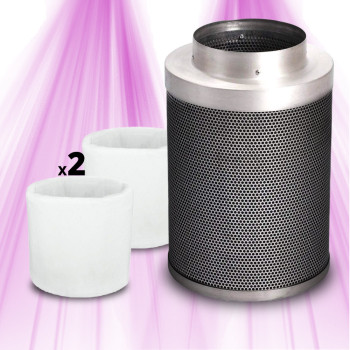
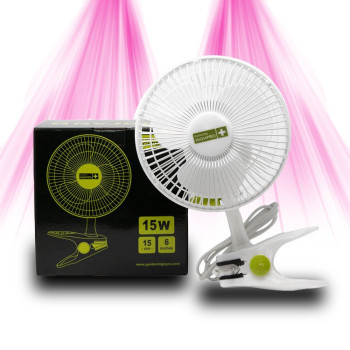
Installation in a 150x90cm closet is quite simple with LEDs. Fix adjustable hanging bars to the ceiling or use ratchet straps for flexibility. Provide a dedicated electrical outlet – 200-400W panels plug directly into 220V. For ventilation, a 150-200 m3/h extractor is largely sufficient thanks to the low heat of LEDs. Add a 15cm oscillating fan to homogenize the air. Don't forget a timer to automate day/night cycles. With this configuration, your closet becomes a functional growing space without major work.
LEDs accumulate less dust than HPS because they generate little heat, but monthly cleaning optimizes performance. Turn off and let cool for 30 minutes before intervening. Use a slightly damp microfiber cloth with 70% isopropyl alcohol to clean the lenses and casing. Avoid abrasive products that scratch the optics. On 1.35m², the operation takes 10 minutes maximum. A clean panel maintains 100% of its light efficiency, while a dusty panel can lose 10-15% intensity. Take advantage of cleaning to check connections and cable condition.
Available in 3 models
Available in 2 models
Available in 2 models
Available in 2 models
Available in 2 models
Available in 2 models
Available in 2 models
Available in 2 models
Available in 2 models