



































































Autopot™
Substrat de Recharge Générateur CO2 AUTOPOT 5L & 10L
In stock · Shipped within 24 h
59,90 € or 3× 19,97 €

Product successfully added to your shopping cart
Ça pousse dans le bon sens

8 products
CO2 diffusers are essential equipment for enriching the atmosphere of your grow space with carbon dioxide. In indoor cultivation, CO2 quickly becomes a limiting factor: your plants consume ambient CO2 (400 ppm) within a few hours under intense lighting. A good diffuser allows you to reach 1200-1500 ppm and increase your yields by 20 to 40%.
The choice of diffuser determines the efficiency of your CO2 injection. A glass diffuser with ceramic offers fine and homogeneous diffusion, perfect for spaces from 0.5 to 2m². Microscopic bubbles dissolve better in the ambient air. For larger installations, a stainless steel diffuser is more resistant to corrosion and supports higher flow rates. External reactors, on the other hand, guarantee almost total CO2 dissolution with an efficiency of 95% compared to 60-70% for a classic diffuser.
The position of the diffuser matters greatly. Placed too high, CO2, which is heavier than air, falls without benefiting the plants. Too low, it stagnates on the ground. The ideal: 30-40 cm above the canopy with a fan to circulate the air. Some growers use several small diffusers rather than one large one for uniform distribution.
The diffusion capacity is calculated according to the volume of your space. Count 1 liter/minute of CO2 for 1m³ of cultivated space. A standard diffuser processes 20-50 liters/hour, sufficient for a 1m² grow tent. Large spaces (4m² and more) require external reactors or several diffusers in parallel.
The material influences durability. Borosilicate glass resists thermal shocks but remains fragile. 316L stainless steel better withstands frequent handling and acid cleaning. Diffusers with a ceramic membrane offer finer bubbles (0.1-0.5mm) than porous stone models (1-2mm).
Check compatibility with your system: 6mm fitting for small installations, 8mm for medium, up to 12mm for high flow rates. A check valve prevents water from flowing back into your lines when the bottle empties.
The glass diffuser with ceramic is suitable for spaces from 0.5 to 2m² thanks to its fine diffusion and affordable price. It produces bubbles of 0.1-0.5mm that dissolve efficiently. The stainless steel diffuser is more resistant to shocks and handling, ideal for permanent installations of 2-4m². The external reactor offers the best efficiency (95% dissolution) for large volumes of 4m² and more, but is more expensive and requires a circulation pump.
Place the diffuser 30-40 cm above the canopy, never on the ground, as CO2 is heavier than air. Install an oscillating fan to circulate the enriched air towards the stomata of the leaves. Use a rigid or semi-rigid hose to avoid kinks that reduce flow. Add a check valve near the diffuser to prevent water from flowing back. Injection should only occur during lighting hours when stomata are open.
Calculate 1 liter/minute of CO2 per m³ of cultivated space to reach 1200-1500 ppm. A standard diffuser of 20-30 L/h is sufficient for 1m², a 50-80 L/h model for 2-3m². Beyond 4m², opt for several diffusers or an external reactor. Ceiling height also influences: a 3m high space requires more CO2 than a 1.5m grow tent for the same floor area.
Clean the diffuser every 2-3 weeks with a 10% citric acid solution or white vinegar. Let it soak for 2-3 hours, then rinse thoroughly. For algae, use a diluted bleach solution (1%) then rinse carefully. Replace the ceramic membrane every 6-12 months depending on use. Regular maintenance maintains optimal flow and prevents blockages that reduce efficiency by 30-50%.
Diffuse only during lighting hours because plants only absorb CO2 during photosynthesis. At night, they even release CO2 through respiration. Adjust the flow rate to reach 1200-1500 ppm: too little (800 ppm) limits gains, too much (2000+ ppm) becomes toxic and wastes CO2. Use a CO2 controller with a probe to automate injection and maintain a stable level. Cut off injection 1 hour before lights out to avoid nocturnal accumulation.
Help & advice
About CO2 diffusers — click a question to see the answer.
In indoor cultivation, a CO2 diffuser is essential for optimizing your plants' photosynthesis. I observe that the ambient air in a closed growing space is quickly depleted of CO2 by plants, becoming a limiting factor for their growth. By enriching the atmosphere, typically between 1200 and 1500 ppm, you allow your crops to reach their full potential, resulting in significantly higher yields, often by 20 to 40%.
There are several types of CO2 diffusers, each with its own characteristics. Glass or ceramic diffusers are often more aesthetic and suitable for small spaces, but their membrane can get clogged. Stainless steel diffusers are robust and durable, ideal for more permanent installations. Atomizers, on the other hand, create extremely fine CO2 bubbles for maximum dissolution, which I find very effective for large volumes or hydroponic systems. The choice will depend on your budget, the size of your crop, and your requirement for diffusion fineness.
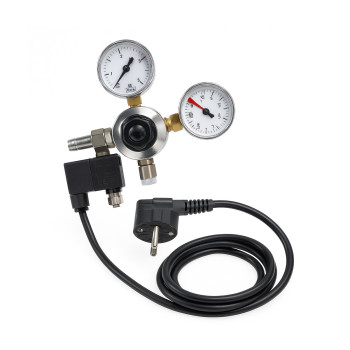
The power of your CO2 diffuser must be adapted to the volume of your grow space. Generally, I aim for a CO2 level between 1200 and 1500 ppm. For a small space, a simple diffuser may suffice. For a larger grow room, a more powerful system, or multiple diffusers, will be needed to ensure homogeneous CO2 distribution. It is crucial to use a CO2 regulator and a controller to maintain desired levels and avoid waste. I advise you to refer to the manufacturer's specifications for the volume covered by each model.
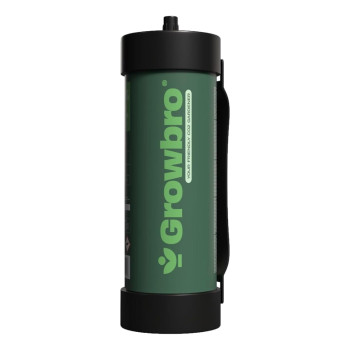
Installing a CO2 diffuser is relatively simple but must be done with care. I recommend placing it in a location where the CO2 can diffuse uniformly throughout the space, often near a fan to aid circulation. Connect it to your CO2 source (pressurized cylinder or generator) via an appropriate hose, ensuring all connections are airtight. A pressure regulator is essential for controlling the flow. Don't forget to use a CO2 controller to monitor and adjust levels in real-time.
In my experience, several mistakes are common with CO2 diffusers. The first is not ventilating enough: an excess of CO2 without air exchange can be counterproductive, even dangerous. Next, you should avoid letting CO2 escape unnecessarily through leaks or by diffusing when the lights are off (plants do not use it in the dark). I often see users neglecting diffuser maintenance, which can reduce its effectiveness. Finally, always make sure to use a reliable CO2 controller to avoid over or under-dosing.
For indoor cultivation, I generally recommend aiming for a CO2 concentration between 1200 and 1500 ppm. It is within this range that plants, under intense lighting and with sufficient nutrients, can maximize their photosynthesis. Above 1500 ppm, additional benefits are minimal, and the risk of toxicity to plants or the operator increases. Below 1200 ppm, you are not fully utilizing CO2 enrichment. A good CO2 controller is essential to maintain these precise levels.
Cannot find your answer? 01 88 33 45 52 or by message.