



































































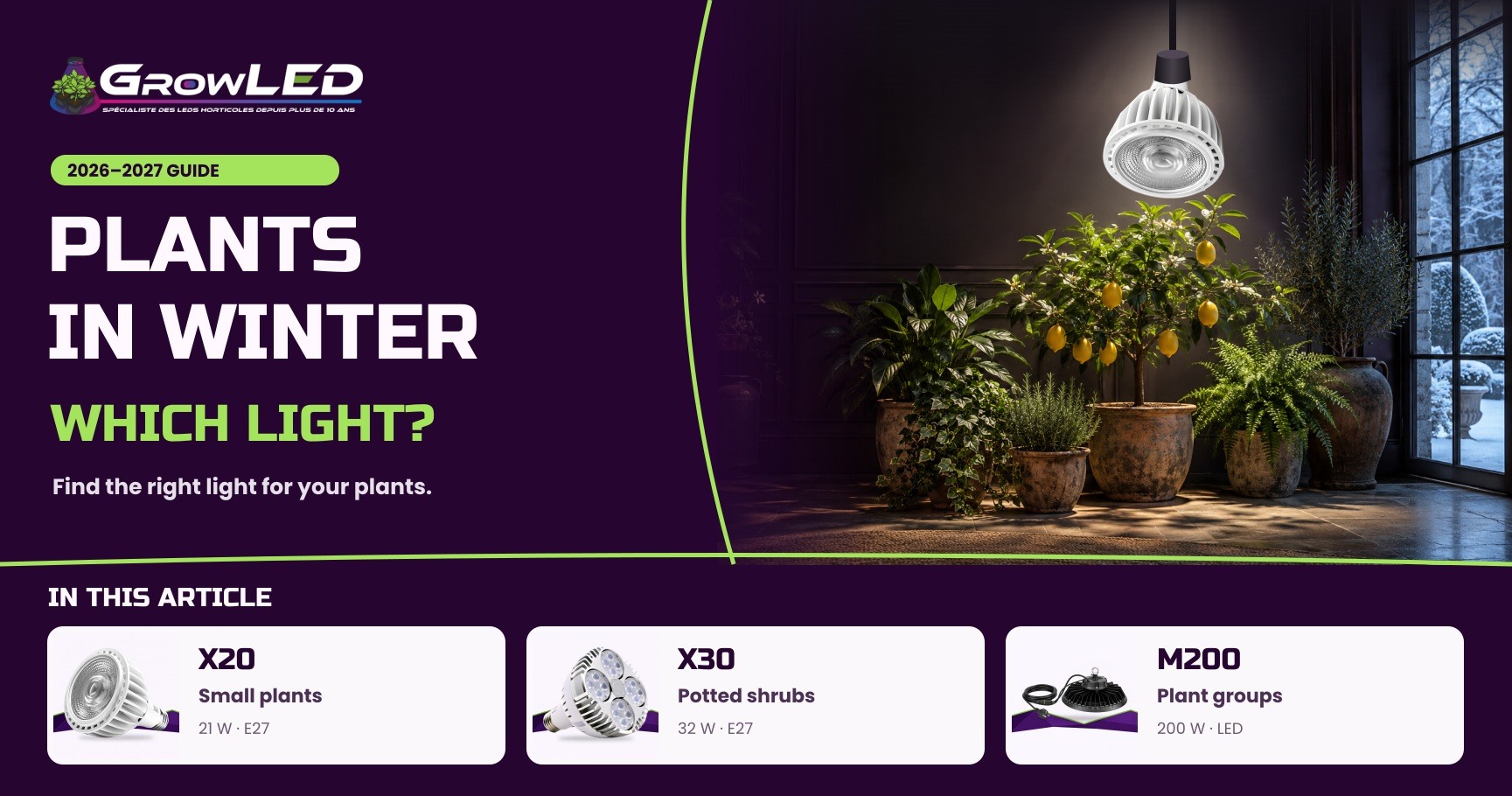
Bringing your citrus tree, houseplants or potted shrubs indoors for winter? Plan their light as well as their temperature. Shorter days and the distance from a window can sharply reduce the light reaching their leaves. A grow light adds a regular supplement. Here is how to choose the X20 for small plants, the X30 for a taller plant or the M200 for a group, and set them up without wasting electricity.
What does it mean to overwinter a plant?
Overwintering means helping a plant through the cold season by adjusting temperature, light and watering to its species. Some plants slow down while keeping their leaves; others enter a clear rest period. The goal is not to force every plant to grow in January. A lamp can make up for poor light, but it cannot replace suitable temperatures or careful watering.
Tubers and some deciduous plants need a cool rest and little water, according to their species. A lamp may be unnecessary.
Citrus, evergreen and potted tropical plants need a bright place first, then a LED if the window is insufficient.
A plant still producing leaves or flowers needs more light and water, and sometimes species-specific feeding.
See the RHS guide to overwintering in conservatories and Penn State Extension's guide to tropical plants.
Which plants actually need light in winter?
A lemon tree and other citrus keep their leaves. Give them a cool, very bright place and add light if dark days or distance from the glass leave the canopy dim. Tropical plants kept warm, including hibiscus, also need good light. Cacti and succulents wintered in cooler conditions are different: many mainly need a bright, dry place and a rest period. Leafless bulbs and tubers follow their own storage instructions and do not necessarily need a lamp.
| Situation | First priority | What a LED can do |
|---|---|---|
| Potted citrus, conservatory or cool room | Strong daylight and frost protection | Supplement light near shaded foliage |
| Tropical plant kept warm | Stable conditions and a bright position | Extend short days and reduce stretching |
| Leafless dormant plant | Follow species-specific rest conditions | Often unnecessary |
Before bringing pots indoors, check leaves and compost for pests and let plants adjust to the new position gradually. The RHS citrus guide and Penn State Extension explain these steps.
Which grow light should you choose for winter 2026–2027?
Look at canopy height and width, available daylight and how the pots are arranged. A quoted lighting area always depends on mounting height and the amount of light required. Raising a lamp spreads its beam over a wider area but gives each leaf less light.
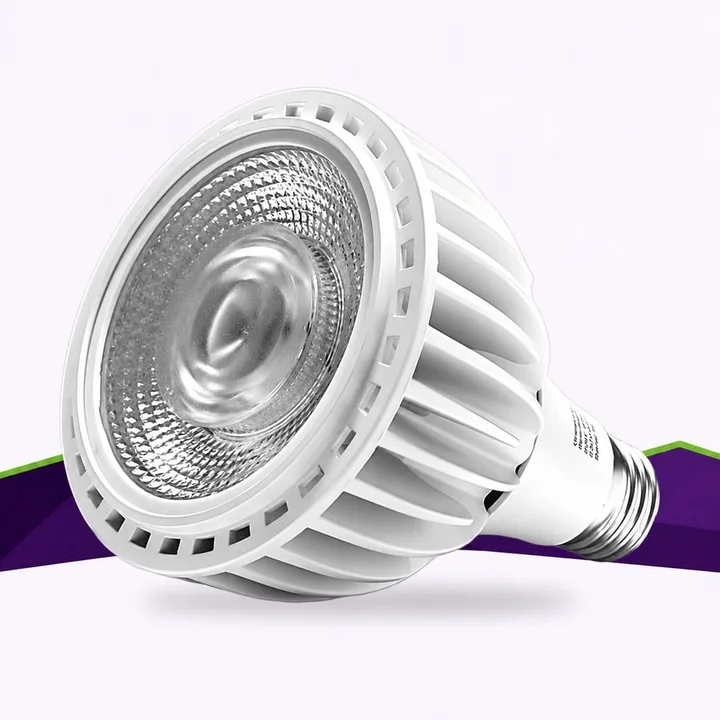
SpectraBULB X20
21 W. A simple bulb for a small group of plants near a window, with an adjustable holder. Its product sheet gives 30 × 30 cm as a growing area at 40 cm from the canopy. For winter supplementary lighting, pots can be arranged within roughly 1 × 1 m if daylight also contributes; the edges receive less light.
View the X20Add to cart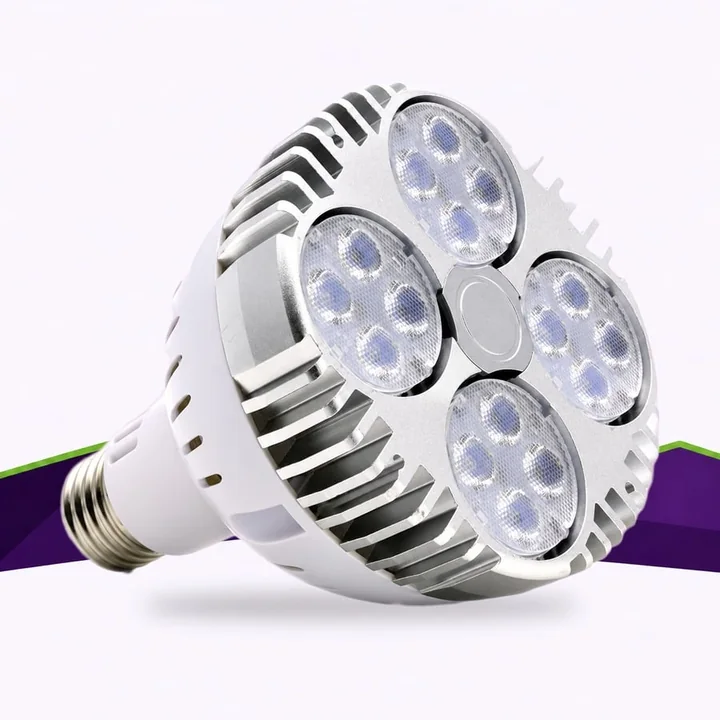
SpectraBULB X30
32 W. Its stronger beam is better suited to the top of a citrus tree or potted shrub. It can supplement an area near 1 × 1 m when the plants already receive daylight. Its stated growing area is 40 × 40 cm: for a broad canopy, check that side leaves are not left in shade.
View the X30Add to cart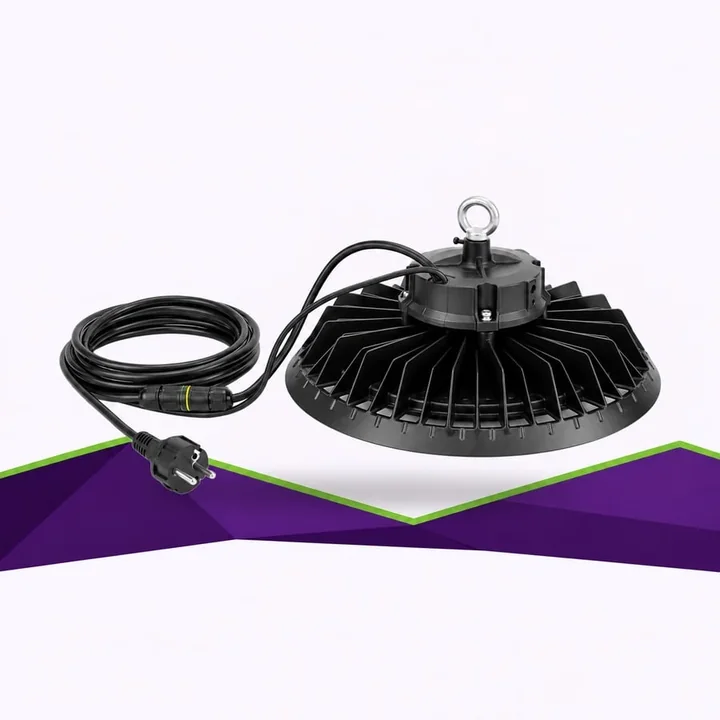
BloomLED SpectraBUD M200
200 W. A stronger central light for several pots, with an adjustable hanging height. The manufacturer recommends 80 × 80 to 120 × 120 cm depending on the required intensity. If you want supplementary light across 2 to 4 m², plan the layout and check the edges: one panel does not guarantee uniform light over that area.
View the M200Add to cartPower and growing areas: X20 sheet, X30 sheet and M200 manufacturer sheet. Wider supplementary areas are installation scenarios, not published PPFD measurements.
Set up winter lighting without complicating your room
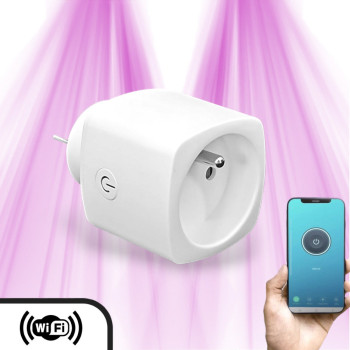
The X20 and X30 screw into an E27 socket, sold separately. Clip the holder to a stable shelf, aim the bulb at the foliage and put the timer between the mains socket and the lamp. A double holder can light two sides of a shrub or two groups of pots; choose the two bulbs separately. Hang the M200 above the group as directed in its instructions.
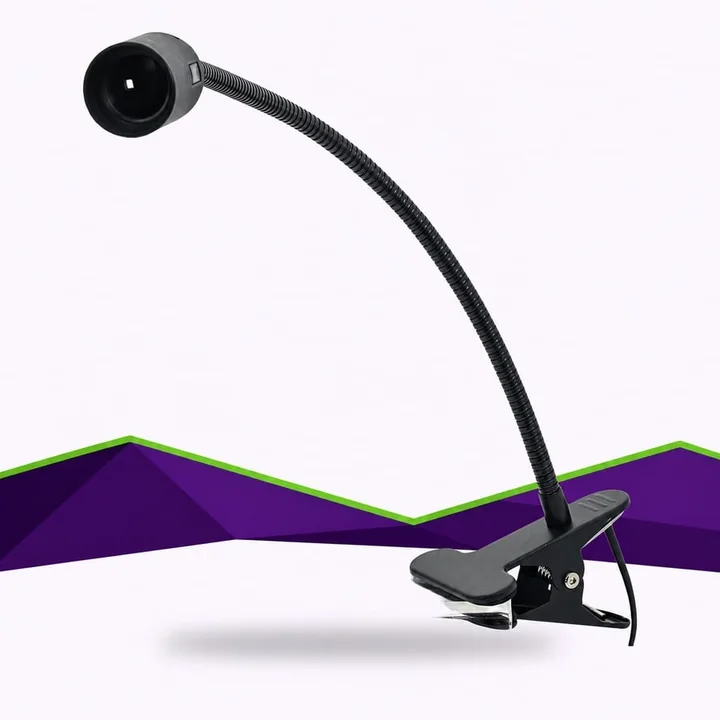 Single E27 holder
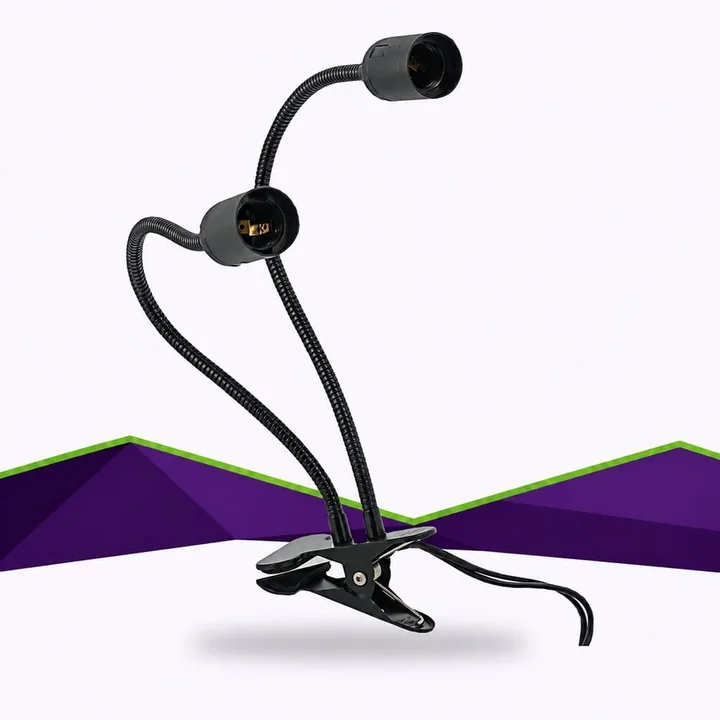 Double E27 holder
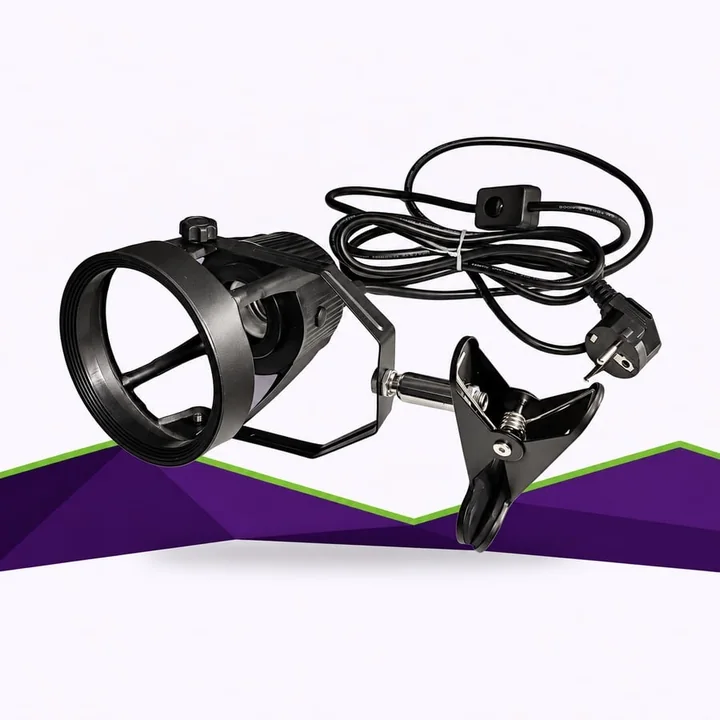 FloraCLIP
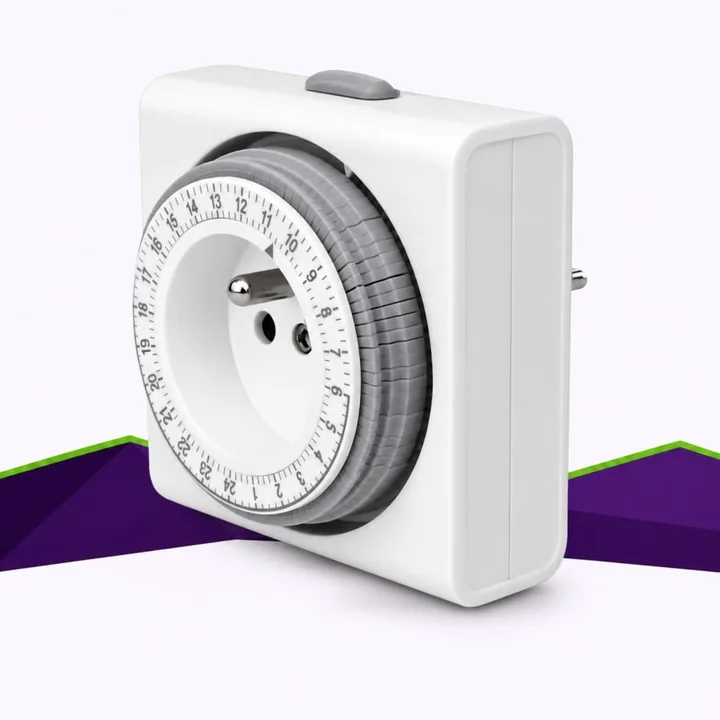 24-hour timer
The FloraCLIP is listed for E27 bulbs but its sheet specifies a size limit: check the dimensions of your bulb version before purchase. Check the holder's maximum load too. Keep electrical connections away from watering areas and do not rely on a lamp to heat a conservatory.
How many hours, and how far from the leaves?
For a foliage plant kept active, start with 12 to 14 hours of total light per day, including daylight, then adapt to the species. If the window already provides several useful hours, supplement mainly during the day or early evening. In a very dark room, the lamp must supply nearly all the light; a small bulb may then be insufficient for a whole citrus tree. Keep a real dark period, as some plants flower in response to night length.
Start the X20 near the 40 cm distance given on its product sheet. For other lights, follow their instructions and watch the leaves: stems stretching or leaning, pale or warm foliage, and persistent shaded areas. Reposition the light or add another point rather than extending the schedule indefinitely. The mechanical timer repeats the cycle daily in 15-minute steps.
Set the timer: a simple example
- Select automatic mode and turn the dial to align the current time with the indicator.
- Select 08:00–20:00 as an example of a 12-hour cycle. With 15-minute intervals, this is 48 segments; follow the activation direction in the timer instructions.
- Plug in the light, check it switches on during an active interval, and confirm that it switches off at the planned time.
- Then adjust the intervals to available daylight and the plant species. Keep a dark period: do not leave the light on around the clock.
The 12–14-hour starting point for foliage houseplants comes from University of Minnesota Extension. Photoperiod needs vary by species.
How much electricity will winter lighting use?
Use power in kW × hours per day × days. At 12 hours a day for 30 days, the lights alone use the following amounts. Multiply kWh by your own electricity price, including tax, to estimate cost. The timer and other equipment use additional electricity.
| Light | Supplement: 4 h/day | Lighting: 12 h/day | Cost at 12 h/day* |
|---|---|---|---|
| X20 · 21 W | 2,52 kWh | 7,56 kWh | 1,89 € |
| X30 · 32 W | 3,84 kWh | 11,52 kWh | 2,88 € |
| M200 · 200 W | 24 kWh | 72 kWh | 18,00 € |
Both examples cover 30 days. An X20 used for just 4 hours a day consumes 2.52 kWh per month, or €0.63 at the illustrative €0.25/kWh rate. Choose the duration to suit the plant, then estimate your cost.
* €0.25/kWh is an example assumption, not a current tariff or bill promise. If the bulb only adds four hours to window light, divide these figures by three.
Balance light, temperature, water and feed
A LED does not prevent frost. First choose a place that suits the species and avoid direct heat from radiators. Check the compost before watering: plants growing less usually take up less water in winter. Empty the saucer after watering and watch for pests. A warm plant under strong light that is still growing has different needs from a plant resting in a cool room.
Do you need a special winter fertiliser? Usually not. Do not routinely feed a dormant or slow-growing plant. One exception to assess is a well-lit, active citrus plant, which may follow a citrus-specific winter feeding programme in accordance with its label. Fertiliser will not solve insufficient light or waterlogged compost. The RHS describes winter citrus feeding, while Penn State Extension advises against routine feeding when plants are not growing.
Frequently asked questions about winter grow lights
Is one X20 enough for 1 m²?
It may supplement a small group of pots across roughly 1 × 1 m near a window. Its specified growing area is 30 × 30 cm at 40 cm, so one X20 cannot promise uniformly lit 1 m², especially in a windowless room.
Which light should I use for a lemon tree?
First place it in a cool, bright position. The X30 reaches the top of a shrub better than the X20, but a broad canopy may need more than one light. In a dark room, ask for a lighting plan instead of assuming one bulb is enough.
Can plants overwinter in a garage without a window?
Only if their winter requirements allow it. An evergreen needs enough artificial light across its foliage and suitable temperatures. A small bulb alone is not a universal solution for a large citrus tree in darkness.
How long should the light stay on?
For a foliage plant kept active, 12 to 14 hours of total light is a useful starting point. Count daylight, keep a dark period and adjust for the species. A timer keeps the schedule consistent.
Will the lamp warm the room?
A LED produces heat at the luminaire but cannot replace a heater. Keep the recommended distance, check the leaves and protect the plant against cold separately.
Should I feed plants during winter?
Not automatically. A resting plant takes up few nutrients. Only plants that remain active, including some citrus, may need species-specific winter feeding.