






































































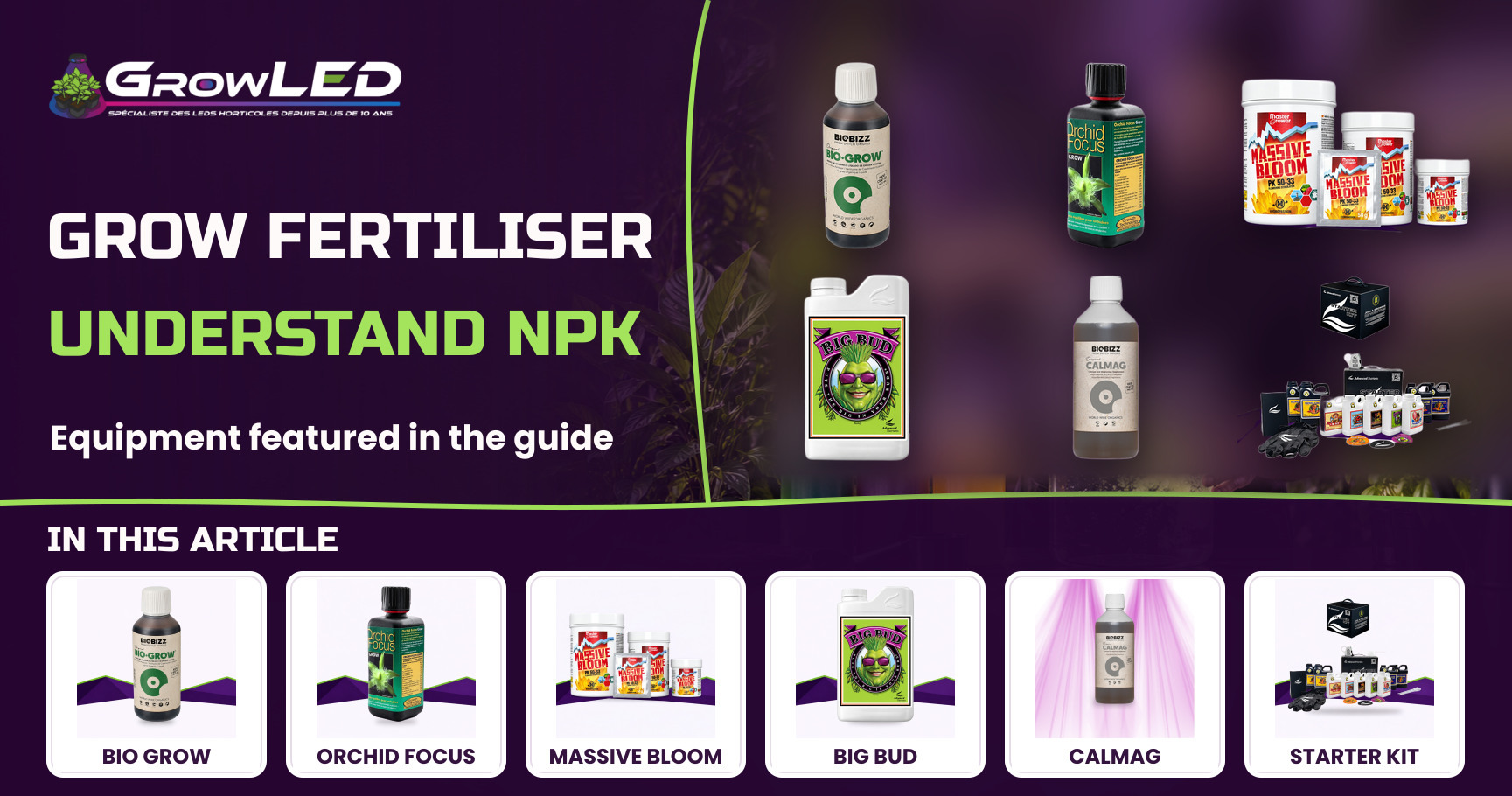
Three letters, three numbers, and yet half of the burnt leaves I come across on plants come from a badly read label, not from a bad fertiliser. In this article I show you how to decode an NPK, why two products with similar ratios can call for doses that are ten times apart, and how to feed your plants without ever pushing them beyond what they can actually take up.
1Understanding NPK: what the three numbers really mean
On every label, three numbers side by side always follow the same order: nitrogen (N), phosphorus (P), potassium (K). Nitrogen builds the visible part of the plant, stems, leaves, chlorophyll. A deficiency yellows the lower leaves first, an excess does the opposite: dark green, brittle leaves with edges that curl into a claw. Phosphorus works below the surface, it drives the roots and triggers flowering. Potassium regulates the exchange of water and sugars throughout the plant, it governs overall vigour and how well the flowers hold up at the end of the cycle. Remember the order, it never changes: N, P, K, in that exact order on any packaging.
But an N-P-K ratio is only a proportion, not a quantity delivered to the plant. A fertiliser marked 4-3-6 and another marked 12-9-18 share exactly the same relative balance, yet the second is three times more concentrated. What the plant actually receives depends on two pieces of information combined, never just one: the concentration shown on the label, and the dilution dose recommended by the manufacturer. This is precisely where most of the mistakes I see in cultivation begin: people compare raw numbers without looking at the dose that goes with them, and they carry the dose of one product over to another thinking that "since it's a fertiliser, it doses the same way". The table below lays the catalogue out flat so the logic jumps out at you.
| Product | NPK / PK shown | Form | Reference dose | What it reveals |
|---|---|---|---|---|
| Orchid Focus Grow | 1-0.7-1.8 | Liquid | 5 ml / 2 L | gentle fertiliser, deliberately low numbers |
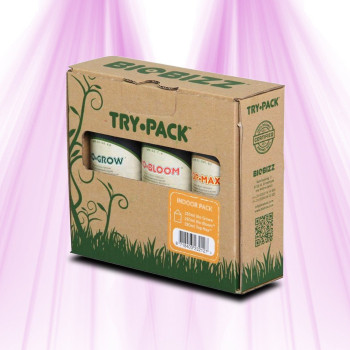
| Bio Grow | 4-3-6 | Liquid | as per grow schedule | nitrogen-dominant, growth phase |
| Canna Terra Pro (soil) | 12-14-24 (1.5 kg/m³), EC 1.0 mS/cm | Ready-to-use substrate | already blended in, no dilution | the substrate feeds before any addition |
| Big Bud | PK 3:1 | Liquid | 2 ml/L | liquid booster, moderate dose |
| Massive Bloom | PK 50-33 | Powder | 0.3 g/L | huge number, tiny dose |
| CalMag | Calcium 3% / Magnesium 1% | Liquid | 0.3 to 1.5 ml/L | corrects a deficiency, not a classic NPK |
| BioDown | pH reducer | Liquid | 0.1 ml/L (lowers pH by 0.5 point) | adjusts uptake, not nutrition |
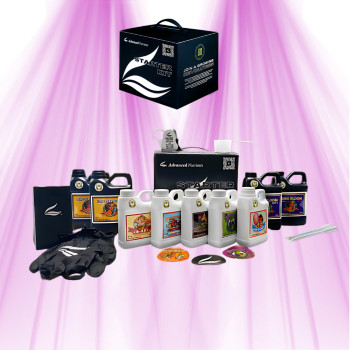
| Starter Kit Master Complet | EC 1.0 to 2.0 mS/cm, pH 5.5 to 6.5 self-regulated | Liquid kit | fixed 2 ml/L | single dose, pH managed automatically |
Look at the Massive Bloom line: PK 50-33, a figure that makes your head spin at first glance. And yet the recommended dose is only 0.3 grams per litre, well below the 2 ml/L of a liquid booster like Big Bud. The number on its own tells you nothing about what you're actually going to pour into your watering can: it's the dose that translates the ratio into a real quantity taken up by the roots.
🌱 Joseph's tip
Before buying a fertiliser because its NPK "looks strong", turn the packaging over and look for the recommended dose in ml/L or g/L. A high ratio combined with a small dose often delivers less active material than a moderate ratio combined with a generous dose. Always compare the two figures together, never one without the other.

2Growth or flowering: reading the label beyond the ratio
In the growth phase, the plant builds its architecture: it needs plenty of nitrogen to put on wood, thicken its stems and multiply its leaves. A growth fertiliser therefore logically shows a first number higher than the two that follow, without an excess of phosphorus or potassium that would serve no purpose at this stage and could slow rooting down. That's exactly what Biobizz - Bio Grow - 100% organic growth stimulator shows, with its NPK 4-3-6 stated in black and white in the specifications. It's a product certified NF U 42-001/A10, and it's also the best seller in our pure nutrition range with 278 sales: a good reference point if you're looking for a growth fertiliser that other growers already use regularly.
But a growth NPK has no absolute value, and this is where many label readers get it wrong. Take Orchid Focus Grow fertiliser 300ml - 1L: it too targets growth, but its stated NPK is 1-0.7-1.8, roughly ten times lower than Bio Grow's 4-3-6. It's not a "worse" fertiliser, it's a fertiliser calibrated differently, designed for plants or substrates more sensitive to excess salts. Its data sheet gives a very precise dosage, 5 ml for 2 litres of water, and the formula is announced free of urea and ammonia, two compounds that can stress fine roots when they're badly dosed. Two "growth" fertilisers, two radically different NPKs, and neither of them is wrong: they're simply designed for different doses and uses.
- The ratio, to know whether the fertiliser targets growth (N dominant) or flowering (P and K dominant).
- The base concentration, which varies enormously from one product to another even at a comparable ratio.
- The recommended dose in ml/L or g/L, the only piece of information that translates the ratio into a real quantity.
- The secondary composition, the presence or absence of urea, ammonia, a certification like Bio Grow's NF U 42-001/A10.
3Concentrated boosters: the burn trap
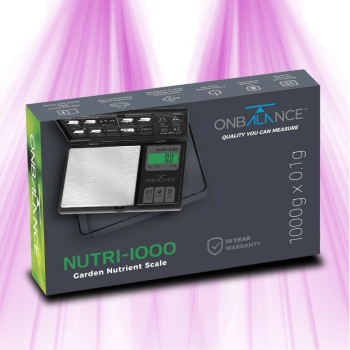
Flowering boosters concentrate phosphorus and potassium to support the swelling of the flowers, and it's precisely their strength that makes them the easiest product to overdose. The Massive BLOOM flowering booster - Hydropassion is the clearest example in the catalogue: a PK 50-33 in powder form, with a recommended dose of only 0.3 grams per litre. The gap between the stated number and the real dose is enormous, and that's exactly what makes a weighing error dangerous: a poorly calibrated small scale, an "about right" spoonful, and you double or triple the dose without realising it. It's an established product, with 110 sales, not a niche curiosity: watching your dosage isn't optional because it's popular, it's essential because it's concentrated.
The format changes the dosing scale just as much as the ratio itself does, and that's what the contrast with a liquid booster shows. Big Bud - Advanced Nutrients - Powerful Flowering Booster shows a PK 3:1 in liquid form, with a dose of 2 ml/L, very different from Massive Bloom's 0.3 g/L for a nonetheless similar goal, boosting flowering. The lesson here isn't that one is stronger than the other: it's that powder and liquid can't be compared on the same numerical scale. A frequent mistake I see among rushed growers is memorising "2 ml/L, that's the booster dose" and applying it mechanically to the next product, powders included. Every product has its own dosage table, printed for a good reason.
🌱 Joseph's tip
Never memorise a dose "by feel" from one product to another, even between two flowering boosters that seem to play the same role. Keep the data sheet or the packaging in front of you at every weighing or measurement, especially for very concentrated powders like Massive Bloom where half a gram of difference changes everything.
4The pre-fertilised soil trap
A soil isn't just a neutral medium, and it's the first thing I explain to a grower who's starting out. Some substrates are pre-fertilised during manufacture, meaning they already contain a reserve of nutrients available to young roots right from potting. The Canna TERRA Professionnal - Soil 50L states it in black and white in its specifications: NPK 12-14-24 at a rate of 1.5 kg per m³, with an EC (electrical conductivity, which measures the concentration of nutrient salts) of 1.0 mS/cm. That EC figure isn't a trivial detail, it's the measurable proof that the substrate is already feeding the plant even before the first liquid fertiliser watering.
The number one avoidable cause of burn I see among beginners is potting into a soil like this one and then immediately adding a full liquid fertiliser programme on top. The two nutrient sources add up, the EC of the substrate climbs beyond what young roots can tolerate, and the symptoms of over-fertilisation appear within a few days: leaf tips turning brown, growth stalling. The habit to adopt is simple to state, harder to stick to when you're keen to do things right: let the soil work on its own while the young plants develop an adequate root system, and only introduce a liquid nutrition programme when the first signs of hunger appear, not before.
- Always check whether your soil is described as "pre-fertilised" before working out a nutrition programme, the information is usually in the product specifications.
- An EC shown on the packaging is a direct clue to the nutrient load already present, the higher it is, the longer you should wait before adding fertiliser.
- Young plants have small needs, a rich soil like Canna Terra Pro often covers all of the demand of the first few weeks on its own.
5Beyond NPK: the hidden causes of burn
A leaf burning at the edges isn't always the sign of an NPK excess, and it's a confusion I correct very regularly when talking with frustrated growers. Two causes visually imitate over-fertilisation without being one: a calcium and magnesium deficiency, common with softened tap water or pure reverse-osmosis water, and a badly adjusted watering pH, which blocks nutrient uptake even when the fertiliser dose is perfectly correct. In both cases, the plant shows signs that resemble an overdose, spots, drying edges, stalling growth, when the problem has nothing to do with the amount of fertiliser poured.
The Biobizz - CalMag - Managing Ca/Mg deficiencies addresses the first case directly. Its composition shows 3% calcium and 1% magnesium, two elements often absent or poorly balanced in everyday watering water, with a fine dosage of 0.3 to 1.5 ml/L depending on the observed need. Before cutting back a fertiliser programme thinking I've overdosed, I always look at whether the symptoms resemble a Ca/Mg deficiency rather than an NPK excess: the distinction completely changes the solution to apply.
The second case comes down to pH, the uptake condition many people forget to check before blaming the fertiliser. The Biobizz - BioDown - pH reducer gives a dosage precise to a tenth of a millilitre: 0.1 ml/L is enough to lower the pH by 0.5 point. That level of precision isn't a detail, it's the demonstration that a perfectly well dosed NPK delivered outside the pH range suited to your crop produces exactly the same visual symptoms as an overdose: the roots simply can't absorb what surrounds them. Before questioning the fertiliser dose, always check the pH of your watering water first.
6Where to start without getting it wrong
Managing the ratio, the dose, the EC and the pH all at once takes experience, and I don't hide that from growers who are just starting. When this mental load becomes a barrier rather than a learning process, the safest solution is a system that automates the riskiest variable rather than one more fertiliser to dose by hand. The Starter KIT Master Complet - Advanced Nutrients is built for that: its specifications explicitly indicate a beginner level, an EC self-adjusted between 1.0 and 2.0 mS/cm, and a pH self-regulated between 5.5 and 6.5 thanks to pH Perfect technology, all with a fixed 2 ml/L dose to remember once and for all. It's a product that has proven itself, with 117 sales to its name, and it directly answers the promise of this article: feeding without burning, by removing the variable that does the most damage in a beginner's hands, a badly controlled pH.
Remember the central rule of everything we've just seen: the NPK number only makes sense paired with its dose, its form, and the pH that governs its uptake. A high ratio isn't dangerous in itself, a badly calibrated dose is. A pre-fertilised soil isn't a trap if you know it's already feeding. A damaged leaf isn't always a fertiliser excess, check the Ca/Mg and the pH first before cutting back your programme.
Build your nutrition programme without guessing the doses
Whether you're starting from a pre-fertilised soil like the Canna TERRA Professionnal or from an automated kit, every label in our range shows its NPK, its dose and its form so you can compare before you buy. Find the Starter KIT Master Complet - Advanced Nutrients and the Biobizz - CalMag - Managing Ca/Mg deficiencies in our growshop, alongside the whole nutrition range.
See the growshop →If I have to take one thing away from all the product sheets I've watched go by, it's that NPK is never a value judgement, it's a data point to cross-reference with the dose. A beginner who reads a dose to the tenth of a millilitre before pouring is already doing better than an experienced grower who pours by eye. Take the time to read the whole label, ratio, dose, form, and check the pH before blaming the fertiliser: that's all that separates a crop that feeds from a crop that burns.