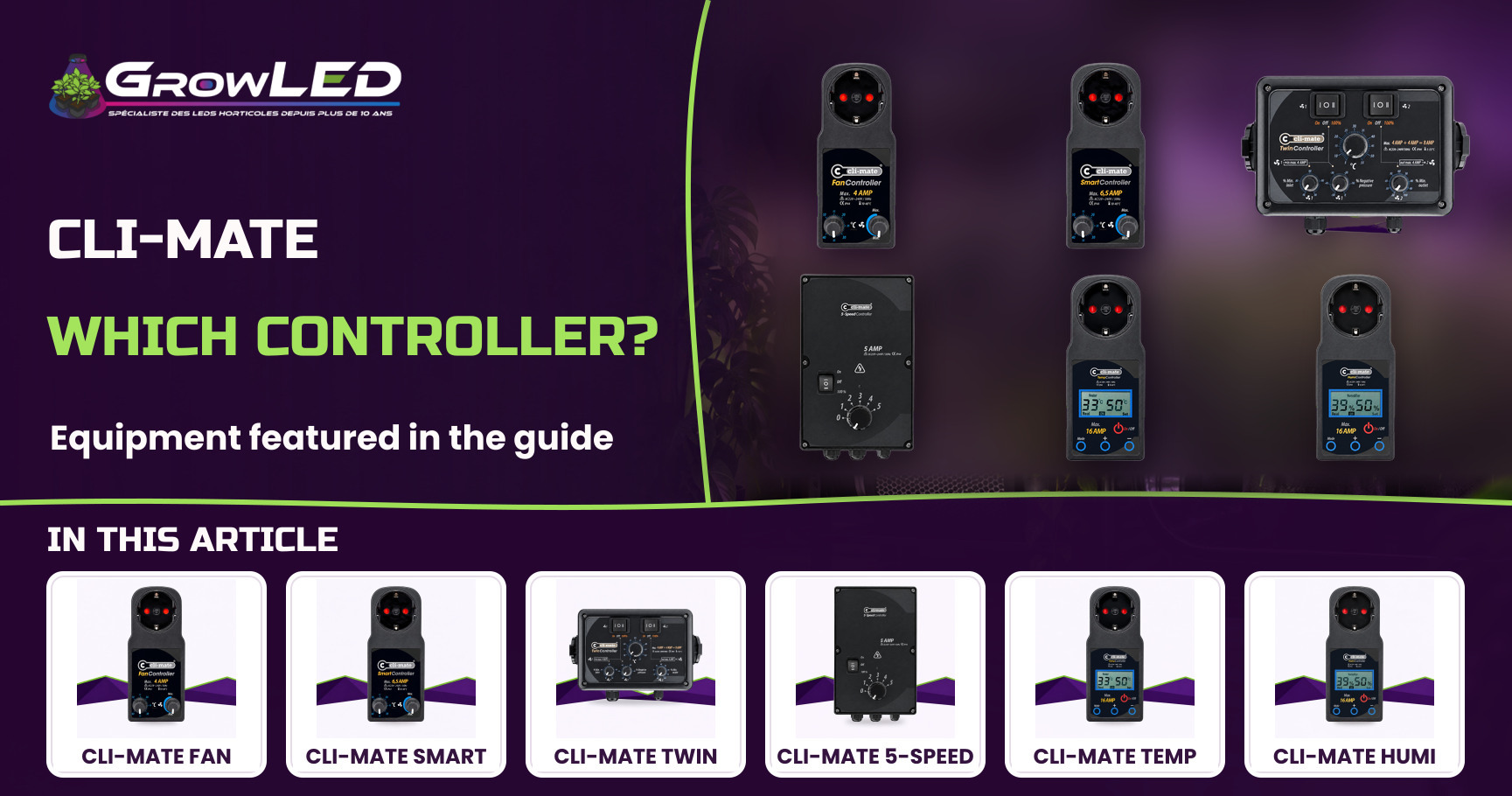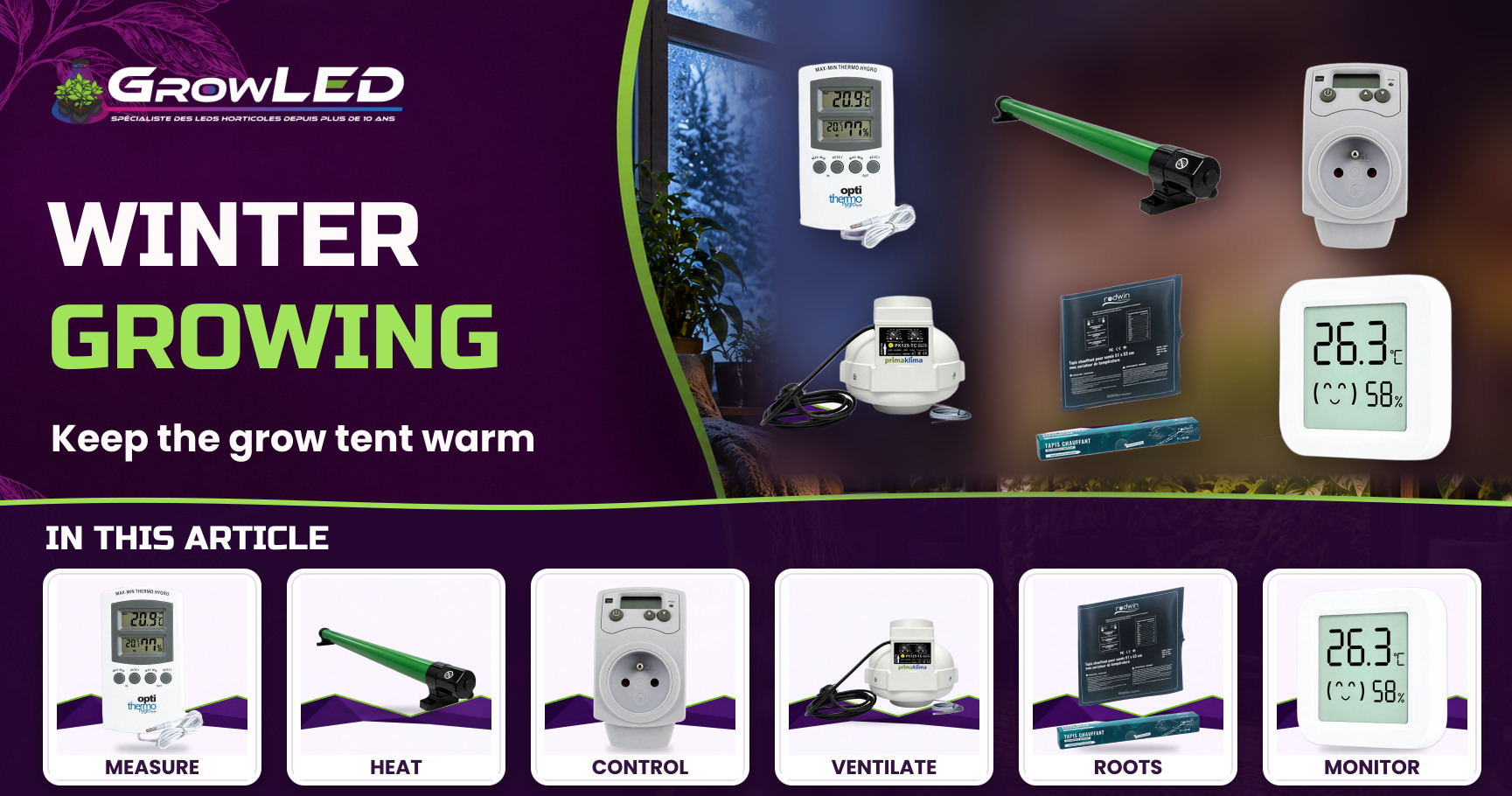




































































Going away on holiday without thinking about your grow tent every five minutes is entirely possible, but it's something you prepare before you shut the door, not mid-flight. The indoor climate (temperature, humidity, VPD) decides whether your plants wait patiently for you or take a beating while you're gone. There's no automatic watering system being sold here: we're only talking about securing the air your plants breathe, with precise thresholds, tested settings, and a checklist that fits on a single sheet of paper.
Why a tent's climate drifts the moment you turn your back
A tent that runs smoothly through two weeks of holiday isn't something you can improvise the night before you leave. The indoor climate of a growing space is a system in fragile balance: temperature, humidity and air exchange constantly offset one another, and it's precisely your daily presence (a glance, a tweak of the fan speed, a door you close properly) that keeps that balance in place. As soon as this watchfulness disappears for 5, 10 or 15 days, the small deviations pile up instead of being corrected.
The first risk is heat. Even an efficient LED bar converts a good part of its energy into heat rather than useful light: a sealed tent without properly sized extraction can climb 6 to 10°C above the ambient temperature of the room within a few hours. In the middle of a heatwave (as I explained in my article dedicated to that subject), a room that hits 30°C in the afternoon can turn your tent into an oven at 38 or 40°C if the extraction is undersized or poorly set. Above 32 to 33°C at canopy level, the plant closes its stomata to limit water loss: photosynthesis slows, growth stops, and during prolonged flowering above 35°C for several days in a row, some sensitive varieties can develop signs of hermaphroditism.
The second risk is humidity drifting in one direction or the other. Extraction running flat out non-stop to keep the temperature safe will also dry out the air by pulling in outside air that is often drier, especially at night. Conversely, a poorly ventilated space where substrate moisture and plant transpiration build up without enough air renewal can see humidity climb above 65 to 70%, an ideal breeding ground for powdery mildew and above all botrytis (grey mould) on dense buds late in flowering. Both of these drifts are silent: they don't show up in a single day, they settle in over several days.
The third risk, less obvious, is the mechanical fault that goes unnoticed. A carbon filter that gradually clogs increases the pressure drop and reduces the extractor's real airflow without anything looking abnormal to the eye. A tiring fan bearing, a poorly calibrated thermostat, a ducting pipe that comes slightly loose: day to day, you fix that in thirty seconds. While you're away, that little fault runs on its own for a week or two and can turn a minor annoyance into a genuine climate problem.
VPD, the indicator that matters more than temperature alone
Temperature and humidity taken separately only tell part of the story. What really determines how the plant breathes, transpires and grows is VPD (vapour pressure deficit), that is, the gap between the amount of water vapour the air could theoretically hold at a given temperature and the amount it actually holds. Two rooms both reading 50% humidity can impose completely different water stress on the plant depending on the temperature.
An example says it better than a formula. At 24°C and 60% humidity, the VPD sits around 1.2 kPa: comfortable for a plant in growth. At 28°C and 40% humidity (a combination you'll easily run into during a summer heat spell with no supervision), the VPD climbs to more than 2.2 kPa: the plant closes its stomata as a safety measure, stops taking in CO2, and growth freezes for the whole duration of the stress. Conversely, at 20°C and 70% humidity, the VPD drops below 0.6 kPa: the air is too saturated, transpiration slows, and the risk of mould rises sharply in the dense areas of the foliage.
| Growth stage | Daytime temperature | Humidity | Target VPD |
|---|---|---|---|
| Vegetative growth (veg) | 22 to 28°C | 55 to 65% | 0.8 to 1.2 kPa |
| Early flowering | 22 to 26°C | 45 to 55% | 1.0 to 1.3 kPa |
| Late flowering | 20 to 24°C | 35 to 45% | 1.2 to 1.6 kPa |
Above all, remember this before you leave. It's the combination of heat and dry air that's dangerous, not either one on its own. A temperature spike by itself, the plant shrugs off for a few hours. A temperature spike paired with a drop in humidity over several consecutive days, that's what wrecks growth or degrades late flowering while you're on holiday.

Monitoring remotely: where to place the probe and which thresholds to aim for
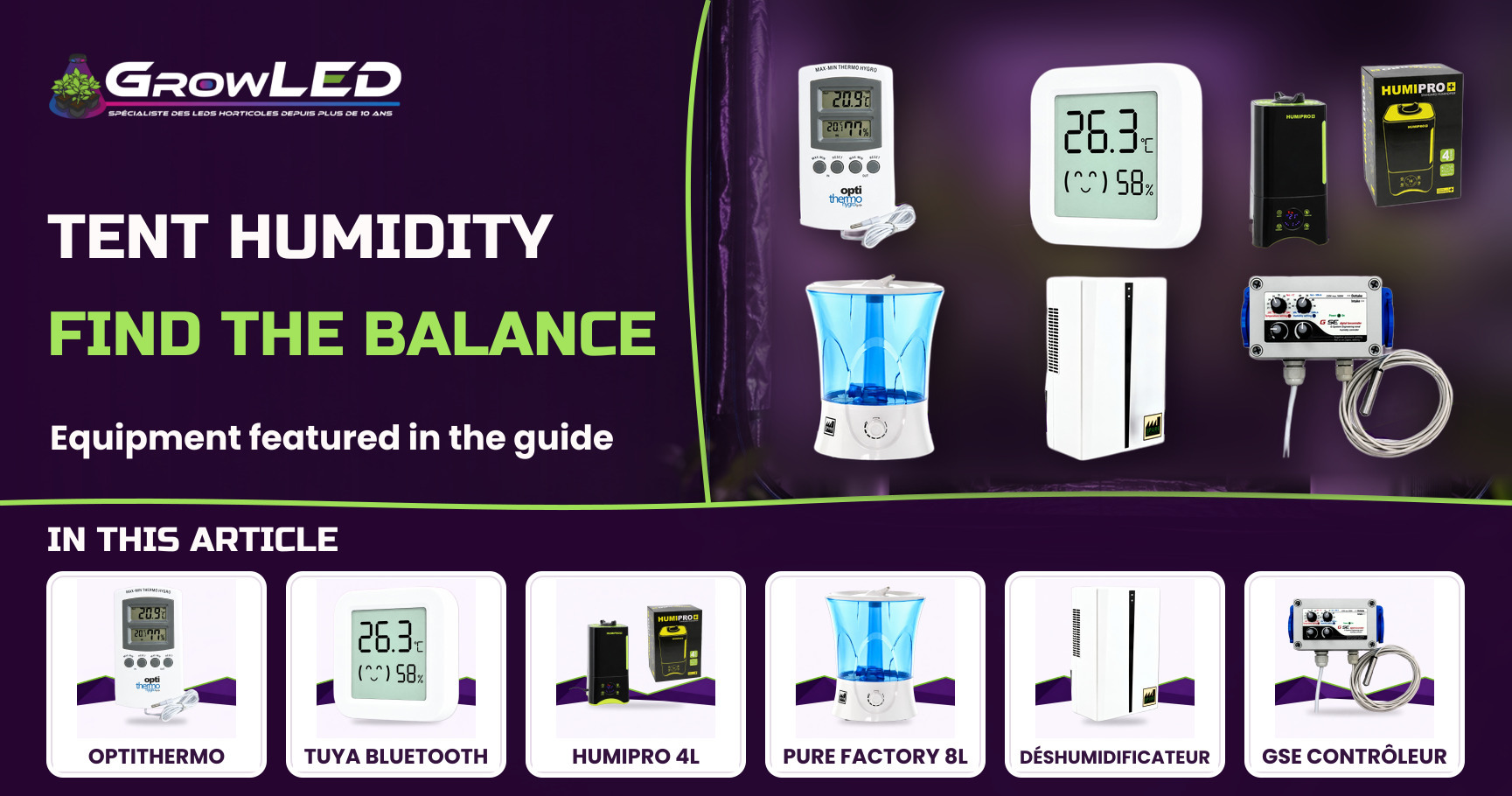
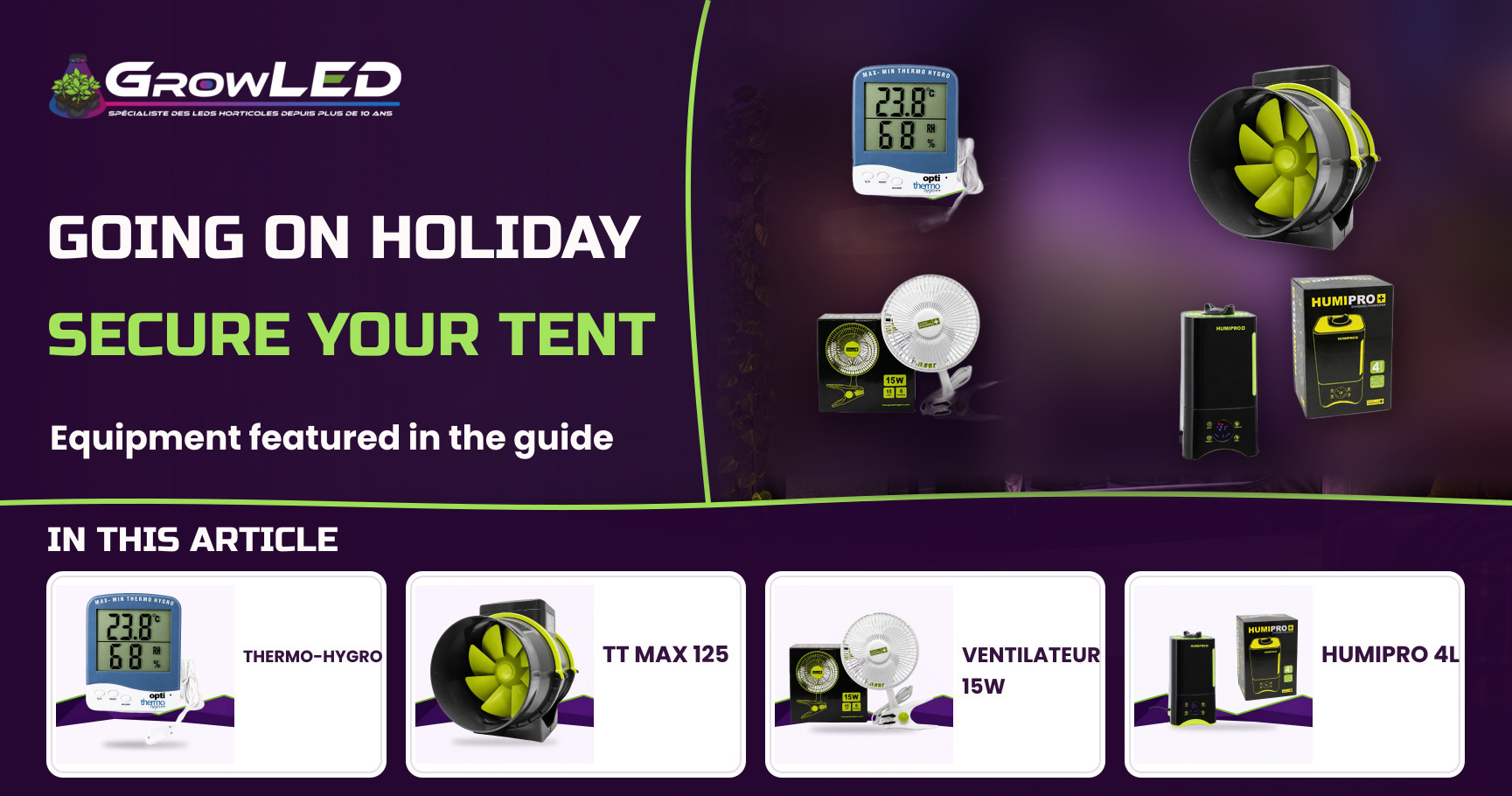
You can't control what you don't measure. A reliable thermometer-hygrometer placed in the right spot is the bare minimum before you leave, and it's the foundation the rest of this checklist rests on. The Digital Hydro Thermometer with its remote probe lets you read temperature and humidity exactly where it counts: at canopy height, not at the top of the tent nor on the floor.
The position of the probe changes the reading completely. Too close to the LED bar, it picks up the radiant heat from the panel and shows 3 to 5°C more than what the leaves actually experience. Placed on the floor, it shows the opposite: a cooler, more humid value that doesn't reflect the active transpiration zone. Best practice: probe 15 to 20 cm above the pot, out of direct light flow, in the zone where the buds or the growing tips are.
Before you leave, run a full-scale test of 48 to 72 hours. Set your climate the way you plan to leave it while you're away, then don't touch anything for those two or three days, noting the minimum and maximum values shown morning and evening. It's this test period that tells you whether your settings genuinely hold up, not a guess made the evening before amid the rush of packing.
Write your thresholds down on paper before you leave, not just in your head. For example: temperature between 20 and 27°C, humidity between 40 and 55%. If you have someone stopping by, it's this sheet that lets them know in ten seconds whether everything's fine or whether they need to act, without needing to know the first thing about indoor growing.
🌱 Joseph's tip
Before every departure, I take a photo of the thermometer. A simple photo with the time and date gives me an exact reference of the starting state. If I get a message from my neighbour with a value that worries me, I can compare it straight away to what I left behind, and tell whether it's a real drift or just a normal day-and-night fluctuation.
Extraction and ventilation: the settings that absorb the swings
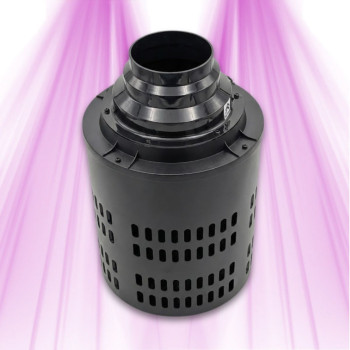
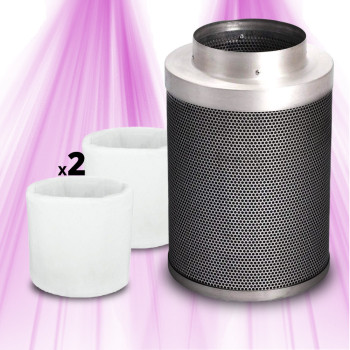
Extraction airflow should be sized to absorb a spike, not just the average. In everyday use, you aim for a complete renewal of the tent's air volume every 1 to 3 minutes, carbon filter included (the filter cuts the real airflow by 20 to 30% compared with the extractor's nominal rating). A TT MAX 125mm 2-speed extractor is designed exactly for this: a low speed that's enough to keep a stable climate day to day, and a high speed reserved for heat spikes, which you set before you leave based on what your 48 to 72h test revealed.
The speed you choose before leaving should be the one for the worst scenario tested, not the one for everyday comfort. If your 48h test shows the tent holds at 26°C on low speed during the hottest day of the week, stay on low speed. If it climbs to 30°C, switch to high speed for the whole trip, even if it means losing a bit of humidity that you'll make up with the humidifier if needed.
A common mistake is leaving the extractor at maximum non-stop to be on the safe side. The opposite often happens: outside air drawn in continuously, drier at night and during dry spells, drops the humidity below 35%, sometimes below 30%, which pushes the VPD very high even at a moderate temperature. The right setting isn't permanent maximum airflow, it's the airflow that stabilises the climate within the target range without going too far in either direction.
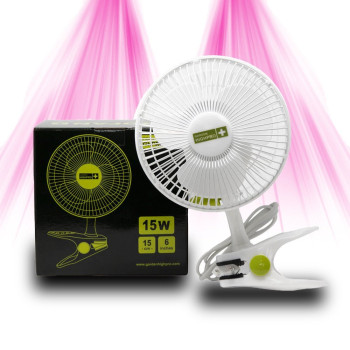
Air circulation inside the tent matters as much as the extraction itself. Without air movement, warm humid air stagnates in localised pockets, particularly near the driver of the LED bar and between dense branches late in flowering, creating micro-zones of condensation that favour botrytis. A Garden HighPro 15W clip fan positioned to gently sweep the top of the canopy (never aimed continuously at a single point, which dries out and curls the leaves locally) evens out the temperature and, as a bonus, strengthens the stem through mechanical stimulation.
Humidifying without drowning: correcting air that's too dry without overdoing it
Only humidify if you've measured a genuine deficit, not on principle. The point of this article isn't to sell you automatic watering, it would be dishonest of me to suggest it without an irrigation system designed for the job: here, we're only talking about correcting the ambient air when it becomes too dry, typically in the middle of a summer heat spell or when the extraction runs on high speed for several days in a row.
An ultrasonic humidifier works by high-frequency vibration that breaks water into micro-droplets suspended in the air, an aerosol, not by heat evaporation. The HUMIPRO 4L ultrasonic humidifier delivers this fine mist, which needs to be dispersed by the air circulation before it settles on the leaves or the buds: place it in the centre of the tent, never up against the foliage, and let the circulation fan do the work of dispersing it.
Working out the tank's run time matters for a departure of several days. A 4-litre tank running non-stop at medium output can empty in 12 to 18 hours depending on the setting: for a departure of a week or more, that's a point to plan for (see the checklist and the section on the trusted friend), not a system you can leave without thinking about it again for ten days.
A common mistake is running the humidifier in an already warm tent without enough air renewal. The dew point then rises faster than expected, and condensation appears on the inner walls or the reflective fabric of the tent rather than being absorbed by the air: perfect ground for mould on the surfaces rather than on the plants, but an equally serious problem in the long run.
🌱 Joseph's tip
I always stick a level marker on the humidifier tank before I leave. A simple line drawn with a permanent marker on the transparent wall: if someone stops by, they know at a glance whether they need to top up the water, without having to open the unit or guess at a percentage.
The checklist to run the evening before you leave
Do this list the evening before, not in the rush of the morning you leave. It runs through, in order, the points that make the difference between a stable tent and one that drifts while you're away.
- Full-scale test of 48 to 72h on the final settings, recording the minimum and maximum values
- Thermometer-hygrometer probe repositioned at canopy height, out of the direct flow of the bar
- Carbon filter checked: if it's clogged (louder motor noise, airflow that seems weak), clean or replace it before you leave, not when you get back
- Extractor speed set to the one validated during the test, not to a last-minute guess
- Ducting fixings, clamps and fan clip checked (nothing should be able to come loose or fall onto the plants)
- Humidifier tank filled to the brim, with a level marker for a quick visual check
- Substrate watered normally, neither in excess to make up for your absence (a waterlogged substrate in a sealed tent for several days sharply increases the risk of root rot), nor below your usual amount
- Climate thresholds noted on paper (acceptable temperature and humidity) for yourself and for whoever stops by
What you should really ask a friend or neighbour to do
Someone stopping by your place doesn't need to become a grower in a single visit. Ask them one simple, precise thing: check that the extractor and fan lights are on, read the numbers on the thermometer and compare them to the range you've written down for them, and top up the humidifier tank if the marker shows a low level.
Above all, don't ask them to touch the settings unless there's a clear written instruction. For example: if the displayed temperature goes above 28°C, turn the extractor knob to position 2, otherwise don't touch anything. A single conditional instruction avoids nasty surprises far better than a long explanation about how the climate works, which they may well forget or misapply.
Don't ask for an improvised manual watering either, without a precise instruction on volume and frequency. This is often where things go wrong: out of an excess of caution, a friend tends to over-water to be sure, which, combined with a sealed tent and already well-managed humidity, can push up the moisture of both the substrate and the air at the same time. If watering is necessary while you're away, give an exact volume in millilitres and a specific day, not a rough impression by eye.
One visit every 3 or 4 days is enough in the vast majority of cases for a climate properly set at the start. If you're away for more than two weeks, plan two spaced-out visits rather than a single one in the middle of the trip: that leaves a margin to react if a setting needs adjusting, without turning your friend into a full-time minder.
What reassures me before leaving is never a single setting, it's the combination of the three: a reliable measurement, extraction tested under real conditions, and a human contact who knows what to look at. A tent's climate isn't magic, it follows a fairly simple physics once you know the thresholds that matter for your growth stage. Leave with peace of mind, not with your eyes shut: the difference between the two is the 48 hours of testing and the sheet of instructions you leave behind.
Kit out your tent before you go
For a climate that holds up without you while you're away: the TT MAX 125mm 2-speed extractor, the digital hydro thermometer and the HUMIPRO 4L humidifier make up a simple, reliable trio.
See climate management →