

































































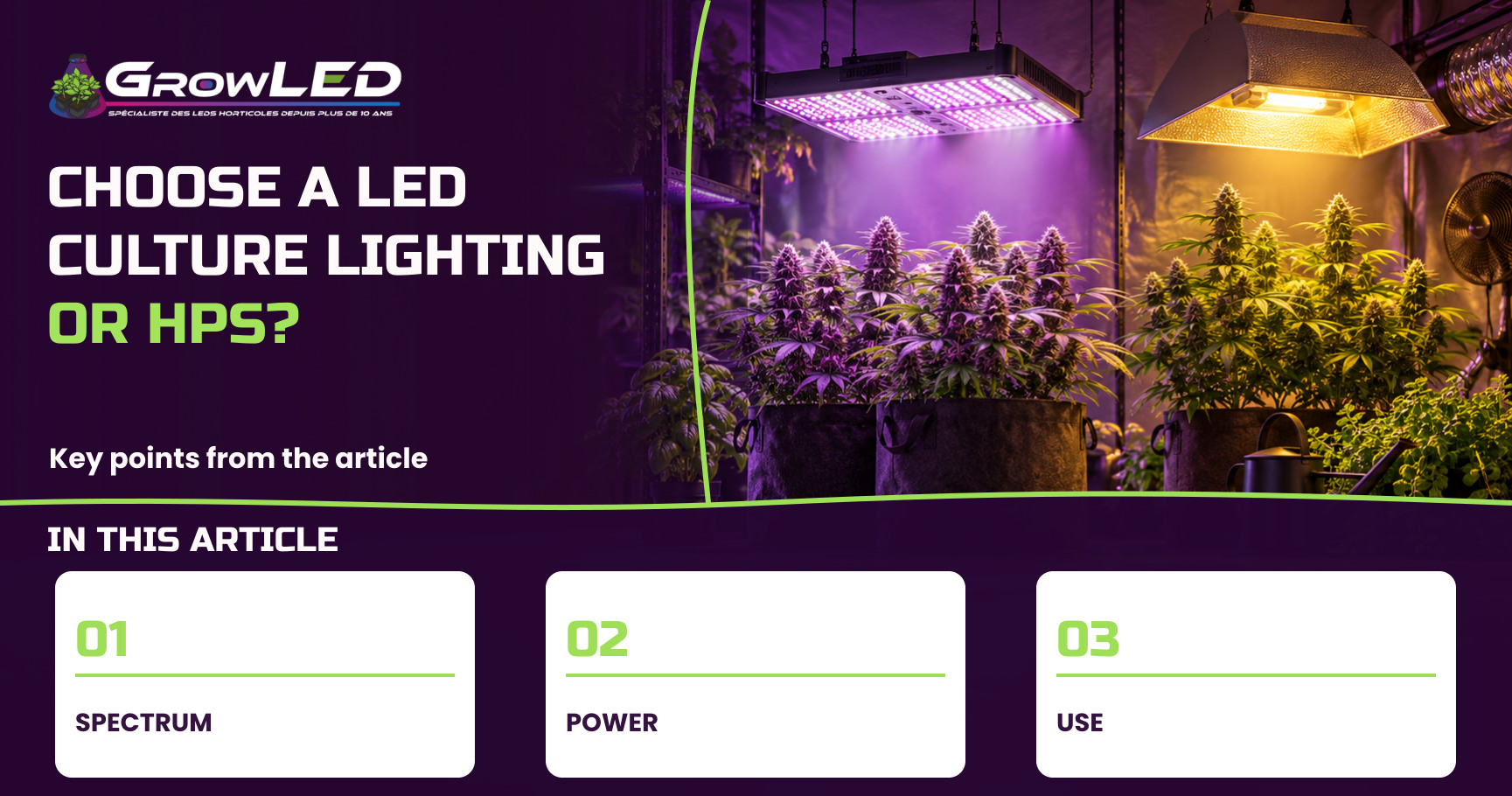
The HPS grow light
Characteristics of the HPS light
The HPS or High Pressure Sodium grow light is one of the most commonly used lighting systems for indoor cultivation. This system uses a combination of several types of gases. It consists of an discharge tube made of aluminum oxide. When energized, an electric arc occurs within the gas, producing a very bright and powerful light.
This system primarily emits a yellow spectrum and is relatively less expensive than an LED or T5 grow light.
Disadvantages of the HPS light
However, this lighting solution also has a number of disadvantages and can be harmful to certain crops. Specifically, the HPS light produces too much heat, requires a lot of energy to be effective, and the yellow light it produces is not sufficient for either the growth or flowering stages of plants.
Furthermore, the HPS system is responsible for emitting a large amount of CO2, which is not ideal in terms of environmental impact. The presence of mercury also complicates its use and is another problematic factor for the environment even after its use.
Alternatives to the HPS light
LED technology has eliminated the need for this unnecessary yellow light and emits the correct wavelengths that your plants need. Although LED is much more expensive, in the end, you will benefit from the energy savings it provides and see a difference at harvest time.