

































































Introduction
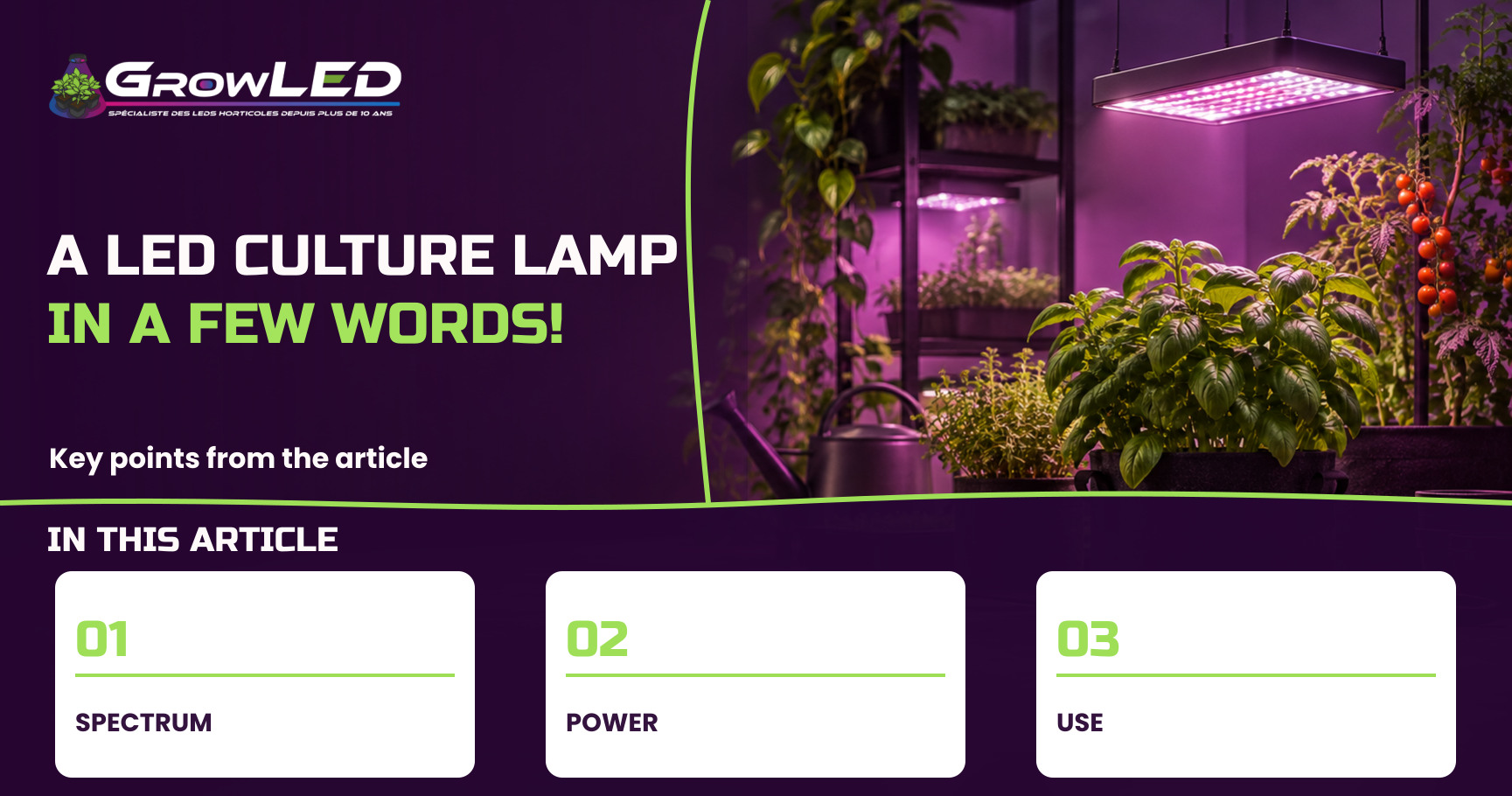
This system consists of sending an electric current through a semiconductor material. The movement of electrons causes a very powerful light emission in a bulb of very small size. The wavelength of the radiation emitted depends on the different materials used for the semiconductor. With this device, your indoor plants will have exactly the brightness they will need at all stages of their growth.
The essentials on Watts
We used to choose our conventional bulbs according to the number of watts. In terms of LED lighting, wattage is no longer a significant criterion. Even though this measurement is written on your LED bulb, what counts is the light output.
The essential on the wavelength
An LED lamp should give your plants all the light they need during all stages of growth / flowering. The light emitted by the LED must be able to be of the same quality and intensity as that of the sun. Between infrared and ultraviolet, different colors of visible spectra come into play depending on the growth cycle of your plants: purple, blue, yellow, orange and red.
Outdoor plants have the advantage of being illuminated by the sun. For your indoor cultivation, you must choose a light bulb that "imitates" the sun and is able to provide your plants with the light they need during growth or flowering. For this you need to choose a broad spectrum LED bulb.
Conclusion
Because of their light output and the width of their spectrum, conventional HPS lamps and fluorescent fixtures have long been preferred for indoor growing. Only they represent a considerable cost. Being much more economical, the LED lamps then replaced these conventional bulbs. Nevertheless, full spectrum LEDs do not have the space they deserve.
The wide spectrum of colors emitted by a LED horticultural lamp is very complete and is perfectly suited to the different phases of the crop.