

































































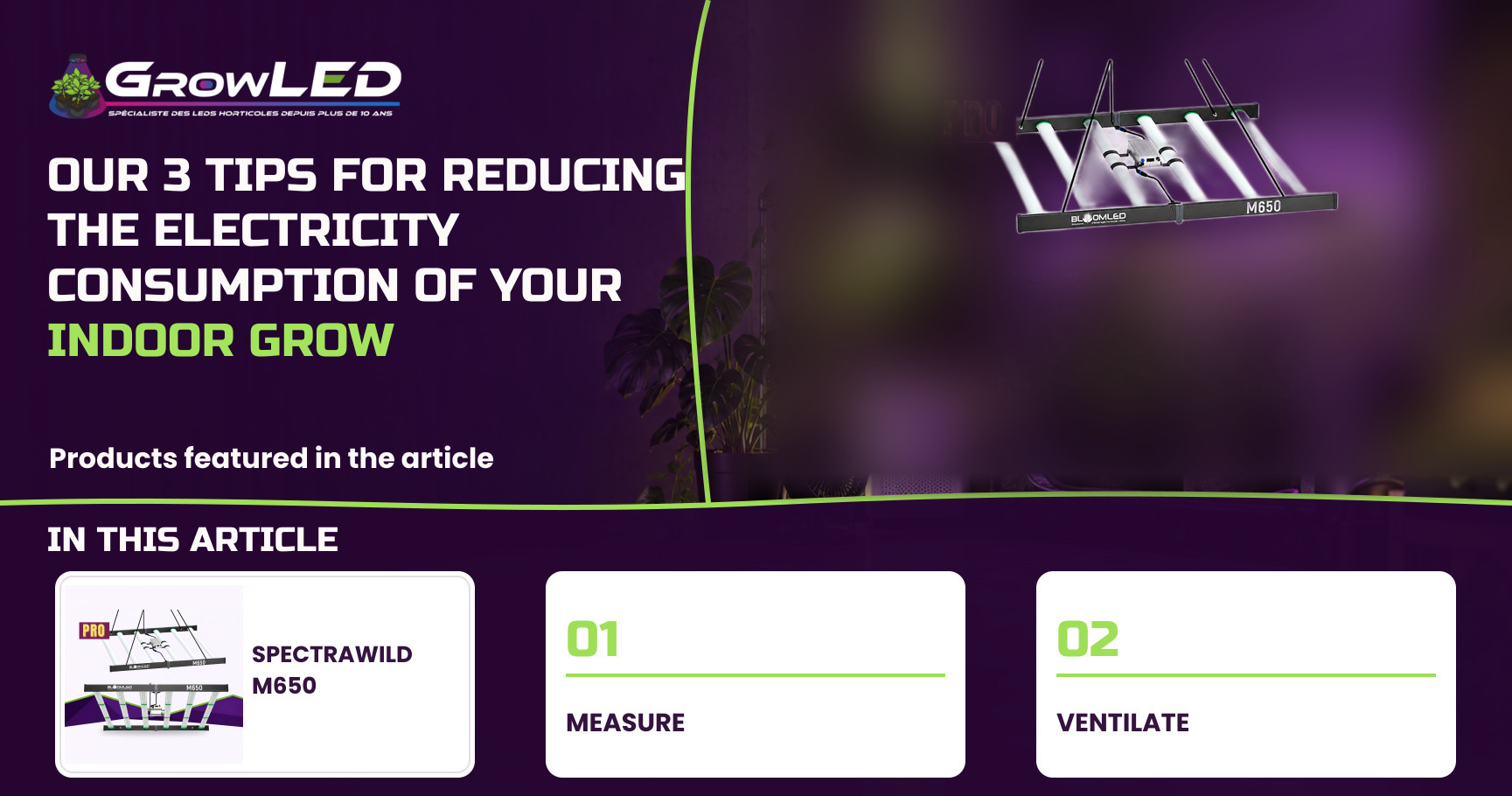
Indoor cultivation presents a significant energy challenge, particularly due to the intensive use of HPS/MH lighting systems. is Electricity consumption a major concern for growers, both for economic and ecological reasons. In this article, we will explore how technological advances, particularly LED lighting, offer solutions to significantly reduce this consumption. We will also see how other items, for example heating or even varieties, can help you reduce your consumption.

1) Choosing LED horticultural lighting to consume less
The switch to horticultural LED lighting represents the first major step towards reducing electricity consumption. Unlike traditional lighting systems like HPS (High Pressure Sodium) lamps, LEDs have the advantage of transforming more of the electrical energy into useful light for plant growth, rather than unnecessary heat. Here are some key benefits:
- Reduction of electricity consumption by up to 30% or more.
- Extended life , reducing the need for frequent replacements.
- Low heat emission , reducing the need for air conditioning and ventilation.
The Importance of the Light Spectrum
Choosing lighting with a suitable light spectrum is crucial. LEDs allow great precision in the light spectrum emitted, which directly influences photosynthesis and can improve the quality and quantity of production.
Find an article on the subject of the light spectrum for indoor cultivation
Advanced Light Intensity Management

The SpectraWILD M650 is an example of an LED solution allowing fine management of light intensity. This ability to adjust the intensity according to the specific needs of plants at different stages of their development represents a major advantage of LEDs.
On the SpectraWILD, for example, we recommend starting a crop at 200W, reaching 400W in flowering and using maximum power in the middle of flowering.
Also reduce your power at the end of flowering to increase yield.
Comparaison LED vs HPS
| Caractéristique | LED Horticoles | Lampes HPS |
|---|---|---|
| Energy consumption | Discounted up to 30% or more | Higher |
| Heat Emission | Weak | High |
| Lifetime | Long (up to 50,000 hours) | Shorter |
| Light Spectrum | Adjustable and precise | Less flexible |
| Initial cost | Higher | Lower |
| Long Term Savings | Significant | Lesser |
Tips for an Eco-responsible Culture
- Reduce intensity at the end of cultivation to boost production while saving energy.
- Take advantage of off-peak hours to turn on your lights, thus reducing the cost of your electric bill.
2) Heating/Thermostat/Lighting: Additional Strategies
Intelligent integration of heating and lighting systems in your growing space can play a crucial role in optimizing your energy consumption. The goal is to create a growing environment that not only promotes the optimal growth of your plants but also does so in an energy-efficient manner .

The Impact of Lighting on Temperature versus HPS
Lighting systems, especially horticultural LEDs , generate less heat compared to HPS systems . This means less stress on your plants from excessive heat and a reduction in the need for air conditioning, another major energy use item. However, in some situations, a supplemental heat source may be necessary to maintain optimal temperatures, especially during cold periods.
Strategic Use of Heating
Find more information in our article dedicated to heating in your indoor culture .
Using an oversized heater, controlled by a thermostat, allows you to reach the ideal temperature for your crops more quickly. This approach may seem counterintuitive at first — why use more powerful equipment when you're looking to save energy?
The answer lies in efficiency:
- Atteinte Rapide de la Température Désirée : Un chauffage plus puissant réchauffe l'espace de culture plus rapidement, ce qui signifie qu'il fonctionne moins longtemps. Cela est particulièrement efficace pendant les heures creuses, où le chauffage peut bénéficier de tarifs d'électricité réduits.
- Meilleur Contrôle de la Température : Avec un thermostat précis, le chauffage ne se déclenche que lorsque c'est nécessaire, évitant ainsi le gaspillage énergétique et garantissant des conditions de culture constantes.
Optimisation des Cycles Lumière/Chaleur
Scheduling your lighting cycles during the coldest parts of the day can also contribute to better thermal management of your grow space. This uses natural heat generated by your lighting system to compensate for temperature drops, reducing the need for additional heating.
Turn on your horticultural lamp at night and benefit from a higher ambient temperature during the day.
Coupling with Intelligent Control Systems
The adoption of intelligent control systems, capable of regulating both lighting and heating based on real-world conditions, can take optimization even further. These systems can automatically adjust light intensity and heat input to maintain ideal conditions, while minimizing energy consumption
3) Choose plant varieties to improve Energy Efficiency
Carefully selecting your crops can play a key role in optimizing the energy efficiency of your horticultural facility. varieties Short-duration offer a promising avenue for reducing overall energy consumption, while maximizing production potential. Here are some key points to guide you in this process:
Benefits of Fast Growing Varieties
- Reduced Crop Cycles: Fast-growing varieties reduce the time needed between planting and harvest. This means less time your lighting and heating systems need to be operational, resulting in substantial energy savings.
- Multiple Cycles Per Year: With shorter growing cycles, it is possible to perform multiple planting and harvesting cycles throughout the year, thereby increasing the productivity of your growing space without increasing your energy consumption.
- Rapid Response to Market Conditions: Fast-growing crops allow you to respond more quickly to changes in market demand, giving you increased flexibility in your production planning.
Choice of Adapted Varieties
When selecting your crops, consider the following criteria to maximize energy efficiency:
- Tolerance of Temperature Variations: Some varieties are more tolerant of temperature fluctuations, which can reduce the need for rigorous climate control and therefore, the associated energy costs.
- Light Requirements: Plants with lower or more flexible light requirements can thrive under varying light intensities, allowing the use of less energy-intensive LED lighting settings.
- High Yield for a Given Area: Favor varieties offering a high yield per unit area. This optimizes the use of your growing space and the energy efficiency of your lighting.
Planting Strategies
- Crop Rotation: By planning a crop rotation that takes into account fast-growing varieties, you can not only improve the soil health and biodiversity of your growing space but also optimize the use of your energy resources throughout the crop. the year.
- Use of Advanced Techniques: Hydroponics or aeroponics can offer faster plant growth by optimizing growing conditions. These methods can be particularly efficient in terms of water and fertilizer use, while being compatible with efficient energy management
Things to remember in this article:
Reduction of electricity consumption: Horticultural LED lighting systems offer an effective solution for reducing electricity consumption in indoor cultivation, with notable advantages such as:
- Up to 30% or more reduction in power consumption compared to traditional HPS/MH lamps.
- Extended lifespan that minimizes replacements.
- Low heat emission, reducing the need for air conditioning and ventilation.
Light spectrum and intensity management: The use of LEDs allows great precision in the light spectrum emitted, essential for photosynthesis, and offers the possibility of finely managing the light intensity to adapt to the specific needs of plants. different stages of their development.
LED vs. HPS Comparison: LEDs outperform HPS lamps in several aspects, including energy consumption, heat emission, lifespan, and light spectrum flexibility, despite a higher initial cost.
Eco-responsible strategies: Among the practices recommended for more eco-responsible cultivation are reducing light intensity at the end of cultivation and optimizing the use of lighting during off-peak hours to reduce costs.
Heating and lighting: Smart management of these two elements can improve the energy efficiency of the growing space. LED systems, producing less heat, may require additional strategies to maintain optimal temperatures, especially during cold periods.
Variety selection: Choosing fast-growing varieties adapted to growing conditions can significantly influence energy efficiency, allowing energy savings while optimizing production.
Conclusion
Horticultural LEDs represent a major advancement in indoor growing, providing growers with an effective solution to reduce their power consumption. By adopting good practices and choosing the appropriate equipment, it is possible to optimize your installation so that it is both productive and eco-responsible.
At GrowLED , we are committed to providing the best lighting solutions to help our customers grow successfully while minimizing their environmental impact. Explore our range and find out how we can help you make significant savings, both for your wallet and the planet.
The full BloomLED range, a "which lamp for your grow area" guide, customer reviews and the PREMIUM warranty are all on our BloomLED brand page.
Domiz: smart plug, WiFi and Zigbee sensors, hub and camera to run your grow tent from your phone. The full range and customer reviews are on our Domiz brand page.