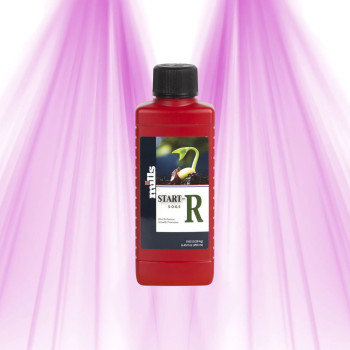














































































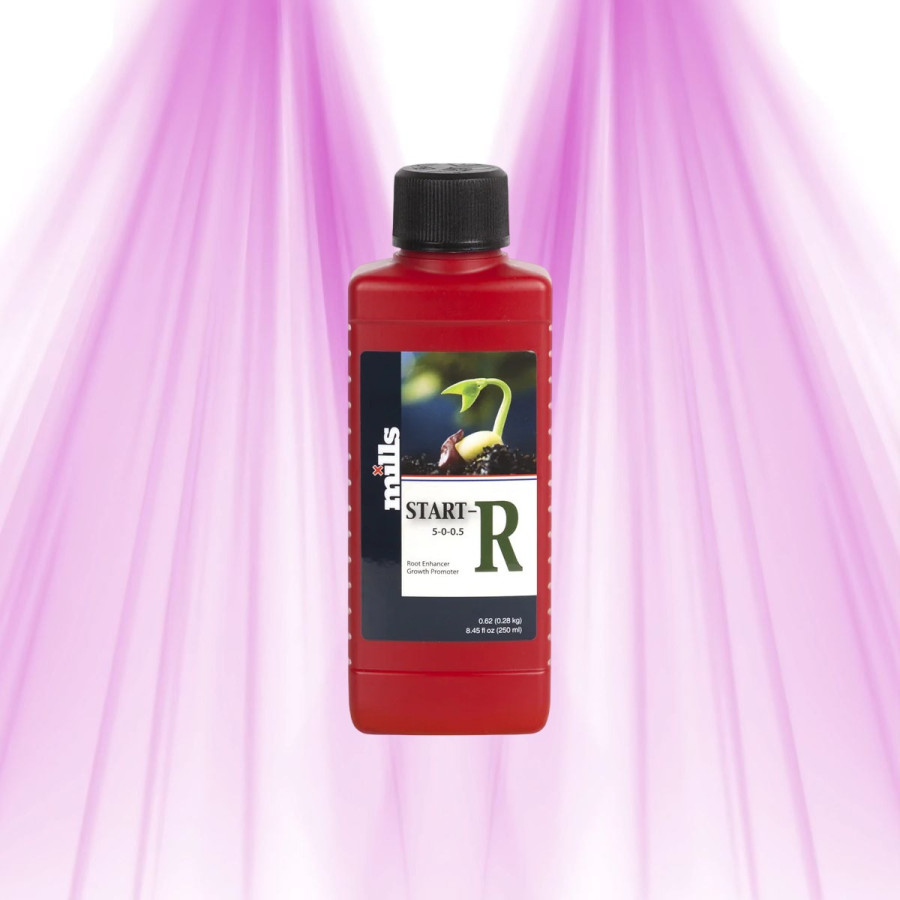
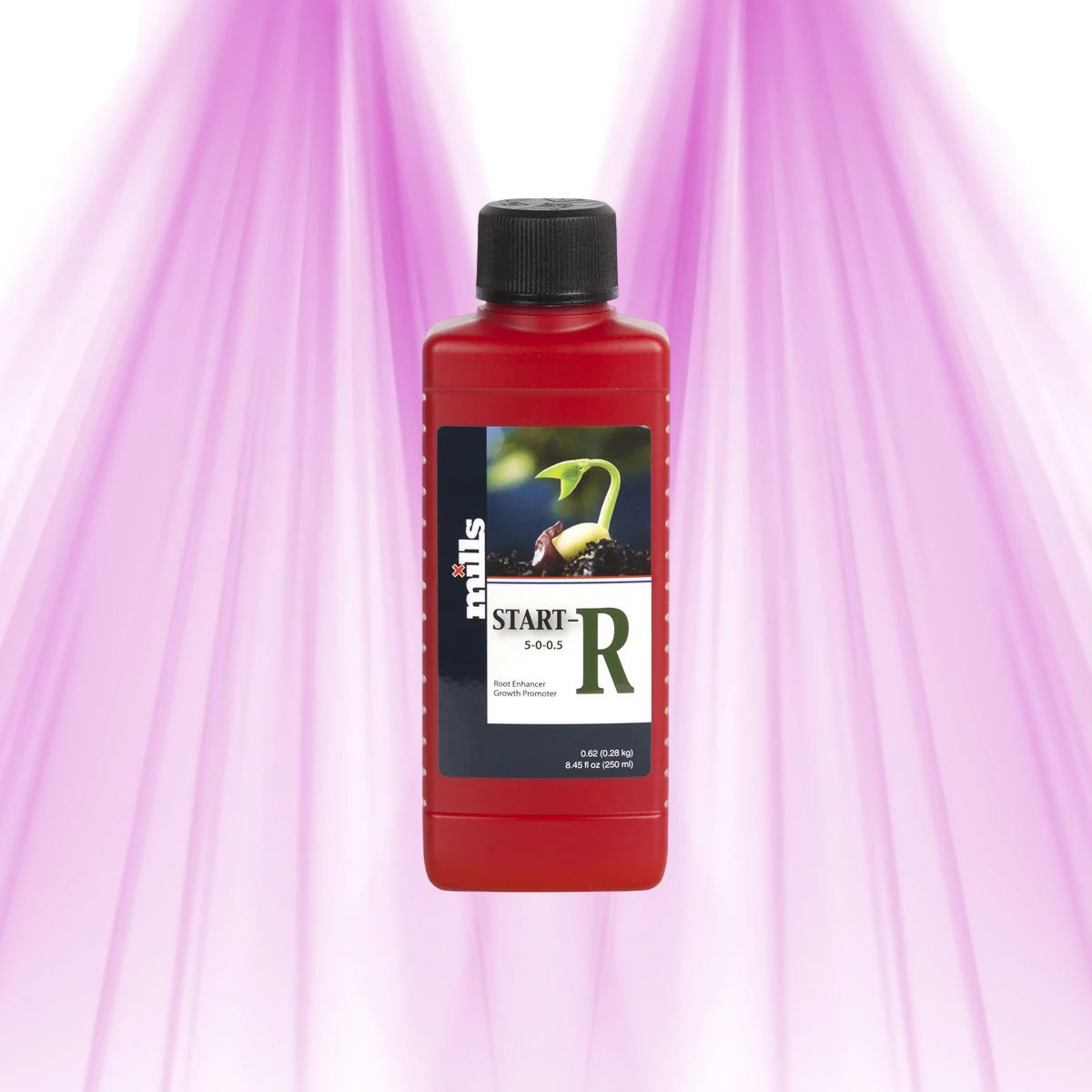

Mills Star is a root booster fertilizer designed to support your plants from the very first stages of their development: germination, rooting, and transplantation.
- Balanced Total Nitrogen — 5.2% (NO3-N: 2.6% + NH4-N: 2.6%)
- Targeted Root Stimulation — formulated for the rooting and germination phase
- Versatile — suitable for germination, rooting, and transplantation
- 4 Available Sizes — from 250ml to 10L depending on your needs
Choose your size and give your roots the best possible start from day one.
Satisfait ou remboursé
14 jours
Retour 14 jours
Frais de retour à votre charge
SAV expert FR
Conseil horticole
Paiement en plusieurs fois
with Alma, from €50 — or pay in 15 days from €100

Mills Star Root Booster Fertilizer...
22,39 €
Parraine tes proches
5 % pour toi & 5 % pour ton ami
Description
Product presentation
{'link_rewrite': 'mills-star-root-booster-fertilizer', 'meta_title': 'Mills Star: Root Booster Fertilizer for a Solid Foundation', 'description': "
Mills Star: The Root Booster Fertilizer for a Solid Foundation from the Start
When cultivating, everything starts with the roots. A well-developed root system guarantees a plant capable of efficiently absorbing water and nutrients throughout its cycle. Mills Star is a root stimulator specifically formulated for the most delicate phases: germination, rooting of cuttings, and transplantation. With a precise and balanced nitrogen composition, it provides exactly what your young plants need for a strong start. At GrowLED, we appreciate this type of targeted product, designed for a specific stage of the plant cycle rather than a general-purpose fertilizer used for everything.
Technical Characteristics of Mills Star
| Parameter | Value |
|---|---|
| Product Type | Root Stimulator |
| Total Nitrogen (N) | 5.2% |
| Nitrate Nitrogen (NO3-N) | 2.6% |
| Ammonium Nitrogen (NH4-N) | 2.6% |
| Application Phase | Germination, Rooting, Transplantation |
| Available Formats | 250ml, 500ml, 5L, 10L |
| References | NS-MILS0001 (250ml), NS-MILS0002 (500ml), NS-MILS0004 (5L), NS-MILS0005 (10L) |
Mills Star Usage Guide
Mills Star is used exclusively during the early phases of the cultivation cycle: seed germination, cloning, and transplantation. This is a precise window of use, and that's precisely what makes it an effective tool — you don't apply it blindly to the entire crop; you target the moment when roots most need a nitrogen boost.
For germination, integrate Mills Star into your nutrient solution from the first watering, strictly following the doses recommended by Mills. Excess nitrogen at this stage can burn young rootlets, so be measured. For cloning, apply it in the soaking water or in the watering solution of your rockwool cube or coco coir plug. The dual nitrogen form — nitrate and ammonium in equal proportions (2.6% each) — allows for progressive absorption adapted to the development rate of young roots.
During transplantation, use Mills Star in the first watering post-repotting to help the plant overcome handling stress and quickly restart its root activity. Make sure your pH is well adjusted before application — water that is too acidic or too basic will reduce the effectiveness of nitrogen absorption. In hydroponics, monitor your EC closely to avoid exceeding values suitable for young plants.
Mills Star naturally combines with other products in the Mills range to build a coherent nutritional program. Once the rooting phase is complete, you can switch to growth and flowering fertilizers suitable for the rest of the cycle.
Compatibility and Recommended Combinations
Mills Star easily integrates into a complete Mills nutritional program. It is designed for the starting phase, but your plants will need other inputs as they develop. Here's what the GrowLED team recommends combining for a well-managed crop from start to finish.
To strengthen your plants' resistance and improve nutrient assimilation throughout the cycle, Mills Vitalize is a natural complement to Mills Star. It acts on the overall vitality of the plant and can be introduced from the first weeks of cultivation to support long-term root development.
If you are cultivating in an environment where water is poor in calcium and magnesium, or if you observe characteristic foliar deficiencies, Mills Calmag is a relevant addition to your nutrient solution. Calcium and magnesium play a key role in cell structure and photosynthesis — two essential processes even for young plants in the rooting phase.
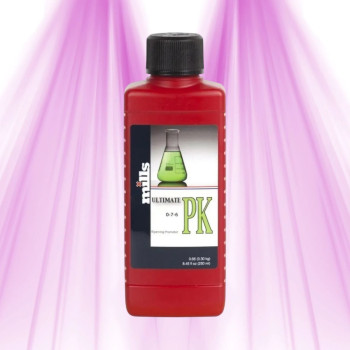
When your plants enter flowering and you want to maximize flower development and bud density, Mills Ultimate PK takes over from Mills Star. It's the end-of-cycle booster that logically completes the program started with Star in the initial phase.
Mills Star is compatible with most substrates: coco, rockwool, soil, hydro. It works equally well in potted systems and recirculating soilless cultivation, provided the doses are adapted to your system and the sensitivity of your varieties.
Frequently Asked Questions about Mills Star
Can Mills Star be used throughout the entire cultivation cycle?
No, Mills Star is specifically formulated for the germination, rooting, and transplantation phases. It is not designed for use in advanced growth or flowering. Once your plants have developed their root system well and begin their active vegetative phase, you switch to fertilizers adapted to these stages. Using Mills Star outside its application window would not provide additional benefit and could unbalance your nutritional program.
What is the difference between nitrate nitrogen and ammonium nitrogen in Mills Star?
Mills Star contains two forms of nitrogen in equal proportions: 2.6% nitrate (NO3-N) and 2.6% ammonium (NH4-N). Nitrate nitrogen is directly assimilable by the plant and promotes rapid and balanced growth. Ammonium nitrogen, on the other hand, is absorbed more slowly and helps stimulate root development. This balanced combination is particularly suitable for young plants that need a progressive nitrogen supply without the risk of burning.
Which format should I choose between 250ml, 500ml, 5L, and 10L?
The choice of format depends on the size of your crop and the frequency with which you germinate or clone. If you are a hobby grower who makes a few cuttings per season, the 250ml or 500ml format is largely sufficient. For more regular crops or larger production spaces with frequent cloning cycles, the 5L or 10L formats are more economical to use. Since Mills Star is only used at the beginning of the cycle, consumption remains moderate even for medium-sized crops.
Is Mills Star compatible with all substrates?
Yes, Mills Star is compatible with the main substrates used in indoor and outdoor cultivation: coco, rockwool, soil, expanded clay, and hydroponic systems. The important thing is to correctly adjust the pH of your nutrient solution according to the substrate used — generally between 5.5 and 6.2 in hydro/coco, and between 6.0 and 6.5 in soil. A poorly calibrated pH will reduce the absorption of the nitrogen forms present in the product, regardless of the quality of the fertilizer used.
"}
Technical data sheet
Features detailed
| NPK | 5,2-0-0 |
|---|---|
| Function | Germination & Cloning |
| Recommended dosage | selon format |
Convinced? Shipped from France. Add to cart — 22,39 €
They've adopted it
Reviews customers
Soyez le premier à donner votre avis !
Partagez votre expérience avec ce produit.
Frequently asked questions
Your questions
Not seeing your question?
Your browsing
Viewed recently