












































Aller au contenu principal
7 produits

Mills

Mills Nutrients for Indoor Growing

Mills is a Dutch brand that built its reputation the hard way, by focusing on one thing: formulations that deliver on their promises without overcomplicating things for growers. No flashy marketing, no endless lineup with twenty-five products when you only need four. Just a solid foundation — Basis A and Basis...

Mills Nutrients for Indoor Growing

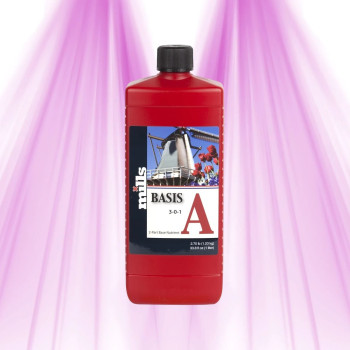
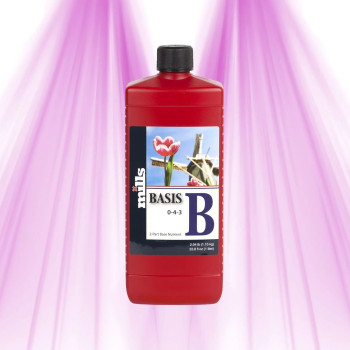
Mills is a Dutch brand that built its reputation the hard way, by focusing on one thing: formulations that deliver on their promises without overcomplicating things for growers. No flashy marketing, no endless lineup with twenty-five products when you only need four. Just a solid foundation — Basis A and Basis B — designed to work across all substrates, whether you're growing in coco, soil, hydro or aero. The brand comes from Amsterdam, and it shows in the approach: pragmatic, effective, no-nonsense.

Why Choose Mills Nutrients

What sets Mills apart from other nutrient brands is the philosophy behind their formulations. Their Basis A+B is built around an N-P-K ratio calibrated to cover the essentials of both growth and bloom without having you juggle five different bottles depending on the week. pH holds naturally within a reasonable window — typically between 5.8 and 6.2 depending on your substrate — which reduces constant adjustments throughout the cycle. And for someone just starting out or managing multiple reservoirs at once, that's genuinely appreciated.

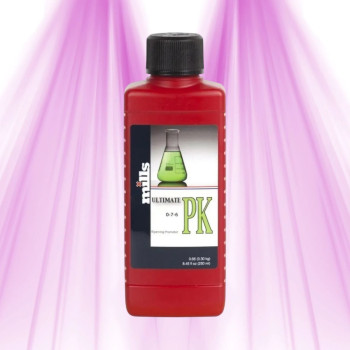
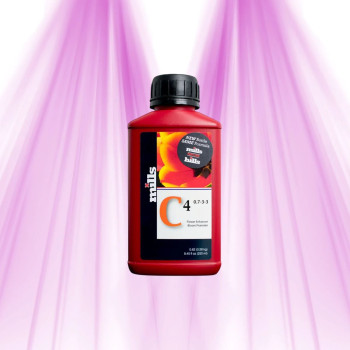
C4 is the other product that comes up most often in grower discussions. It's a concentrated bloom stimulator based on amino acids, vitamins and organic compounds. Not the kind of booster that promises the moon and delivers yellow leaves — this one works on cellular nutrition and micronutrient uptake. In practice, you dose it between 0.5 and 1 ml/L depending on the week of bloom, and the effect on bud density is measurable from one cycle to the next. Combine it with Ultimate PK in late bloom, where the phosphorus-potassium ratio increases to support bulking.

Vitalize is often overlooked by those new to the range. Yet it's a key product: it contains bioavailable silicon in the form of orthosilicic acid, which strengthens the cell walls of stems and leaves. The practical result: plants that are more resistant to heat stress, better tolerance to EC fluctuations, and a structure that holds up better under the weight of late-stage flowers. Use it from the first clone or seedling stage, at around 0.5 ml/L throughout the entire cycle.

How to Choose the Right Mills Products

The Mills range is intentionally short — that's the whole point. For 90% of growers, a four-product program covers the full cycle: Basis A+B as a base from veg through bloom (1 to 2 ml/L each depending on the stage), C4 from week 2 to 7 of bloom (0.5 to 1 ml/L), Ultimate PK from week 5 to 8 (0.5 to 1 ml/L), and Vitalize from start to finish (0.5 ml/L). That's the core program, and it works in coco, soil and hydro alike.

If you're growing in pure hydroponics — NFT, DWC or aero — you'll be working with more precise EC targets. In veg, aim for 1.2 to 1.6 mS/cm with Basis A+B. In bloom, ramp up progressively to 1.8–2.2 mS/cm depending on the strain and your room temperature. Mills performs particularly well in coco coir, where the inert substrate gives you complete control over what you're feeding. In soil, your starting EC needs to account for nutrients already present in your mix — start lower and adjust week by week.

For aeroponic systems, concentrations should be dialed back slightly compared to standard DWC, since root absorption is faster and more direct. Start at 60–70% of recommended doses and increase gradually. The advantage of Basis A+B here is its complete solubility — no risk of clogging your nozzles with residue as long as you follow the dilution instructions.

Frequently Asked Questions

What is the difference between Mills Basis A&B and Mills Ultimate PK for soil growing?

Basis A and B are your base nutrients: they cover the entire cycle, from veg through the end of bloom, with a balanced supply of nitrogen, phosphorus, potassium, calcium, magnesium and trace elements. You use them from day one through the final flush. Ultimate PK is a concentrated bloom booster that you add only from week 5–6 onwards, when the plant enters its maximum bulking phase. It supplements the Basis — it doesn't replace it. The higher phosphorus-potassium ratio in Ultimate PK drives maturation and tightens up flowers. In soil, since your substrate already provides some nutrients, monitor your total EC to avoid exceeding 2.0 mS/cm when combining both products.

How do I dose Mills nutrients for tomatoes in hydro as a beginner?

For tomatoes in hydro with a Mills base, start with conservative doses while you find your footing. In veg: 1 ml/L of Basis A and 1 ml/L of Basis B, which gives you an EC of around 1.2–1.4 mS/cm in low-residue water. Add 0.5 ml/L of Vitalize to strengthen the stems — tomatoes in hydro grow fast and a solid structure prevents snapping. In bloom, gradually increase Basis A+B to 1.5–2 ml/L and introduce C4 at 0.5 ml/L from the first flower sites. Ultimate PK comes in late bloom, between weeks 5 and 8 depending on the variety. Always check pH after mixing — target 5.8–6.0 for tomatoes in hydro.

Are Mills nutrients compatible with an aeroponic system?

Yes, the Mills range is fully compatible with aeroponics. Basis A+B dissolves completely without leaving insoluble residue, which is essential to avoid clogging your spray nozzles. The key in aero is working with lower EC levels than in DWC or NFT, because suspended roots absorb much more efficiently. Start at 50–70% of standard doses — roughly 0.8 to 1 ml/L of each Basis — and observe plant response before adjusting. Vitalize is particularly valuable in aero for root resistance. Avoid high doses of Ultimate PK since the ultra-rapid absorption can create an imbalance in late bloom — stay at 0.5 ml/L maximum.

From which week of bloom should I start using Mills Ultimate PK?

Ultimate PK is generally used from week 4–5 through week 7–8 of bloom, depending on your strain's total cycle length. If your plant has an 8-week cycle, introduce it at week 4 at 0.5 ml/L and increase to 1 ml/L during weeks 5–6 at peak bulking. In weeks 7–8, drop back to 0.5 ml/L or stop entirely depending on trichome development and pistil coloration. If your cycle exceeds 10 weeks, you can shift the window: start at week 5–6. The classic mistake is introducing it too early while the plant is still stretching — you waste product and risk a phosphorus excess that blocks zinc and iron uptake.

Can Mills C4 and Mills Vitalize be used together without burning the roots?

Yes, C4 and Vitalize combine without issue. They serve two clearly distinct roles: Vitalize delivers orthosilicic silicon that strengthens cell walls, while C4 acts on carbon nutrition and metabolic activity during bloom. At recommended doses — 0.5 ml/L of Vitalize and 0.5 to 1 ml/L of C4 — there is no negative interaction. Caution is only warranted if you're already running a strong Basis A+B at 2 ml/L alongside other additives: it's the total salt load that determines whether roots are under osmotic stress, not any single product. Stay below 2.4 mS/cm total EC to play it safe.

How long does an opened bottle of Mills Basis A&B keep?

An opened bottle of Basis A or B keeps perfectly well for 12 to 18 months if stored correctly: away from direct light, between 10 and 25°C, and properly sealed after each use. Light and temperature fluctuations are your main enemies — they degrade the chelates that keep minerals in a bioavailable solution. If the liquid becomes heavily cloudy, changes color or develops a flaky deposit that doesn't go back into suspension after shaking, it's time to replace the bottle. Also note that Basis A and Basis B must never be mixed together in concentrated form — only into your reservoir water, one after the other.

Are Mills nutrients suitable for coco coir growing, or only for hydro?

Mills is actually particularly effective in coco coir — it's one of the substrates where the brand truly shines. Coco is inert, giving you complete control over nutrient inputs, and the Basis A+B formulation includes calcium and magnesium in sufficient quantities to compensate for coco's natural tendency to bind calcium. In practice, use full-strength doses in coco — 1.5 to 2 ml/L of each Basis in bloom — and target a pH between 5.8 and 6.0. Watering frequency depends on pot size: in manually watered coco pots, 2 to 3 times per day during bloom is sufficient, with a slight run-off at each watering to prevent salt buildup.

How do I adjust pH with the Mills range without disrupting nutrient uptake?

Mills does not include a pH adjuster in their range — you use standard pH up (KOH or K2CO3) and pH down (phosphoric acid or citric acid). Mixing order is critical: always add your nutrients to the water before adjusting pH. If you do it the other way around and correct pH first, adding the nutrients will shift it again and you'll go around in circles. With Basis A+B in coco or hydro, target 5.8–6.0; in soil, go up to 6.0–6.5. A pH that's too low (below 5.5) blocks calcium and magnesium uptake; too high (above 7.0), and iron and manganese will precipitate out of solution. Always measure after complete mixing and allow 30 seconds for the probe to stabilize before reading the value.

Showing 1 - 7 of 7 items
What is the difference between Mills Basis A&B and the Mills Starter Pack, and which should I choose as a beginner?
   

Mills Basis A&B is the nutritional foundation of the range: two complementary solutions (A and B) mixed into water to cover the essential macro and micronutrient needs throughout the entire cycle. The Starter Pack bundles several products from the range in smaller formats — ideal for testing the full line without committing to large bottles. In practice, if you're new to Mills and just want to get a feel for it, the Starter Pack is an excellent entry point: it typically includes Basis A&B along with supplements like C4 or Ultimate PK. If you already know you'll stick with this brand, buying separate bottles will be more cost-effective in the long run.

How do I calculate Mills doses based on my reservoir or pot volume?
   

Mills provides a precise dosing chart expressed in ml per litre of water. The calculation is straightforward: multiply the recommended dose (for example 2 ml/L for Basis A) by your total reservoir or watering volume. One thing I often see is growers overlooking the moisture-holding capacity of their medium — an 11 L pot of coco doesn't retain the same amount of water as the same pot filled with soil. I recommend starting at 50–70% of the stated doses on first use, then adjusting based on plant response and EC readings. A conductivity meter is essential when working with Mills: aim for a starting EC of 1.2–1.6 mS/cm during growth, and up to 2.0–2.4 mS/cm during flowering depending on the species.

Can Mills nutrients be combined with boosters from other brands without risking nutrient burn?
   

It's technically possible, but I'd urge some caution. Mills uses specific organic and mineral chelates that can interact with concentrated phosphate- or potassium-based boosters from other brands. The main risk isn't direct burn so much as nutrient precipitation in the solution (white deposits, reduced uptake) or pH imbalance. If you want to combine products, do so gradually — add each product one at a time to the water, mixing thoroughly between each addition, and measure the final EC before watering. In practice, the Mills range is comprehensive enough (C4 for growth, Ultimate PK for flowering) that external supplements are rarely necessary — which is precisely why loyal users tend to stick with it exclusively.

How long does an opened Mills bottle last and how should it be stored?
   

Once opened, a Mills bottle typically keeps for 12 to 18 months under proper conditions. The golden rule: always reseal the cap tightly after use and store away from direct light and excessive heat. I recommend a storage temperature between 10 and 25°C — avoid damp cold spaces (risk of salt crystallisation) as well as overheated sheds in summer. For Basis A and B in particular, avoid any cross-contamination between the two bottles: even a few drops of concentrate A into bottle B can trigger a precipitation reaction. If you notice a deposit forming at the bottom of a bottle after several months, shake it well before use — this is usually normal and does not affect the product's effectiveness.

Is Mills Ultimate PK enough on its own during flowering, or does it need to be used alongside other products in the range?
   

Mills Ultimate PK is a flowering booster concentrated in phosphorus and potassium, but it is not designed to be used on its own — it's a supplement, not a base. In practice, Ultimate PK is used alongside Basis A&B, which continues to supply the residual nitrogen, calcium, magnesium, and trace elements needed even during late flowering. I typically introduce it from week 3 or 4 of flowering, gradually increasing to the recommended dose, then phasing it out 1 to 2 weeks before harvest to allow for a final flush. C4, another product in the range, can usefully complement Ultimate PK to stimulate flower initiation at the start of the reproductive phase.

How do I adjust pH after preparing my nutrient solution with Mills fertilisers?
   

Once your Mills solution is prepared, pH should be adjusted last, after all products have been incorporated. Mills tends to slightly acidify the water, which often simplifies the process. The target ranges I recommend are: 5.8 to 6.2 in coco and hydro, and 6.0 to 6.5 in soil. Use a pH-up (potassium hydroxide) or pH-down (phosphoric or nitric acid), adding very small amounts at a time — a few drops are enough for 10 litres. Always measure with a recently calibrated probe: pH strips are not precise enough for working with precision nutrients like Mills. If your pH rises quickly after adjustment, check your source water quality: a high carbonate level (KH) is often the culprit. Osmosis water or lightly remineralised water gives the best results with this range. For more information on deals and promotions on the Mills range, check out the regular offers available at GrowLED.

What is the difference between Mills Basis A&B and Mills Ultimate PK for soil growing?
   

Mills Basis A&B is the base nutrient I use throughout the entire cycle: it delivers essential macro and micronutrients (nitrogen, phosphorus, potassium, calcium, magnesium) in two balanced parts to prevent precipitation in the bottle. Mills Ultimate PK is a bloom booster concentrated in phosphorus and potassium that I only introduce during the central 3 to 5 weeks of flowering, when the flowers are bulking up.

In soil, I always start with Basis A&B at a reduced dose (50–60% of the recommended dose) because the substrate already provides a nutritional reserve. Ultimate PK comes as a supplement, never as a replacement for Basis. What I commonly see with beginners: they substitute one product for the other and end up with calcium-magnesium deficiencies. These two products are complementary and cover different phases of the cycle.

How do I dose Mills nutrients for tomatoes in hydroponics as a beginner?
   

In hydroponics, the plant relies 100% on the nutrient solution, so I recommend starting cautiously: begin at 50% of the dose shown on the Mills feed chart, then work your way up gradually while monitoring leaf behaviour. For tomatoes in the vegetative stage, I start at 2 ml/L of Basis A and 2 ml/L of Basis B, targeting an EC of around 1.8–2.2 mS/cm.

In practice, the classic beginner mistake in hydro is pushing EC too fast. Tomatoes handle salt excess poorly, especially during growth. I check EC and pH (5.8–6.2 in hydro) with every reservoir change. Mills formulates highly concentrated, readily available products — less is often better to begin with. Browse the Mills range available at GrowLED to get your setup started.

Are Mills nutrients compatible with an aeroponic system?
   

Yes, the Mills range is fully compatible with aeroponics. In practice, I adjust two things: dilution and filtration. In aeroponics, the nozzles spray fine droplets directly onto the roots, so any undissolved particle can clog them. I always prepare my solution in a separate container, agitating thoroughly before feeding the reservoir, and I filter through a 100 µm filter at minimum.

The target EC in aeroponics is generally lower than in NFT or DWC because root uptake is highly efficient: I aim for 1.4–1.8 mS/cm during growth and 1.8–2.2 mS/cm during flowering with Basis A&B. Mills Vitalize (silica-based) is particularly valuable in aeroponics as it strengthens the cell walls of aerial roots, which are more exposed to the mechanical stress of the nozzles.

From which week of flowering should I start using Mills Ultimate PK?
   

I introduce Mills Ultimate PK from week 3 or 4 of flowering, once the stretch phase is over and the flower sites are well established. Introducing it too early risks stalling late vegetative development and creating an imbalance with nitrogen.

In practice, here is how I work Ultimate PK into my schedule: I ramp up the dose gradually over 2 weeks (starting at 0.5 ml/L, then 1 ml/L), hold at full dose for 2 to 3 weeks, then taper off before the final flush. If you are growing short-flowering varieties (7–8 weeks), compress the window: 2 weeks ramping in, 1 to 2 weeks at full dose maximum. Do not exceed 1.5 ml/L unless the Mills feed chart specifically indicates otherwise.

Can Mills C4 and Mills Vitalize be used together without risking root burn?
   

Yes, I regularly combine Mills C4 and Mills Vitalize without any root burn issues at recommended doses. Mills C4 is a bloom stimulator based on amino acids, seaweed extracts, and carbohydrates that feeds microbial life in the substrate and densifies flowers. Mills Vitalize is a soluble silica source (orthosilicic acid) that strengthens cells and improves stress tolerance.

What I do in practice: I dilute each product separately in my water before combining them in the reservoir, because silica can react with certain components if added directly to a concentrated product. The combined dose stays within manageable EC levels. However, I never use Vitalize at the same time as Basis A&B without adjusting pH afterwards: silica slightly raises the pH of the solution and can impact iron and manganese uptake if left uncorrected.

How long does an opened bottle of Mills Basis A&B stay effective?
   

Under good storage conditions, an opened bottle of Mills Basis A&B remains effective for 12 to 18 months without significant loss of potency. What I always do: store away from direct light, at a stable temperature between 10 and 25 °C, and seal tightly after each use.

Two-part nutrients like Basis A&B are formulated separately precisely to prevent nutrient precipitation in the bottle. Once opened, the main enemies are oxidation and cross-contamination (never use the funnel from bottle A in bottle B). If you notice unusual sediment or significant discolouration, efficacy may be compromised. For smaller grows, I recommend buying a format that matches your actual consumption rather than the large size if you only run 2 to 3 cycles per year.

Do Mills nutrients work in coco coir, or are they designed for hydroponics only?
   

If I had to pick one substrate for the Mills range, it would be coco coir — in my experience, it is where the line performs at its best. Coco is an inert substrate that behaves like hydroponics but with a more forgiving ionic buffer for dosing errors. Mills formulated Basis A&B with a calcium-magnesium ratio suited to coco, which is naturally low in these elements and tends to retain calcium.

In practice with coco, I water to run-off (20–30%) to prevent salt build-up and target a solution EC of 1.6–2.0 mS/cm in flowering. Additives like Mills Start (root stimulator) and Mills Vitalize (silica) are especially effective in coco because roots are very active in this well-draining substrate. The range also works well in soil, but doses are reduced since the substrate already contributes nutrients.

How do I adjust pH with the Mills range without disrupting nutrient uptake?
   

The target pH depends on the substrate: 5.8 to 6.2 in hydroponics and coco, 6.2 to 6.8 in soil. I always prepare my full nutrient solution before adjusting pH — never the other way around — because every product I add shifts the final pH of the solution.

My concrete recommendation: add all your Mills nutrients to the water, mix thoroughly, check EC, then correct pH using a phosphoric acid-based pH-down (avoid in late flowering as it adds phosphorus) or citric acid. Make corrections in small increments and allow 1 to 2 minutes to stabilise before re-measuring. A pH that is even 0.3 points off can lock out iron, manganese, or calcium uptake even when your EC is perfect — this is often the real cause behind deficiencies wrongly blamed on the nutrients. Check our Mills range offers at GrowLED to complete your nutrient programme.

Blog navigation

Latest posts

What Wattage LED Grow Light Should a Beginner Choose?

What wattage LED grow light should a beginner pick? Real watts, W/m², PPFD and a 60x60 setup explained in the GrowLED...

Read more
VIVOSUN Grow Cam 6mm 2K QHD WiFi Grow Camera

Tired of anxiety when you're away from your grow? The VIVOSUN Grow Cam 6mm 2K QHD WiFi Grow Camera lets you keep an...

Read more
STOP à la Tourbe ! Découvrez les 4 Meilleurs Substrats Écologiques pour une Culture Indoor Explosive

Le monde du jardinage connaît une transformation silencieuse mais profonde. Face à l'urgence climatique et à la prise...

Read more