




































































Quest
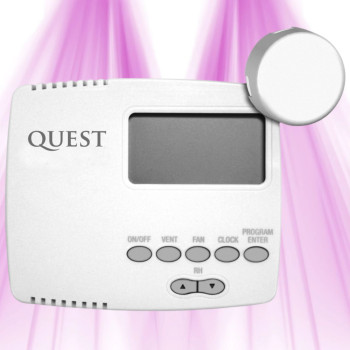
Sensor Quest Humidity Sensor - QUEST - Precise Climate Control
Ships within 2 weeks
143,16 € or 3× 47,72 €

Product successfully added to your shopping cart
Ça pousse dans le bon sens

6 products
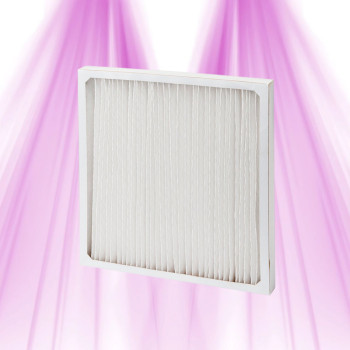
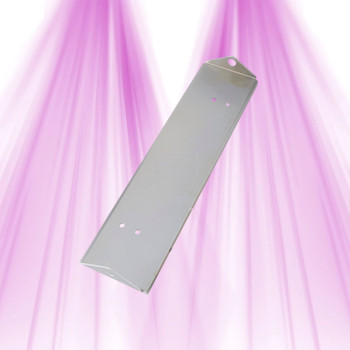
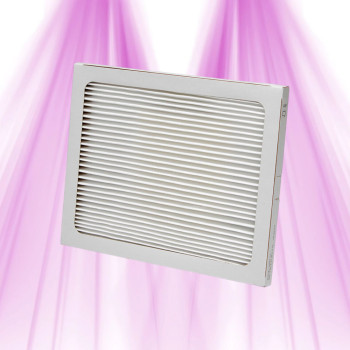
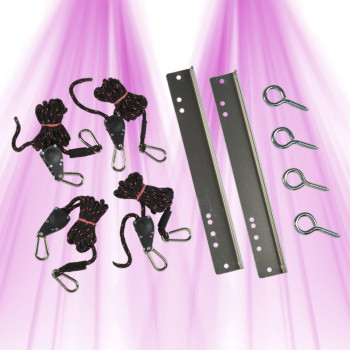
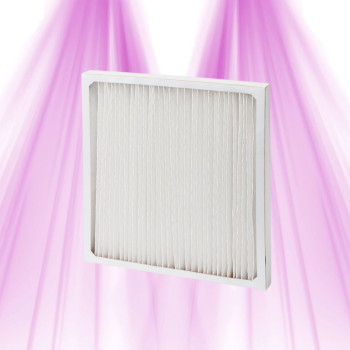
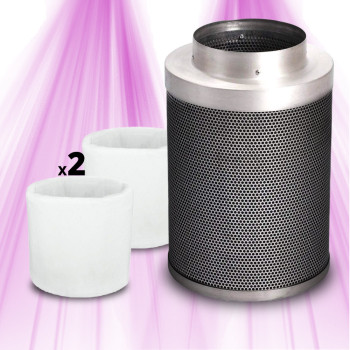
Replacement filters, hanging kits and a control sensor for Quest dehumidifiers: parts specific to one given model, whose availability determines whether an installation keeps running.
A dehumidifier filter is a wear part. It clogs, pressure drop rises, airflow through the coil falls and extraction capacity with it, without any indicator saying so. The documentation for one compact model calls for replacement every three months in continuous operation: across a fleet of several machines, that is planned as a maintenance task and budgeted annually. These pleated media cannot be washed; a rinsed filter distorts and lets through what it was meant to hold back.
Each part number belongs to one specific machine: the filter for a hanging model does not fit a compact one, and a mounting kit is calculated for the mass of a given appliance. Checking the model number, rather than the rated capacity, avoids the most mundane stoppage there is — a machine standing idle for want of the right part costs more in lost climate than several years of consumables. Hence the value of a buffer stock built up from commissioning.
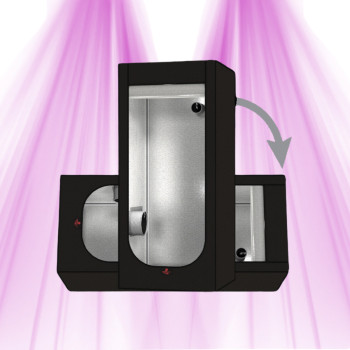
A hanging kit carries several dozen kilograms above a crop and above the people working in it. The rated load of the kit is not enough to conclude: the anchor point, the nature of the support — roof structure, slab, rack frame — and vibration transfer are verified on site. Mounting at height frees up productive floor area, but it means designing in access for coil cleaning and filter replacement from the outset.
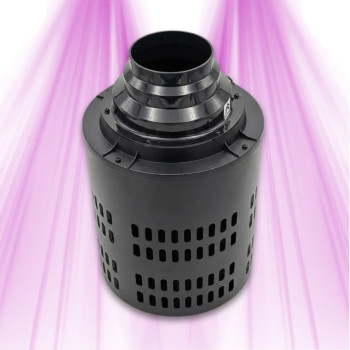
The humidity sensor in this section is intended to drive the brand's machines: it sends a reading to the appliance, which decides to start or to stop. It is neither an ambient hygrometer with a display nor a data logger. Its value lies in the measurement point: placed at the canopy, it stops a machine regulating on its own return air and short-cycling in a way that wears out the compressor.
The machines these parts belong to are listed in the compatible industrial dehumidifiers. To read the humidity of a room independently of the appliances' own control, see temperature and humidity probes. For domestic equipment, our climate management accessories cover everyday needs.
Help & advice
About Humidity Control Accessories — click a question to see the answer.
To measure humidity in indoor cultivation, I use and recommend reliable hygrometers. These small devices are essential for obtaining an accurate reading of the relative humidity of the air. I generally position them at canopy height to get the most representative data of my plants' environment.
For my indoor grow, I always prefer a digital thermo-hygrometer. It's a two-in-one device that gives me both temperature and humidity, crucial data for the well-being of my plants. I make sure it has good accuracy and, if possible, a min/max recording function to track variations over 24 hours.
Installing a hygrometer in your grow box is simple but crucial. I always place it at the height of my plants' canopy, away from direct airflow from the fan or heat sources like the lamp. This guarantees me an accurate reading of the real environment my plants are experiencing. I also make sure it's not in direct contact with water or the substrate.
The difference is quite simple: a hygrometer measures only the relative humidity of the air. A thermo-hygrometer, on the other hand, measures both temperature and humidity. In practice, I always recommend the thermo-hygrometer for indoor cultivation, as temperature and humidity are two inseparable parameters, and having both pieces of information on a single device is much more practical for optimal management.
To reduce humidity in my grow tent, I have several solutions. The first is to improve ventilation by increasing the power of the extractor or adding a circulation fan. If that's not enough, especially during the flowering period, I resort to a dehumidifier. It's a very effective solution for purifying the air and preventing mold problems.
To increase humidity in indoor cultivation, especially during the vegetative phase or for young seedlings, I use a humidifier. I can also place containers of water in the tent or use saucers filled with expanded clay pebbles soaked in water under my pots. Natural evaporation helps to raise the ambient humidity level. I always monitor with my hygrometer to avoid exceeding recommended thresholds.
The most common mistake I see is not regularly monitoring humidity, or relying solely on intuition. Another mistake is not adapting humidity to the different growth phases of the plant. Finally, neglecting ventilation can quickly lead to problems of excessive humidity and promote the appearance of diseases. It is crucial to remain proactive and use the right tools like those described in this article.
Cannot find your answer? 01 88 33 45 52 or by message.