Aller au contenu principal
LED bars
76 produits

LED bars

LED Bars for Indoor Cultivation: The Game-Changing Linear Lighting

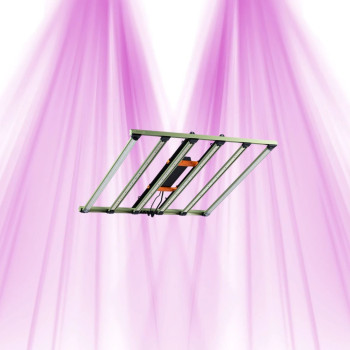
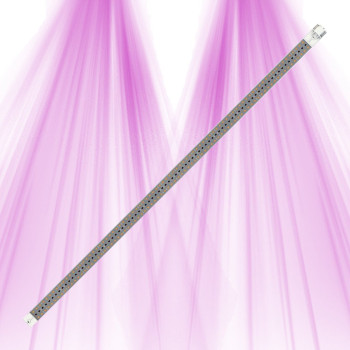
LED bars are revolutionizing indoor grow lighting by offering perfectly uniform light distribution across the entire growing surface. Unlike traditional panels that often create shaded areas, these linear systems cover every square centimeter with the same light intensity. Wheth...

LED Bars for Indoor Cultivation: The Game-Changing Linear Lighting

LED bars are revolutionizing indoor grow lighting by offering perfectly uniform light distribution across the entire growing surface. Unlike traditional panels that often create shaded areas, these linear systems cover every square centimeter with the same light intensity. Whether for a 60x60 cm tent or a 240x120 cm space, LED bars adapt to all configurations.

Why choose LED bars for your grow

The main advantage of LED bars is their ability to eliminate hot spots and shaded areas. With a full spectrum between 380 and 780 nm, they faithfully reproduce natural sunlight. Energy consumption is truly impressive: expect around 30 to 50 watts per bar depending on the length, which is 3 times less than an equivalent HPS light. The heat generated remains minimal thanks to integrated aluminum heat sinks, greatly simplifying the thermal management of your grow space. Samsung LM301B or Osram diodes equip most high-end models, guaranteeing a luminous efficacy of 2.7 to 3.0 µmol/J.

How to choose your LED bars

Length is the primary selection criterion. For a 60x60 cm tent, a 60 cm bar is more than sufficient. 120x120 cm spaces generally require 2 to 3 120 cm bars for optimal coverage. Power varies between 30W for 30 cm bars and up to 150W for 150 cm models. Also check the type of mounting: some bars hang with cables, others screw directly to the tent ceiling. The light spectrum should cover at least red (660 nm) and blue (450 nm), but full spectrum models with UV and IR yield better results. Finally, the IP65 rating guarantees essential humidity resistance for indoor cultivation.

Frequently Asked Questions

What length of LED bar should I choose for my 120x120 cm tent?

For a 120x120 cm tent, the ideal is to install 2 120 cm bars spaced 40 to 50 cm apart. This configuration ensures uniform coverage without shaded areas. You can also opt for 3 80 cm bars if you want more flexibility in positioning. The important thing is to maintain a PPFD between 400 and 600 µmol/m²/s during growth, and 600 to 900 µmol/m²/s during flowering.

What distance should there be between the LED bars and my plants during the growth phase?

During the growth phase, keep your LED bars 40-50 cm from the top of the plants. This distance avoids light stress while providing enough photons for vigorous growth. Monitor the leaves: if they curl or yellow, you're too close. Conversely, if the internodes stretch too much, move the bars slightly closer. A lux meter will help you accurately measure light intensity.

Are LED bars better than LED panels for uniform coverage?

Honestly, yes. LED bars offer much better uniformity than traditional panels. With a panel, you often have a hot spot in the center and a drop in intensity at the edges. Bars distribute light linearly, which eliminates these variations. This is particularly noticeable in rectangular spaces where the bars perfectly follow the geometry of the tent. The only drawback: you need several bars to cover a large area, as opposed to a single panel.

How to easily install an LED bar in my indoor grow room?

Installation is really simple. Most LED bars attach with adjustable straps or suspension cables. First, attach the fixing points to the crossbars of your tent, then adjust the height with the cables. Some models screw directly with metal brackets. Remember to distribute the weight evenly if you install multiple bars. For power, a single driver can generally power 2 to 4 bars depending on their wattage.

Do LED bars need cleaning and how can I make them last longer?

Monthly cleaning significantly extends the lifespan of your LED bars. Use a slightly damp microfiber cloth to remove dust and residue that accumulates on the diodes. Avoid aggressive chemicals that could damage components. Also check that the heat sinks are not obstructed by dust. Good ventilation of the grow space also helps maintain optimal operating temperature. With regular maintenance, your LED bars can easily exceed 50,000 hours of operation.

Showing 13 - 24 of 76 items
How to choose LED bars for indoor growing?
   

To choose your LED bars well, I advise you to start by defining the size of your growing space. Then, you need to consider the necessary power, the light spectrum (full spectrum is often a good starting point), and the quality of the diodes. I also recommend checking the modularity of the system, as this can be very practical for adapting the lighting to your plants' growth.

What power of LED bars should I choose for my grow tent?
   

The power really depends on the surface area and the type of plants you are growing. Generally, for small to medium-sized tents (for example, 60x60 cm to 100x100 cm), I often see powers ranging from 100W to 300W. For larger spaces, you will need to increase the power or add more bars. The goal is to achieve a sufficient and homogeneous PPFD (Photosynthetic Photon Flux Density) across the entire canopy.

What is the difference between LED bars and LED panels?
   

The main difference lies in the light distribution. LED panels, often more compact, tend to concentrate light, which can create hot spots and shaded areas. LED bars, due to their linear format, allow for a much more uniform diffusion of light over the entire growing surface, thus reducing under-lit areas. This is a major advantage for the homogeneity of your crop.

What are LED bars used for in indoor growing?
   

LED bars are designed to provide optimal and homogeneous lighting for your plants in indoor cultivation. They maximize photosynthesis across the entire canopy, preventing certain plants or parts of plants from lacking light. I also use them a lot to supplement existing lighting or for vertical farming, where their linear format is an undeniable asset.

How to install LED bars for horticulture?
   

Installing LED bars is generally quite simple. I recommend suspending them using the provided cables or hooks, ensuring they are well parallel and uniformly spaced above your canopy. Make sure the system is stable and the bars are at the correct height relative to your plants. Don't forget to consult the manufacturer's manual for the exact specifications of your model.

What is the ideal distance between LED bars and plants?
   

The ideal distance varies depending on the power of your LED bars and the growth stage of your plants. In general, I recommend starting with a distance of approximately 30 to 60 cm from young shoots, then adjusting based on your plants' reaction. The idea is to provide maximum light without causing stress or burns. I invite you to consult this article for more detailed information on choosing and using horticultural LED lamps.

Full spectrum LED bars or growth/flowering specific?
   

If I had to choose, I would lean towards full spectrum LED bars. They are more versatile and better simulate natural sunlight, which is beneficial for all growth stages, from germination to flowering. Specific growth or flowering spectra can be useful for very precise objectives, but full spectrum offers excellent overall performance without having to change lighting.

How many watts per m² for LED bars?
   

For LED bars, the power in watts per m² is an indication, but I prefer to rely on the PPFD (Photosynthetic Photon Flux Density). However, to give you an idea, we generally aim for between 200 and 400 watts per m² for demanding plant crops, and a little less for plants that require less light. It is crucial to check the PPFD specifications provided by the manufacturer for a more accurate assessment.

Blog navigation

Latest posts

VIVOSUN Grow Cam 6mm 2K QHD WiFi Grow Camera

Tired of anxiety when you're away from your grow? The VIVOSUN Grow Cam 6mm 2K QHD WiFi Grow Camera lets you keep an...

Read more
STOP à la Tourbe ! Découvrez les 4 Meilleurs Substrats Écologiques pour une Culture Indoor Explosive

Le monde du jardinage connaît une transformation silencieuse mais profonde. Face à l'urgence climatique et à la prise...

Read more
Master Pack PRO Advanced Nutrients: Created by GrowLED for demanding growers!

When you're starting out or looking to optimize your indoor growing, the hardest part is often choosing the right...

Read more