







































































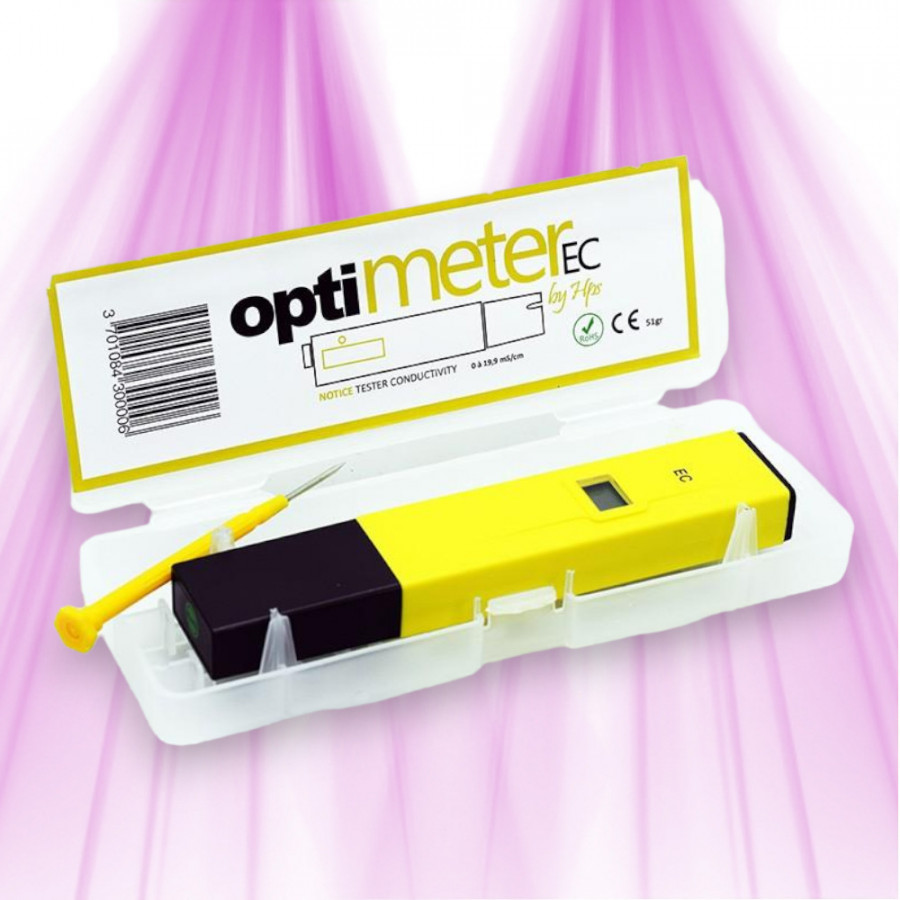
EC tester for hydroponics cultivation - 0 to 19.9 EC
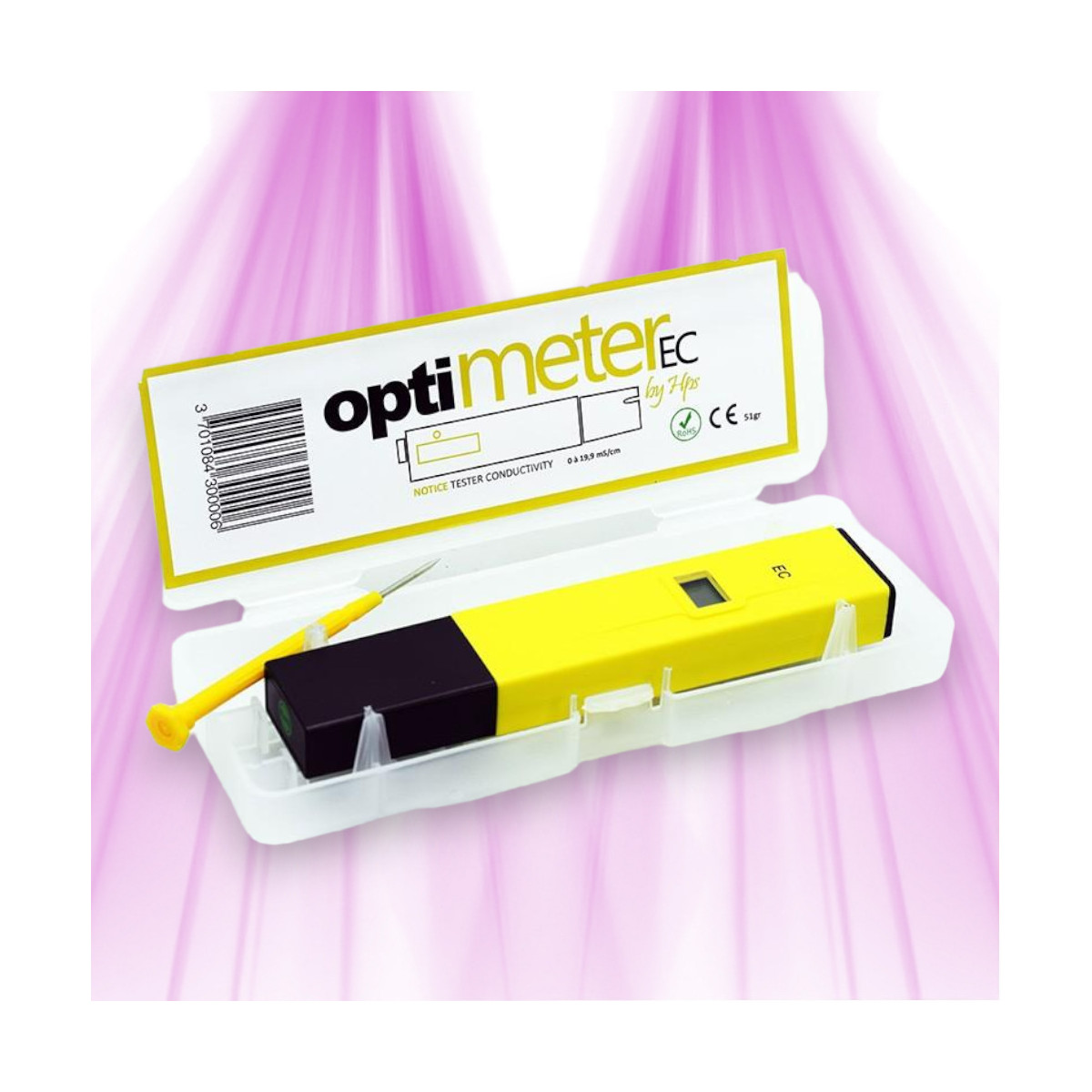
- Accurate measurement: 0 to 19.9 EC.
- LCD screen for clear reading.
- Ergonomic shape.
- Compact and durable housing.
- Easy calibration with supplied screwdriver.
- Batteries included for immediate use.
- Suitable for hydroponics, aquaculture and aquariums.
Product presentation
General description :
The EC tester is an essential tool for measuring water quality in your hydroponics, aquacultures, aquariums and much more. Featuring a clear LCD display, it offers unrivaled accuracy and ease of use.
Main Features :
- Measuring range : 0 to 19.9 EC
- Resolution : 0.1EC
- Accuracy : +/- 2% FS
- Operating temperature : 0° to 50° C
- Automatic temperature compensation : 0° to 50° C
- Current source : 4 x 1.5 V (AG13)
- Dimensions : 150 x 29 x 16 mm
- Weight : 51g
Strong points :
- Ergonomic shape and compact housing.
- Calibration screwdriver included.
- LCD screen for easy reading.
- Batteries included.
Usage tips :
- In the presence of certain radio transmitters, the product may display erroneous readings. Change location to get an accurate measurement.
- Check the accuracy of your tester every 3 months.
- If the electrode is dirty, rinse it with alcohol for a few minutes. Do not touch or scratch the electrode tip.
Technical characteristics :
- Range : 0 to 19.9mS/cm
- Resolution : 0.1 mS/cm
- Accuracy : ±2%
- Calibration : Factory calibration
- Temperature compensation : 5 to 50°C
- Battery : 4 x 1.5 volt batteries
- Calibration solution : 12.88-mS/cm
Features detailed
| Functions | Measurement |
|---|---|
| Type | EC-mètre |
| Warranty (years) | 6 months |
| Compatibility | tous systèmes hydroponiques (NFT, DWC, aéroponie), engrais liquides standards, solutions nutritives, eau osmosée, de pluie ou robinet stabilisée |
| Power supply | 4 x 1.5 V |
| Estimated duration of action | 1000 mesures |
| Calibration | annuel avec solution standard 1.41 mS/cm |
| Automatic temperature compensation | 0-50°C |
| CO2 measurement range (ppm) | 0 à 19.9 |
Reviews customers
Soyez le premier à donner votre avis !
Partagez votre expérience avec ce produit.
Your questions
Does the EC HYD TESTEUR EC OPTI allow easy calibration in the field and how to check its accuracy after several months of use?
Compact EC tester with easy calibration, is it suitable for frequent use in hydroponic culture?
What is the ideally recommended frequency to calibrate this EC tester to optimize precision and reliability over a year in hydroponics?
Does the EC tester really maintain the advertised accuracy after several months of use in real conditions?
The EC tester for hydroponics maintains its advertised accuracy after several months of use, provided it is properly maintained. Regular cleaning of the electrodes is essential to avoid the accumulation of salt deposits that can distort measurements. Additionally, periodic calibration with a standard solution helps to maintain high reliability, even under variable conditions.
Without these precautions, accuracy may decrease over time, which is typical for this type of device. In summary, when used and maintained properly, this tester remains a precise tool for optimizing your hydroponic culture.
Is integration possible with home automation systems like MQTT or Z-Wave for real-time monitoring and automated alerts?
The EC tester for hydroponic cultivation does not natively offer direct integration with home automation systems via MQTT or Z-Wave. However, it is technically possible to connect it to a compatible microcontroller (like an ESP32 or ESP8266) capable of communicating via MQTT for real-time monitoring and automated alerts.
For Z-Wave, integration is more complex and less common, requiring a specific compatible module. In summary, integration will largely depend on adding a third-party device compatible with these protocols, as the tester alone does not have this feature readily available.
Does this EC tester maintain the announced accuracy over time beyond the 6-month warranty, or does the accuracy degrade quickly?
The EC Tester for hydroponic cultivation maintains its accuracy especially if you perform regular calibration with a certified solution, such as a 1.413 mS/cm solution. Beyond the 6-month warranty, accuracy can be retained if maintenance is performed correctly, especially thanks to the easy adjustment of the tester with a screwdriver. The quality of the probe and the conditions of use also play an important role in how long the accuracy is maintained.
What frequency of recalibration do you recommend to maintain the accuracy of this EC tester in a growing and flowering hydroponic culture?
Is the calibration precision stable over time or does it require frequent recalibration during daily hydroponic use?
The calibration precision of the EC tester for hydroponics generally remains stable over time when it is a quality device, like the one we offer at GrowLED. In daily use, frequent recalibration is not necessary if the initial calibration is performed correctly with an appropriate solution.
However, it is advisable to carry out periodic checks, especially in case of abnormal results or intensive use, to ensure consistently reliable measurements. Simple and regular maintenance also contributes to maintaining this stability.
In summary, you can rely on a durable calibration, with only a few occasional checks to ensure optimal reliability of your EC measurements in hydroponics.
What frequency of calibration do you recommend for intensive use in hydroponics to maintain the precision of the Opti EC tester?
For daily intensive use in hydroponics, it is recommended to calibrate your EC tester at least once a week. This frequency allows for optimal accuracy, especially in cases of repeated use or exposure to concentrated nutrient solutions.
In addition to this regular calibration, remember to check the calibration after each cleaning, shock, or prolonged period of inactivity. If the readings become unstable or inconsistent, recalibrate without delay.
Proper maintenance of the probe is also essential: rinse it with distilled water after use, always keep it moist in an appropriate solution or clean water, and avoid letting it dry out.
What is the recommended frequency for calibrating the EC tester to ensure optimal accuracy in hydroponic cultures with a measurement range up to 19.9 EC?
Furthermore, calibration should be redone as soon as you notice unusual readings or after a complete cleaning of the electrode, in order to ensure reliable readings and accurate management of the nutrient solution.
Does the calibration remain stable for several weeks or does it need to be recalibrated too often during a crop?
The calibration of the EC tester for hydroponic cultivation does not remain stable for several weeks. It is therefore recommended to regularly recalibrate the device, ideally every few weeks or before each new growing cycle, to ensure accurate measurements.
This precaution is essential because sensors can drift over time and usage, and the ion concentration of the nutrient solution is constantly evolving. Using a standard calibration solution ensures reliable monitoring of conductivity and perfect control over your plants' nutrition.
Does the precision level of +/- 2 percent remain stable even after several uses without regular recalibration in a nutrient-rich hydroponic environment?
Can this precise EC tester with automatic temperature compensation be used to finely adjust nutrients in a SCROG system under LED without risking misadjustments due to rapid temperature variations?
What frequency of calibration do you recommend to ensure optimal precision of the EC tester in hydroponics without disturbing the crop?
How do you integrate this EC tester into a hydroponic automation system to automatically adjust the nutrient solution in real-time?
To integrate the EC Tester for Hydroponic Cultivation - 0 to 19.9 EC into an automation system, it must first be connected to a controller capable of reading its data, such as a Bluelab Connect Stick. This controller can then drive pumps or nutrient injectors to adjust the solution in real time.
After calibrating the tester with a standard solution (1.413 mS/cm), it is important to set precise conductivity thresholds in the controller. When the measured EC deviates from the target value, the system automatically adjusts the nutrient concentration by injection.
The tester must be positioned in constant contact with the hydroponic solution to ensure continuous monitoring. Supervision via dedicated software allows real-time visualization of measurements and adjustments. Finally, regular maintenance of the tester is necessary to ensure long-term accuracy.
Compatible with home automation integration such as MQTT or Zigbee for real-time remote EC monitoring without manual intervention?
The EC tester for hydroponic cultivation, ranging from 0 to 19.9 EC, is designed for manual and local reading. It does not natively integrate MQTT or Zigbee connectivity for real-time remote monitoring.
For connected monitoring, it is possible to use a microcontroller (like Arduino, ESP32, or Raspberry Pi) as an addition, which will retrieve measurements from the tester and then publish the data via MQTT. However, direct compatibility with Zigbee is very rare for this type of equipment and requires specific development.
In summary: no integrated home automation solution in this EC tester, but integration via external module is feasible for connected monitoring.
Is it preferable to have a separate EC tester for each crop to avoid cross-contamination, or is thorough cleaning between each measurement sufficient to ensure the accuracy of the results?
To ensure the accuracy of measurements with the EC Tester for hydroponic crops, it is not necessary to have a separate device for each crop. Rigorous cleaning of the probe between each measurement, by rinsing it in clear or demineralized water, is perfectly sufficient to avoid any cross-contamination.
This simple protocol eliminates residual salts and maintains the reliability of results, while avoiding unnecessary investment. Regular maintenance and proper storage of the probe are also essential to maintain the accuracy of your measurements over time.
How do you ensure the stability of EC measurements in the presence of radioelectric interferences in an automated agricultural environment?
How do we maintain and recalibrate this EC tester to ensure optimal long-term accuracy in a hydroponic culture?
To ensure optimal accuracy of the EC tester for hydroponic culture in the long term, it is essential to follow a simple yet rigorous routine:
- After each use, thoroughly clean the probe and keep it moist to avoid corrosion and residue buildup.
- Regularly change the batteries (approximately every 1 to 2 years) to ensure reliable operation of the device.
- Recalibrate your tester every 2 to 4 weeks by immersing it in a certified calibration solution (e.g., at 1.413 mS/cm) and adjust the measurement using the manual setting provided on the device.
This maintenance and recalibration routine is key to reliable measurement in hydroponic culture, allowing you to effectively control nutrient concentration and optimize the health of your plants.
What frequency of calibration do you recommend for this EC tester in hydroponic microculture to ensure reliable measurement in a confined space?
Also remember to clean the probe and keep it moist between uses to maintain its accuracy. Regularly checking the EC of your nutrient solutions, tap water, and drainage contributes to optimizing plant nutrition in a confined space where conditions evolve rapidly.
How long does the accuracy of the EC tester remain reliable before it needs to be recalibrated?
The EC tester for hydroponic growth offers stable accuracy for several months, provided it is regularly maintained. It is important to clean the probe after each use and keep it clean and moist to avoid corrosion.
To ensure measurement reliability, recalibration is recommended approximately every month or every few months, depending on the frequency of use. This recalibration is done by immersing the probe in a certified calibration solution and then adjusting the measurement if necessary.
Careful maintenance prolongs the time between recalibrations, ensuring accurate and reliable measurements for your growth.
Is this compact EC tester precise enough for a micro hydroponic space with moisture resistance and easy to calibrate without false readings due to radio interference?
This compact EC tester is perfectly suited for a micro hydroponic space. It offers a precision of around ±2%, sufficient for reliable monitoring of nutrient concentration in small volumes. Its design allows for good moisture resistance, essential in the humid environments typical of hydroponics.
Manual calibration is simple and effective, thanks to a screwdriver adjustment, ensuring stable measurements over time when performed regularly with a calibration solution.
Finally, although no particular sensitivity to radio interference has been reported, this tester is designed to limit false readings and operate reliably in a confined space with minimal electrical disturbances.
What frequency of calibration do you recommend for this EC tester during rotation crops to ensure reliable continuous measurements?
To ensure reliable continuous measurements with your EC tester during hydroponic rotation crops, it is recommended to calibrate your device at least once a week. This frequency helps to compensate for the drift of the electrodes associated with use and the diversity of nutrient solutions used in hydroponics.
Calibration is done with an appropriate standard solution, often a buffer solution at 1.413 mS/cm, before each significant measurement session. Additionally, don't forget to ensure regular maintenance such as battery replacement and checking the condition of the probe to maintain long-term accuracy.
This routine guarantees you precise monitoring of nutrient concentration and helps you optimize the adjustment of your nutrient solutions throughout the crop cycles.
What measurement stability is observed over a continuous range of 30 minutes in real hydroponic conditions with this EC tester?
For the EC tester intended for hydroponics with a range of 0 to 19.9 EC, the stability of measurements over 30 minutes is generally very good. These devices use graphite sensors that limit polarization effects, thus ensuring reliable readings over an extended period.
Furthermore, the integrated automatic temperature compensation helps maintain measurement stability and repeatability even in the case of slight thermal variations. In real conditions, with a homogeneous nutrient solution and a clean sensor, stable accuracy around ±0.01 to ±0.05 mS/cm is observed over these 30 minutes.
In summary, this EC tester offers very good continuous measurement stability, perfectly suited for reliable monitoring of your hydroponic solution.
Is this EC tester compatible with liquid nutrient solutions for my indoor plants, or is a specific model required?
The EC tester for hydroponic cultivation (6 MONTH WARRANTY) is perfectly suited and compatible with the liquid nutrient solutions used for your indoor plants. It accurately measures the electrical conductivity of dissolved nutrients, an essential indicator for adjusting the concentration of your nutrient solutions.
Its extended measurement range (0 to 19.9 mS/cm) and automatic temperature compensation ensure reliable readings, regardless of your cultivation method (hydroponics, pots, DWC, aeroponics). Therefore, there is no need for a specific model for your indoor solutions.
To ensure optimal accuracy, simply remember to regularly calibrate your device with a dedicated solution.
Is this EC tester easy to recalibrate with the provided screwdriver, and how often do you recommend this operation for first indoor use?
The EC tester for hydroponic cultivation is easy to recalibrate with the provided screwdriver. Simply immerse the probe in an appropriate calibration solution, wait for stabilization (1 to 3 minutes), and then adjust the reading to the exact value with the screwdriver.
For first indoor use, it is advisable to calibrate the device before any measurements to ensure accuracy. Then, recalibrating every 1 to 2 weeks, or before each intensive session, helps maintain this reliability.
Compatible with home automation integration for real-time EC monitoring via WiFi or Bluetooth?
The EC Tester for hydroponic cultivation - 0 to 19.9 EC does not natively have WiFi or Bluetooth connectivity for real-time home automation integration. It is designed for manual and local reading of electrical conductivity.
However, it is possible to pair this tester with a compatible external system, such as a specialized controller, which can collect data and transmit it via home automation protocols for automated monitoring. This solution requires additional equipment, as the tester alone does not manage this function.
What frequency of calibration do you recommend to ensure optimal accuracy in intensive hydroponic growing conditions?
To ensure optimal accuracy for your EC tester in intensive hydroponics, we recommend weekly calibration with an appropriate calibration solution, usually at 1.413 mS/cm. This frequency aligns with the regular change of nutrient solution and ensures reliable measurements.
It is also crucial to clean the probe after each use to avoid corrosion, which helps maintain accuracy without requiring overly frequent calibration. Finally, a daily check of the EC is ideal for precise and responsive monitoring of your hydroponic system.
Viewed recently
Related articles
 Hydroponics for Beginners: Introducing the Terra Aquatica Ebb & Grow System


