




































































Domiz
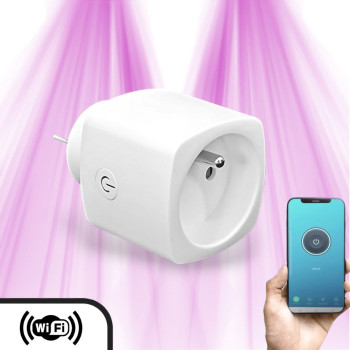
WIFI timer/timer connected socket with consumption control - 16A LED compatible
In stock · Shipped within 24 h
22,90 €

Product successfully added to your shopping cart
Ça pousse dans le bon sens

10 products
Home automation is the application of home automation technology to indoor horticulture. It allows you to control and manage the growing conditions of your plants in an automated way, which has many benefits for the growth and health of your plants.
Home automation allows you to precisely control the growing conditions of your plants, such as temperature, humidity, lighting and watering. This allows you to maintain an ideal environment for your plants to grow, improving their health and yield.
For example, you can use a home automation thermostat to maintain a constant temperature in your greenhouse or indoor garden, or an automated watering system to ensure that your plants are always well hydrated.
By automating gardening tasks, home automation allows you to save energy and time. You no longer need to spend time monitoring and maintaining your plants because technology takes care of it for you.
Additionally, by precisely controlling the growing conditions of your plants, you can optimize their growth and yield while reducing their energy consumption. For example, by using smart LED lighting and adapting its intensity and duration according to the needs of your plants, you can save energy while ensuring optimal growth.
Home automation also allows you to track and monitor the condition of your plants in an automated way. You can therefore be alerted in the event of a problem and act quickly to remedy the situation.
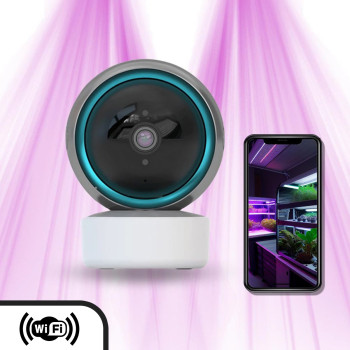
For example, you can use temperature and humidity sensors to monitor your plants' environment and be alerted if any abnormal variations occur. You can also use surveillance cameras to monitor the condition of your plants remotely and be alerted if there is a problem.
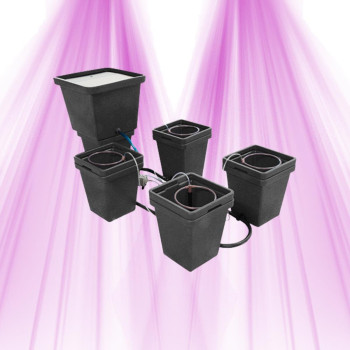
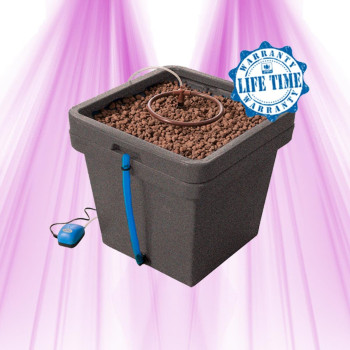
Home automation can also help you optimize the growing space for your indoor plants. You can use hydroponic or aeroponic growing systems, which allow plants to be grown without soil using an inert substrate and a water nutrition system.
These systems grow plants denser and more efficiently, allowing you to maximize your production using minimal space. Additionally, because the plants are grown in a controlled and protected environment, they are less exposed to diseases and pests, improving their health and yield.
In summary, home automation offers many advantages for indoor growing, such as precise control of growing conditions, energy and time savings, tracking and monitoring of your plants, and space optimization. If you are passionate about gardening and want to improve the growth and health of your plants, home automation is an ideal solution to consider.
Help & advice
About Home automation for indoor cultivation — click a question to see the answer.
As an expert, I see home automation as a real asset for indoor horticulture. It allows me to control and automate crucial parameters such as lighting, temperature, humidity, and even watering. In practice, this means optimal and constant growing conditions for my plants, without me needing to intervene manually all the time. It's a huge time-saver and a guarantee of better yields.
If you're looking to optimize your plants' growth, reduce your daily workload, or go on vacation with peace of mind, then I'd say home automation is for you. I particularly recommend it for crops that require high precision or for growers who want to take their environmental control to the next level. It's an investment that quickly pays for itself through the quality and quantity of your harvests.
For ventilation and humidity, home automation is a game changer. I use connected humidity and temperature sensors which, once thresholds are defined, automatically activate or deactivate my exhaust fans, intake fans, or humidifiers/dehumidifiers. This allows me to maintain a stable and ideal environment, thus avoiding mold problems or water stress for my plants. It's a proactive, not reactive, management.
For lighting and horticulture, I advise turning to systems specifically designed for this purpose, or at least compatible with the requirements of our crops. I favor systems that offer precise time programming, light intensity management (dimming), and reliable connectivity. Some of our new Spectrawild from BloomLED already integrate advanced home automation features, which greatly simplifies installation and use.
Temperature control is essential. With home automation, I install precise temperature probes that are connected to a central controller. This controller is then programmed to activate or deactivate my heating or cooling systems (or simply ventilation) as soon as the temperature goes outside the ideal range I have defined. It's constant monitoring that ensures my plants never suffer from thermal stress.
The most common mistake I see is relying too much on automation without occasional supervision. You should always regularly check the proper functioning of sensors and actuators. Another mistake is not calibrating your sensors properly or poorly defining thresholds, which can lead to suboptimal conditions. I recommend starting simple and adding features gradually to master each aspect well.
LED lighting power is crucial and depends on several factors: the surface area of your grow space, the type of plants you are growing, and their development stage. I advise not to rely solely on electrical power (watts) but rather on PPFD (Photosynthetic Photon Flux Density). For optimal flowering, I generally aim for a high PPFD, but be careful not to over-light, which could stress the plants. It is often preferable to opt for dimmable lighting to adjust the power according to needs.
Cannot find your answer? 01 88 33 45 52 or by message.


