


































































Secret Jardin
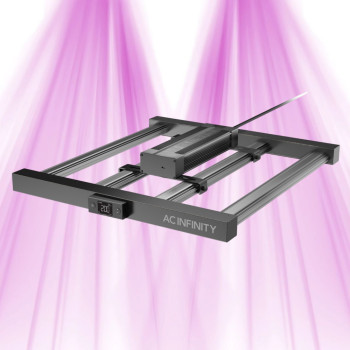
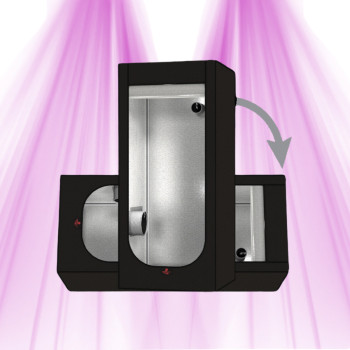
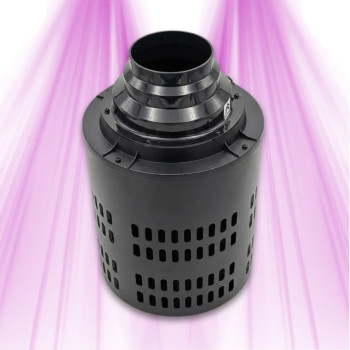
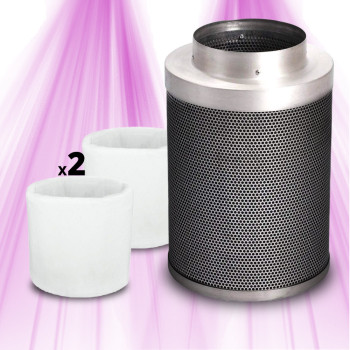
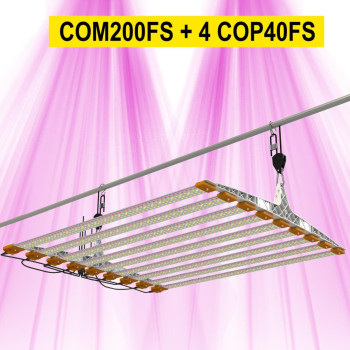
Secret Jardin Cosmorrow 360 W – bloom LED bar kit
Available in 4 models
In stock · Shipped within 24 h
659,99 € or 3× 220,00 €

Product successfully added to your shopping cart
Ça pousse dans le bon sens

20 products
400-500 watt LED lights represent the sweet spot for replacing your old HPS and MH lamps of similar wattage. This range offers ideal light coverage for grow spaces of 1.2 to 1.5m², while halving your electricity consumption. Say goodbye to hot ballasts and bulbs that need changing every six months.
Frankly, the difference is noticeable from the very first electricity bill. Where a 400W HPS actually consumes 460W with its ballast, an equivalent LED caps at 400W while delivering a full spectrum. Photosynthetic efficiency jumps by at least 30% thanks to Samsung LM301B diodes hitting 2.7 µmol/J. No more juggling between MH bulbs for growth and HPS for flowering: the full-spectrum handles both phases.
In terms of heat, it's like night and day. A 400W HPS blasts 1365 BTU/h into your space, compared to 800 BTU/h for an equivalent LED. The result: less ventilation needed, less thermal stress for your plants, and much simpler climate control. In summer, this really makes a difference.
Coverage area remains the number one criterion. For 1m² in intensive cultivation, aim for a minimum of 400W. For 1.5m², go up to 480-500W. The spacing between the canopy and the LED varies by model: count 30-45cm for classic panels, 20-30cm for LED bars that distribute heat better.
The spectrum matters immensely. Models with UV (280-400nm) and IR (730-800nm) boost resin production and accelerate the flowering transition. Meanwell drivers guarantee stable power for at least 50,000 hours. Also check the IP rating if your space is humid: IP65 minimum to avoid short circuits.
For ventilation, plan for 150-200 m³/h of extraction per 400W LED installed. That's half as much as with HPS, but it's still essential to renew CO2 and remove humidity.
With a 400-500W LED, you can grow 4 to 9 plants depending on the technique used. In SOG (Sea of Green), 16 small plants on 1m² work perfectly. In SCROG or LST, 4 well-developed plants make better use of the available space. Density mainly depends on your growth period: 2-3 weeks for SOG, 4-6 weeks for larger plants. The important thing is that each plant receives at least 200-250 PPFD during growth.
400W HPS primarily emits in the red-orange (580-700nm), perfect for flowering but insufficient for growth. 400W MH favors blue-white (400-500nm), ideal for vegetative but limited for flowering. A 400W full-spectrum LED combines both with 40% higher photosynthetic efficiency. It also produces 60% less heat, which avoids thermal stress and allows the light source to be placed closer. In terms of lifespan, count 50,000 hours for LED versus 10,000 hours for HPS/MH.
A 400W LED effectively covers 1 to 1.2m² in intensive cultivation, 1.5m² in extensive cultivation. A 500W goes up to 1.2-1.5m² intensive, 1.8m² extensive. These areas correspond to a PPFD of 600-800 µmol/m²/s in flowering, which is the minimum for optimal production. Beyond that, light penetration becomes insufficient at the edges. For larger spaces, it's better to distribute several medium-sized LEDs than one large one: the coverage is more homogeneous, and you maintain modularity.
Suspend your 400-500W LED 30-40cm from the canopy with adjustable straps, never chains that transmit vibrations. Plan for a minimum 200-250 m³/h extractor with a 150 m³/h intake fan to create slight negative pressure. Place an oscillating fan under the LED to circulate warm air and prevent stagnant spots. Ensure the temperature under the light does not exceed 28°C: beyond that, stomata close and photosynthesis drops. A thermo-hygrometer with remote probes gives you the true values at plant level.
A 400W LED consumes exactly 400W, which is 9.6 kWh per day on an 18/6 cycle (growth) or 4.8 kWh on a 12/12 cycle (flowering). At €0.20/kWh, this represents €1.92/day during growth, €0.96/day during flowering. Over a full 4-month cycle, expect €180-200 in electricity costs. A 400W HPS with ballast consumes 460W actual, which is 25% more. Annual savings with LED easily exceed €150, not including replacement bulbs and reduced ventilation. The return on investment occurs within 12-18 months depending on your electricity tariff.
Available in 4 models
Available in 3 models
Available in 7 models
Available in 7 models
Available in 3 models
Available in 3 models
Available in 17 models
Available in 4 models
Available in 17 models
Available in 3 models
Available in 3 models
Help & advice
About 400 - 500 Watts — click a question to see the answer.
The difference is significant, and that's what makes LEDs so attractive. A 400-500W LED lamp will have half the power consumption compared to an HPS/MH of the same nominal wattage, while offering superior light efficiency. Furthermore, LEDs generate much less heat, which simplifies climate control in your grow space. No more bulky and noisy ballasts, and the lifespan of LEDs is much longer.
For a grow space of 1.2m² to 1.5m², I unreservedly recommend a 400 to 500 Watt LED lamp. This is the ideal sweet spot to effectively cover this area and ensure optimal growth and flowering of your plants. You will achieve excellent light penetration and significant yields, all with controlled power consumption.
The installation distance will depend on the specific model of your LED lamp and the growth phase of your plants. Generally, for a 400-500W LED, I would start with a distance of about 40 to 60 cm from the top of the plants during vegetative growth. During flowering, you may be able to move it slightly closer, around 30 to 45 cm, but it is crucial to carefully observe your plants for any signs of light stress. I always recommend following the manufacturer's guidelines.
The advantages are numerous and very significant. Firstly, you will achieve drastic energy savings, often around 50%. Secondly, heat management is much simpler, which reduces ventilation needs and the risk of thermal stress for your plants. Thirdly, the lifespan of LEDs is much longer, saving you from frequent bulb replacements. Finally, the light spectrum is often more precise and adaptable, which promotes healthier plant development and improved yields.
Absolutely! 400-500W LED lamps are perfectly suited for the flowering phase, provided they offer a full or red and infrared-enriched light spectrum. It is often during this phase that their efficiency and ability to stimulate flower and fruit production are fully revealed. I recommend choosing models with a good spectral balance to maximize your yields.
For a 400-500W horticultural LED lamp, I favor a 'full-cycle' or 'full-spectrum'. This means it must cover all wavelengths necessary for photosynthesis, from blue (for vegetative growth) to deep red and infrared (essential for flowering and fruiting). A good spectral balance ensures harmonious plant development at all stages of its life cycle.
Cannot find your answer? 01 88 33 45 52 or by message.