




































































GreenVisuaLED
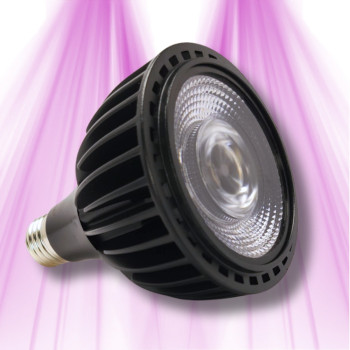
GU10 LED horticultural bulb - Ideal for green plants, bonsai or frames
In stock · Shipped within 24 h
13,90 €

Product successfully added to your shopping cart
Ça pousse dans le bon sens

9 products
LED bulbs are becoming increasingly popular in indoor growing setups due to their low power consumption, relatively long lifespan, and ability to produce high intensity light. They are available in a variety of light spectrums, including red, blue and white, all of which are suitable for different stages of plant growth.
LED bulbs have many advantages over other types of indoor growing lighting, including:
It's important to choose the right LED bulbs based on the plant species you're growing, your growing equipment, and your lighting needs. It may be helpful to consult a specialist or research the different types of bulbs available to determine which one is best for your indoor growing setup. By investing in quality LED bulbs, you can be sure to provide your plants with the lighting they need to thrive and grow optimally.
Help & advice
About Light bulbs — click a question to see the answer.
The difference is significant, and I see it every day in crops! Horticultural LED bulbs are much more energy-efficient and generate much less heat, which simplifies the management of your growing environment. Furthermore, they offer a modulable light spectrum, whereas HPS bulbs like the Florastar 400W HPS Horticultural Bulb have a fixed spectrum, often less optimized for all growth phases.
In practice, for growth, I recommend a spectrum with a dominance of blue. For flowering, red and far-red should be favored. Modern horticultural LEDs, especially full-spectrum ones, are designed to meet these needs. If I had to choose, I would say that a full spectrum is ideal because it adapts to all phases, but some prefer specific spectra like those of HPS HRO bulbs for intense flowering, such as the Florastar High Red Output (HRO) 400W.
The choice of wattage really depends on the size of your grow space and the needs of your plants. For a small area, a 100-200W LED might be sufficient. For larger spaces, I advise increasing the wattage or using multiple modules. It is crucial to consider the PPFD (Photosynthetic Photon Flux Density) rather than just the wattage, as this indicates the amount of light actually usable by the plant. If you are using HPS, a Sylvania SHPTS 400W Bulb is a good standard for medium-sized areas.
To choose well, I always start by evaluating the surface area of your grow space. Then, I look at the type of plants you are growing and their specific light requirements. You also need to anticipate the hanging height of the lamp. A good LED should uniformly cover the surface without creating hot or cold spots. Don't forget accessories like the Clamp with socket and 3m cable for easy installation.
The advantages of LEDs are numerous: energy saving, low heat emission, long lifespan, and adjustable light spectrum. This makes them the preferred choice for the future. The main disadvantage, if I had to name one, is often the higher initial cost compared to traditional HPS systems like the Lumatek 250W MH Bulb. However, this investment is quickly recouped through energy savings and better harvest quality. I explain the advantages of LEDs in more detail in this article.
For seedlings and young plants, I favor LEDs with a gentle spectrum and moderate light intensity. A spectrum rich in blue and cool white is ideal for promoting healthy root development and robust vegetative growth without stressing young shoots. It is not necessary to invest in very high power at this stage; a well-positioned low to medium power LED will suffice.
In general, yes, I would say that a full-spectrum LED lamp is very advantageous for most plants, especially if you are looking for a versatile solution for all growth phases. It provides a balance of colors that mimics natural sunlight, allowing plants to perform optimal photosynthesis. However, for very specific needs, such as ultra-intense flowering, some growers prefer to supplement with specific red LEDs or HPS, such as the Florastar High Red Output (HRO) 250W.
Cannot find your answer? 01 88 33 45 52 or by message.