





































































The influence of light on plant development
Using LEDs to influence plant development indoors
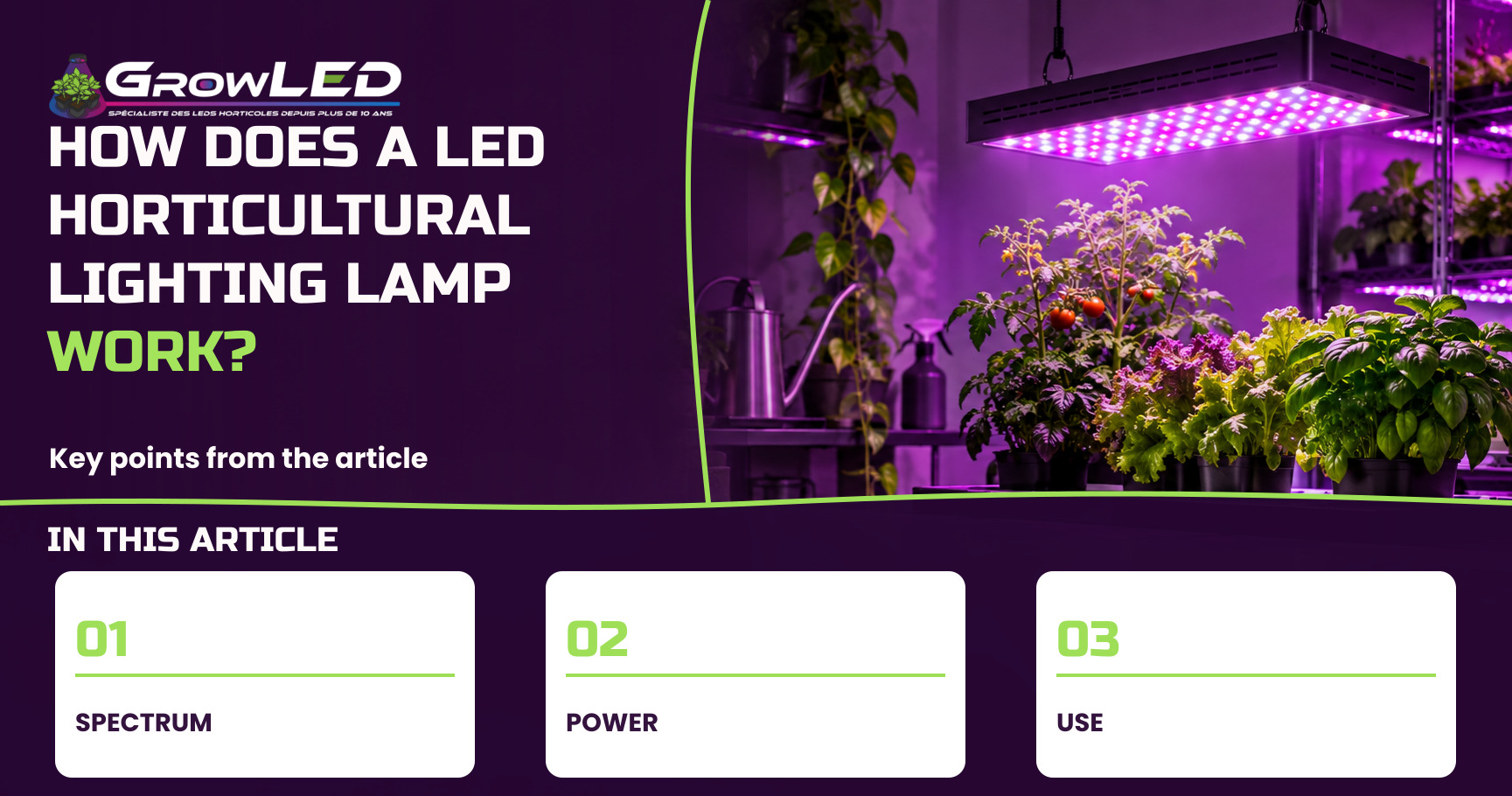
The colors emitted by LEDs are comparable to natural sunlight and influence plant development. Let's take a closer look at the most appropriate light spectrum for the plant depending on the stage of development.
Blue (450nm) for accelerating vegetative growth
Blue, located in the range of 450nm, is the ideal spectrum for accelerating vegetative growth. However, this light is less useful during the flowering and budding stage, as it can produce bushy plants with few buds.
Red (630-660nm) to promote flowering and budding
In contrast to blue, red, located in the range of 630-660nm, will promote flowering and budding. However, too much red spectrum can harm the vegetative growth of your plants and even its health.
White LEDs to provide visibility and detect plant health problems
White LEDs are only necessary to provide visibility inside your growing space, detect problems that affect your plants and provide various wavelengths.
Ultraviolet spectrum to increase THC content
The ultraviolet spectrum is not commonly used. According to research, this color is used for a short period to increase THC content.
Why should we never limit ourselves to red and blue colors?
If a large number of farmers limit themselves to the red and blue spectra, know that these two colors alone will not be enough to reproduce the natural light that the plant would benefit from outdoors. When developing outdoors, plants receive a variety of lights that change over the days and months. It would be necessary to reproduce these conditions for indoor cultivation.
Florastar LED panels: Samsung diodes, 4 dimmable channels on Ti PRO, from 80 × 80 to 120 × 120 cm. The full range, the recommended lamp for each grow area and customer reviews are on our Florastar brand page.