EC/pH Testers for Hydroponics: Precision for Your Crops
In hydroponics, controlling pH and EC (electrical conductivity) is not optional. These two parameters directly determine your plants' ability to absorb nutrients. A poorly adjusted pH or unsuitable EC can lead to your entire harvest collapsing. EC/pH testers provide the essential precision to maintain your nutrient solution within optimal values.
Why Invest in a Good EC/pH Tester
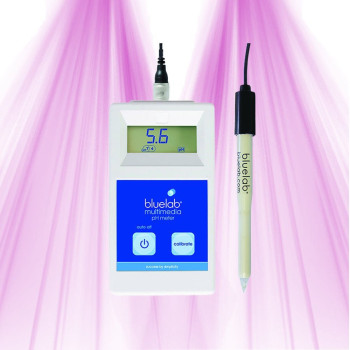
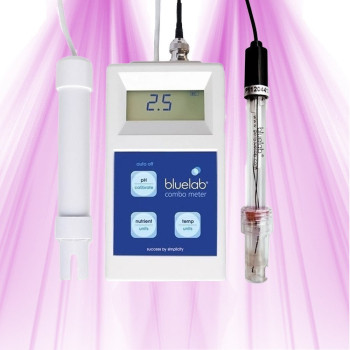
The difference between an amateur grower and a professional often lies in the rigor of measurements. A reliable tester helps you avoid dangerous approximations that can hinder nutrient assimilation. For example, the Durable EC / PH / T° Combo Tester HI98130 - The ultimate portable tester - Hanna combines pH, EC, TDS, and temperature in a single waterproof device, perfect for hassle-free daily measurements.
The advantage of digital testers over test strips? Precision. Where a test strip gives you an approximation, a digital tester displays exact values to the hundredth. This is crucial when working with concentrated nutrient solutions where 0.2 pH points can make the difference between optimal absorption and nutrient lockout.
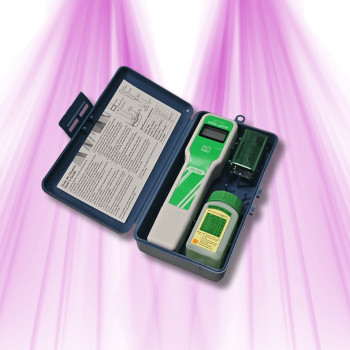
For those who prefer a more economical approach, the Manual pH tester for indoor growing - GHE - For 200 Soil/Hydroponics tests remains a valid alternative for 200 measurements, ideal for beginners or as a complement to a main tester.
How to Choose the Right Tester for Your Setup
The choice primarily depends on the size of your setup and your budget. For a grow room with a few plants, a pen tester is more than sufficient. These portable models fit anywhere and provide instant measurements. Make sure it's waterproof – you're bound to get it wet.
Accuracy matters greatly. Look for models with a resolution of 0.01 for pH and 1 µS/cm for EC. Low-end testers with deviations of ±0.2 pH can mislead you on critical adjustments. Automatic calibration is a plus: no more complicated manipulations with buffer solutions.
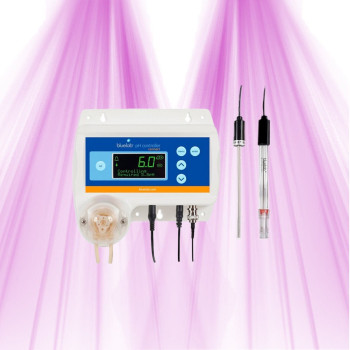
For larger setups, consider continuous controllers that monitor constantly and can even trigger dosing pumps. But frankly, for most indoor growers, a good portable tester does the job perfectly.
Frequently Asked Questions
Which EC/pH tester should I choose between a portable pen model and a continuous controller for my hydroponic system?
For the majority of indoor setups (up to 10-15 plants), a portable pen tester is largely sufficient and more economical. It allows you to quickly measure pH and EC before each watering or solution change. Continuous controllers only become interesting for large systems (NFT, multi-tank DWC) where you want to automate corrections with dosing pumps. Expect to pay €50-150 for a good pen versus €300-800 for a complete controller.
How do I properly calibrate my pH/EC tester with pH 4 and 7 buffer solutions?
Calibration is always done on a clean, dry tester. Start with pH 7 buffer solution (neutral), let it stabilize for 30 seconds, then validate. Rinse with distilled water, dry, then move to pH 4 buffer. Some testers also require a point at pH 10 for greater accuracy. For EC, use a 1413 µS/cm calibration solution (equivalent to 0.7 EC). Repeat calibration every 2-3 weeks or if you notice drifts in your usual measurements.
Is an EC tester necessary in hydroponic cultivation, or is it useless if I use RO water?
Even with RO water, EC remains essential in hydroponics. It indicates the total concentration of nutrient salts in your solution. An EC that is too low (below 0.8) indicates under-nutrition, while an EC that is too high (above 2.5) risks burning the roots. RO water starts at 0, but as soon as you add your nutrients, the EC rises. It's your only way to dose precisely and detect if your plants are consuming more water than nutrients.
How often should I measure pH and EC in my hydroponic nutrient solution?
In active hydroponics (NFT, aeroponics), measure daily because variations are rapid. In DWC or inert containers, every 2-3 days is usually sufficient. The ideal: measure before watering to see the evolution, then after adding nutrients to validate your dosages. During periods of strong growth or flowering, plants rapidly change the composition of the solution, hence the importance of regular monitoring. A pH drift of more than 0.3 points in 24 hours often indicates a problem.
How do I maintain my tester's probe to keep it accurate and prevent degradation?
Always rinse the probe with distilled water after each use and dry it gently. Never rub the sensitive part with a rough cloth. Store pH probes in a special storage solution (3M KCl) or, failing that, in pH 4 buffer – never in pure water, which damages the membrane. Replace storage solutions every 3 months. Avoid thermal shocks: let the tester acclimate if you move it from the fridge to the grow room. A well-maintained probe retains its accuracy for 1-2 years.