



































































Lumatek
VF Vertical Farming 120W - Multi-Bar System for clones and seedlings by Lumatek
Available in 2 models
Ships within 2 weeks
299,00 € or 3× 99,67 €

Product successfully added to your shopping cart
Ça pousse dans le bon sens

66 products
It is important to understand the HPS/MH equivalence in LED when selecting lighting for growing plants indoors. HPS and MH are types of mercury vapor lighting used in indoor growing of plants, while LEDs are becoming increasingly popular due to their low power consumption and low heat output.
HPS/MH LED equivalence is measured in watts, which means it is important to understand the wattage of each type of lighting. In general, it is recommended to choose LED lighting that has an equivalent wattage to the HPS/MH lighting you were previously using. For example, if you were using 400 watt HPS lighting, you should look for 400 watt LED lighting for similar area coverage.
It is also important to consider the light needs of each plant species when selecting LED lighting. Some plants need more light than others, and it's essential to make sure you're providing your plants with the light they need to thrive. Be sure to learn about the light needs of each plant species and choose LED lighting suited to those needs to ensure optimal growth.
In conclusion, HPS/MH LED equivalence is an important element to consider when selecting lighting for growing plants indoors. Be sure to understand the wattage of each type of lighting and consider the light needs of each plant species to select the right LED lighting for your needs and ensure optimal growth of your plants.
Available in 2 models
Available in 3 models
Available in 2 models
Available in 3 models
Available in 3 models
Available in 2 models
Available in 2 models
Available in 2 models
Available in 3 models
Available in 3 models
Help & advice
About HPS/MH equivalence — click a question to see the answer.
To choose well, I invite you to consider several key factors. Firstly, the surface area of your grow space: a small tent won't have the same needs as a large room. Then, the type of plants you're growing and their light requirements. Finally, your budget, of course! I advise you to look at our ranges of 200 to 300 Watt LEDs or 300 to 400 Watt LEDs for medium-sized spaces.
HPS (High-Pressure Sodium) and MH (Metal Halide) are older technologies that produce a lot of heat and consume more energy. MH are ideal for growth due to their blue spectrum, and HPS for flowering with their red spectrum. LEDs, on the other hand, are more energy-efficient, produce less heat, and offer optimized light spectra, often 'full spectrum,' suitable for all plant phases. It's a higher initial investment, but one that quickly pays for itself.
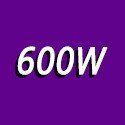
If you had a 250W HPS, I would guide you towards an LED of about 120-150W. For a 400W HPS, a 200-250W LED is usually sufficient. And if you were using a 600W HPS, then a 300-400W LED will do the job. The important thing is not to rely solely on Watts, but rather on the quality of the diodes and the light output. For example, a 300-400 Watt LED can be very powerful.
Installation distance is crucial and depends on your LED's wattage and the plant's growth phase. Generally, I advise starting at 40-60 cm from the canopy for young plants, then gradually reducing to 20-40 cm during flowering to maximize light intensity. Always observe your plants: if leaves yellow or curl, the light is too intense or too close.
With LEDs, we have the advantage of being able to adapt the spectrum! For growth, I favor a spectrum richer in blue, which promotes robust vegetative development. For flowering, a spectrum with more red and far-red is ideal for stimulating flower and fruit production. Many modern LED panels offer 'full spectrum' that covers the entire cycle, or adjustable options to optimize each phase.
The light cycle primarily depends on the type of plant and its life stage. For the vegetative (growth) phase, I generally recommend a cycle of 18 hours of light and 6 hours of darkness. For flowering, most photoperiodic plants require a cycle of 12 hours of light and 12 hours of darkness to initiate and maintain flowering. This is a golden rule to follow for good results.
Cannot find your answer? 01 88 33 45 52 or by message.