



































































CYCLONE
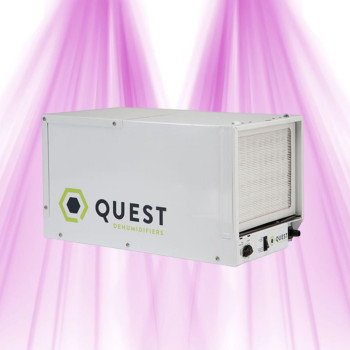
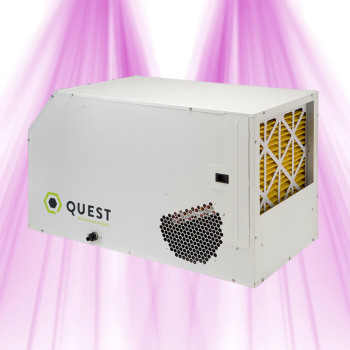
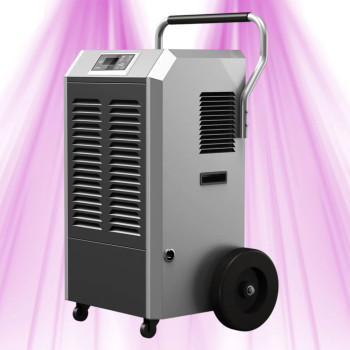
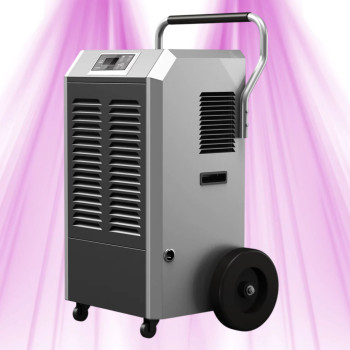
Cyclone Desert 138L – industrial dehumidifier
Available in 3 models
Ships within 2 weeks
1 934,35 € or 3× 644,78 €

Product successfully added to your shopping cart
Ça pousse dans le bon sens

13 products
Seven machines rated from 26 to 335 L/day, plus their consumables. An industrial dehumidifier is chosen on the real water load of the crop and on its efficiency in litres per kilowatt-hour, never on a stated covered area.
What irrigation supplies comes back almost entirely into the air, through transpiration. Reckon on 1 to 5 litres per square metre per day depending on species, growth stage and radiation: a 100 m² room in full vegetative growth may call for more than 300 litres of extraction a day, a propagation room ten times less. The covered areas printed on some data sheets cannot be verified and are sometimes wrong by an order of magnitude.
There is no mandatory test condition in the European Union for a dehumidifier: these appliances are excluded from energy labelling and from ecodesign. Three reference standards therefore coexist, and a unit changes capacity depending on which one the manufacturer adopts.
| Test condition | Used by | Relative capacity |
|---|---|---|
| 30 °C / 80% RH, so-called saturation | entry-level ranges | 100% |
| AHAM DH-1-2008: 26.7 °C / 60% RH | Quest figures and US data | about 62% |
| DOE 2019 and AHAM DH-1-2022: 18.3 °C / 60% RH | US reference standard | about 37% |
A unit quoted at 60 L/day under saturation conditions extracts in the order of 37 L/day at 26.7 °C / 60% RH, and 22 L/day at 18.3 °C / 60% RH. Comparing a “60 L” and a “26 L” without reading their conditions sometimes amounts to comparing the same machine twice. A second trap: at Quest, the model number is in US pints per day (1 pint = 0.4732 L), not in litres.
Efficiency relates the litres extracted to the energy consumed, at a declared condition. It is what weighs on operating cost: a machine running fifteen to twenty hours a day all year costs more in electricity than its purchase price. Capacity and efficiency do not go together: at Quest, the 155 is quoted at 3.93 L/kWh against 3.40 L/kWh for the 706, which is much larger — a difference of generation, not a rule that small means efficient.
These machines contain a refrigerant governed by Regulation (EU) 2024/573. R410A, still present in part of the installed base, has a global warming potential of 2,088: placing a new dehumidifier charged with it on the Union market will be prohibited by 1 January 2027 at the latest. Recent generations move to R454B, whose potential of around 466 still rules out calling it an environmentally benign refrigerant. Periodic leak checking applies above 2.4 kg of R410A, and any work on the circuit is a matter for a certified company.
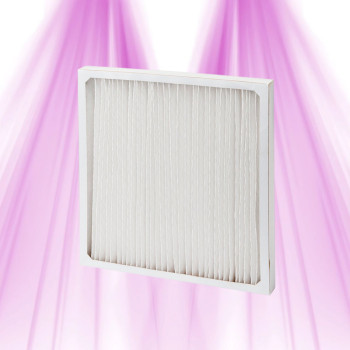
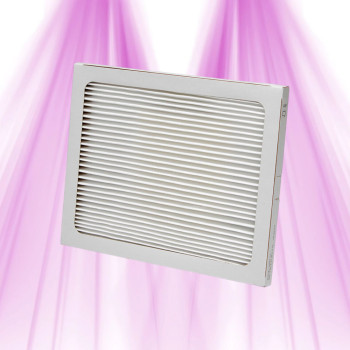
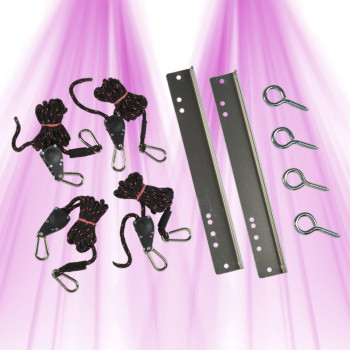
This equipment ships on a pallet, lead time stated on the quotation. Filters, hanging kits and sensors are grouped in dehumidifier accessories and spare parts. The opposite need is covered by our humidifiers section, and humidity control is discussed in humidify or dehumidify, the complete guide. This section belongs to industrial climate control.
Available in 3 models
Available in 3 models
Available in 3 models
Available in 3 models
Available in 3 models
Available in 3 models
Help & advice
About Industrial Dehumidification — click a question to see the answer.
As an expert, I can tell you that there isn't a single rate, but rather ideal ranges that vary depending on the cultivation phase. Generally, I recommend aiming for 60-70% relative humidity for vegetative growth, as this promotes healthy root development and good nutrient absorption. For flowering, it's better to drop to 40-50% to prevent mold and optimize production. It's really a matter of constant adaptation.
To measure humidity, I always use and recommend a hygrometer. It's the essential tool for getting an accurate reading of the relative humidity (RH) in your grow space. There are many models, from the simplest to the most sophisticated, which can also measure temperature. I invite you to consult our selection of accessories to find the one that best suits your needs.
When I have to choose a hygrometer, I always prioritize precision and reliability. A good hygrometer should give you consistent readings. I often recommend digital models that also display temperature, as these two parameters are closely linked. Some advanced models can even record data, which is very useful for tracking trends and adjusting your environment. Also consider placement: a remote sensor can be a plus for measuring humidity at canopy level.
To increase humidity, the most effective solution I use is a humidifier. There are several types, from ultrasonic models to foggers. I advise placing it so that the mist does not fall directly on the plants, which could promote diseases. Another tip, especially during the growth phase, is to place water containers in your space or use a substrate with good water retention. Make sure you have good control to avoid excesses.
To reduce humidity, my first reflex is always to strengthen the ventilation of the space. A good air extractor, coupled with an intake fan, allows for air renewal and evacuation of excess humidity. If that's not enough, especially during the flowering period, investing in a dehumidifier becomes essential. I often see growers underestimate the importance of good air circulation, which is a common mistake that can lead to mold problems.
The choice of a dehumidifier will depend mainly on the size of your grow space and the humidity level to manage. For small tents, a compact dehumidifier may suffice. For larger grow rooms, I recommend models with a greater water extraction capacity. Also consider the continuous drainage function, which will save you from manually emptying the tank. Some models integrate a hygrometer and a humidistat, allowing for very practical automatic control.
The difference is quite simple but fundamental: a humidifier adds moisture to the air, while a dehumidifier removes it. I use each of them at very specific times during cultivation. The humidifier is valuable at the beginning of the cycle for young plants that appreciate high humidity. The dehumidifier, on the other hand, becomes crucial during flowering to avoid problems related to excess humidity. These are two complementary tools for fine environmental management.
In practice, I recommend the following ranges: for seedlings and young plants, aim for 70-80% humidity. This is a very sensitive phase where plants need a lot of humidity. During vegetative growth, I lower it to 60-70%. Finally, during flowering, it is imperative to reduce humidity to 40-50% to prevent mold and promote flower quality. Good control of these phases is a guarantee of success.
Cannot find your answer? 01 88 33 45 52 or by message.