




































































Garden HighPro
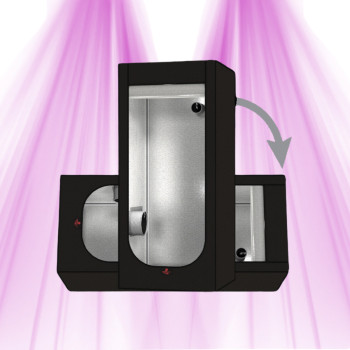
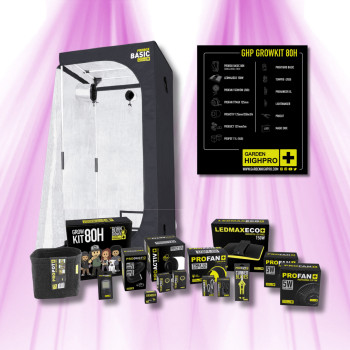
Garden HighPro Probox Propagator M – propagator tent 80x60x40 cm
Available in 4 models
In stock · Shipped within 24 h
63,90 € or 3× 21,30 €

Product successfully added to your shopping cart
Ça pousse dans le bon sens

5 products
Winterization grow tents are cultivation spaces specially designed to keep your plants safe during the cold months. Unlike classic grow tents, these boxes incorporate reinforced insulation and heating systems to ensure stable temperatures even when it's freezing outside. This is the essential solution for continuing to grow indoors when outdoor temperatures drop below 10°C.
The main advantage of a winterization box is its superior thermal insulation. Where a classic tent lets the cold in, these models use multi-layer insulating materials that keep the heat inside. The walls are generally 30% thicker than a standard box, with insulation layers of foam or technical fibers. This makes all the difference when your grow room is unheated or poorly insulated.
The other strong point is the native integration of heating systems. Many models directly accommodate floor heating mats or ceramic heaters without risk of overheating. The openings are designed to avoid thermal bridges, with airtight closures and insulated sleeves for ducts. The result: you can easily maintain 20-25°C inside even with 5°C in the room.
For cuttings and young plants, it's frankly indispensable. These small plants are ultra-sensitive to temperature variations, and a cold snap can ruin weeks of work. A winterization box creates a stable microclimate that promotes rooting and growth, even in the middle of winter.
The size obviously depends on your space and the number of plants. For beginners or for overwintering cuttings, a 60x60x140cm is more than enough. If you want to maintain mother plants or do winter growth, opt for at least 100x100x200cm. Keep in mind that insulation takes up space: the useful internal space is reduced by 5 to 10cm on each dimension.
Insulation is the number one criterion. Check the wall thickness (minimum 2cm to be effective) and the type of insulation used. High-end models use multi-layer reflective insulation that reflects heat inwards. Zippers should be doubled with insulating flaps to prevent thermal leaks.
For heating, two schools: floor heating mats (more economical, gentle heat) or suspended ceramic heaters (faster temperature rise, better control). Some boxes accept both systems. Also plan for a precise digital thermostat - variations of 2-3°C can stress your plants.
Extraction remains crucial even in winter. Look for models with pre-cut openings for 100 or 125mm extractors, with insulated sleeves. An extractor that is too powerful will suck out all your warm air, so size it correctly: 150-200m3/h maximum for a 1m² box.
For overwintering cuttings and small plants, a 60x60x140cm is perfect and can accommodate 15-20 cuttings in pots. If you want to maintain mother plants or do winter growth, opt for at least 80x80x160cm, or even 100x100x200cm for more comfort. Be aware that insulation reduces the internal space by 5 to 10cm on each dimension, so plan for a larger size than for a classic box. For a beginner, I recommend starting with 80x80cm, it's a good compromise between useful space and ease of heating.
The trick is to create a closed air circuit without directly drawing in cold outside air. Place your extractor at the top of the box with a short duct that exhausts into the same room, not outside. For air intake, use the lower openings with backdraft dampers to prevent cold drafts. Heating is ideally placed on the floor (heating mat) or at the bottom of the box (ceramic heater) to create natural convection. Set the extraction to a minimum: 50-100m3/h is largely sufficient, the goal is just to renew the air without losing heat.
The two systems are complementary rather than competing. Reinforced insulation is essential in all cases - without it, you will be heating for nothing and skyrocketing your electricity bill. Heating mats are perfect for overwintering cuttings and seedlings: gentle heat, low consumption (20-50W), and it directly warms the roots. For larger plants or very cold temperatures (below 5°C), add a 100-200W ceramic heater. The best option is a well-insulated box + heating mat + small auxiliary heater if needed. Avoid "all-heating" models without insulation; it's money thrown out the window.
For cuttings, maintain 22-25°C at substrate level with a 20-30W heating mat under your trays. Humidity should remain high (70-80%) so use a humidifier or water trays. Light with low-power LEDs 18-24h/day for the first few days, then switch to 18/6. Extraction should be minimal: just a small circulation fan to avoid air stagnation. Check the temperature morning and evening with a min/max thermometer - cuttings hate variations. If it drops below 20°C at night, add a small 50W ceramic heater with a thermostat.
Check temperature and humidity twice a day with a digital hygrometer - variations of more than 3°C stress plants. Make sure the ventilation openings are not blocked by condensation, especially the backdraft dampers which can freeze. Clean the humidifier weekly to prevent algae and bacteria. If you use a heating mat, check that there is no standing water on it - this can cause short circuits. Remember to ventilate for 5-10 minutes a day when it's less cold outside; this renews the air without cooling the box too much. In case of heating failure, hot water bottles can help for a few hours.
Available in 4 models
Available in 3 models
Available in 19 models
Available in 19 models
Available in 3 models
Help & advice
About Wintering culture box — click a question to see the answer.
A winterization grow box is primarily used to protect your plants from winter cold and maintain optimal growing conditions when outdoor temperatures drop. It allows you to extend the growing season, overwinter frost-sensitive plants, or start early seedlings, by ensuring a stable temperature and appropriate lighting.
The main difference lies in their design and insulation. A winterization grow box is specifically designed with reinforced insulating materials and often integrates heating systems to maintain a constant temperature, even in very cold weather. A classic grow tent, while offering a controlled environment, generally does not have the same level of thermal insulation and is less suitable for harsh winter conditions.
To choose a winterization grow box, I recommend considering several key factors: the size suitable for your plants, the level of thermal insulation, the power of the integrated heating system or the possibility of adding one, and the quality of the materials. Also, think about ease of access and ventilation to avoid stagnant humidity. It's an investment that must match your specific needs.
The necessary heating power will depend on the size of your box and the ambient temperature of the room where it is installed. In general, I advise opting for a heater with an integrated thermostat to precisely regulate the temperature. For a small box, a few tens of watts may be sufficient, while for a larger one, several hundred watts may be needed. The goal is to maintain a stable temperature without overconsuming.
The ideal temperature in a winterization grow box varies depending on the type of plant you are growing. Generally, for most plants, I recommend maintaining a temperature between 18°C and 24°C. For overwintering Mediterranean or tropical plants, a slightly cooler temperature, around 10-15°C, may be sufficient to keep them dormant or at a slowed growth rate.
Maintaining good humidity is crucial in winter, as heating tends to dry out the air. I advise you to use an air humidifier with a hygrostat to regulate the humidity level. You can also place saucers of water or moist clay pebbles. Good humidity management prevents water stress in plants and limits the appearance of diseases.
A common mistake is to neglect ventilation, which can lead to problems of excessive humidity and mold. I also often see growers underestimate the importance of good supplemental lighting. Remember that even in winter, your plants need light. I explain in more detail how to choose lighting in this article.
If your box is not specifically designed for winterization, you can insulate it by adding layers of insulating materials such as extruded polystyrene or insulating foam to the outer walls. Make sure to seal the joints well to avoid thermal bridges. This is an effective solution to reduce heat loss and optimize the efficiency of your heating system.
Cannot find your answer? 01 88 33 45 52 or by message.


