



































































BloomLED
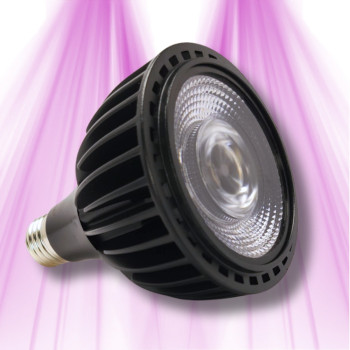
BloomLED SpectraBULB X30 – LED grow bulb E27 35 W
Available in 3 models
In stock · Shipped within 24 h
85,90 € or 3× 28,63 €

Product successfully added to your shopping cart
Ça pousse dans le bon sens

7 products
Winterizing LED grow lights are the solution to keeping your indoor plants healthy during the darker months. When days shorten and natural light becomes insufficient, these specialized LED lamps compensate for the lack of photons to prevent etiolation and leaf drop. Unlike conventional lamps, they deliver a light spectrum tailored to photosynthetic needs without overheating your space.
Winter can be tough on our indoor plants. Between November and February, light intensity drops drastically – from 100,000 lux in summer to barely 5,000 lux on a cloudy day. The result: your plants stretch, lose their leaves, and become dormant. Winterizing LED grow lights solve this problem by delivering between 20 and 50 watts per m², equivalent to 15,000 to 30,000 lux depending on the distance. Frankly, much more effective than a desk lamp! These LEDs consume 10 times less than an incandescent bulb for the same light output, and their spectrum between 3000K and 6500K perfectly matches the needs of green plants. Another advantage: they generate very little heat, so there's no risk of scorching your delicate foliage.
To choose your winterizing LED grow light, start by calculating the area to be illuminated. Count 20 to 30 watts per m² for classic green plants, 40 to 50 watts for more demanding plants like ficus or monsteras. Color temperature also plays a role: 4000K to 6500K stimulates vegetative growth, while 3000K to 4000K is better suited for winter maintenance without forcing growth. Regarding distance, maintain 30 to 60 cm between the LED and the foliage depending on the power – too close and you risk burns, too far and efficiency drops. LED bars are practical for shelves, panels for larger areas. Don't forget a programmable timer: 12 to 14 hours of daily lighting are generally sufficient to compensate for the lack of winter light.
For 1m² of classic indoor plants (pothos, philodendrons, ficus), aim for 25 to 35 watts of LED. This is more than enough to maintain photosynthesis without forcing winter growth. If you have more light-hungry plants like citrus or succulents, go up to 40-50 watts. A 30W LED bar placed 40-50 cm high will be perfect for a standard shelf. Avoid oversizing: too much light in winter can disrupt your plants' natural resting cycle.
The optimal distance depends on the power of your LED. For a 20-30W bar, keep a minimum of 30 to 40 cm. With 40-50W, move it to 50-60 cm. The trick to check: place your hand at leaf level for 30 seconds – if it feels hot, it's too close. Signs of burning appear quickly: leaves yellowing, browning at the edges, or curling. It's better to start further away and gradually move closer if your plants show signs of stretching.
4000K white LEDs work very well for winterizing! Contrary to popular belief, you don't need purple full spectrum LEDs to keep your plants healthy in winter. A good 4000-6500K white LED already contains the essential wavelengths (blue 400-500nm, red 600-700nm) in correct proportions. Specialized horticultural LEDs are mainly useful for intensive growth or flowering. For winterizing, the goal is just to compensate for the lack of natural light, and a quality domestic LED does this perfectly. Bonus: it also lights up your interior!
12 to 14 hours a day is the sweet spot for winterizing. Turn them on from 7 am to 7 pm or 8 am to 10 pm depending on your lifestyle. The idea is to simulate a spring/autumn day, not summer (16 hours would be too much). A basic mechanical timer for €15 will do the trick, but a digital timer allows for more precise scheduling. Some growers prefer to turn them off for 1-2 hours in the middle of the day to simulate cloudy weather, but that's a minor detail. Regularity is important: your plants need a stable day/night cycle to hibernate well.
Clean your LEDs every 2-3 weeks with a slightly damp microfiber cloth, never water directly on the electronics! Dust reduces light efficiency by 10 to 20% in a few months. Regularly check that connections remain tight and that cables don't overheat. In indoor cultivation, humidity can create condensation: ensure your LEDs have a minimum IP65 rating if humidity exceeds 70%. Replace LEDs when their intensity visibly decreases (generally after 30,000 to 50,000 hours depending on quality). Regular maintenance can double their lifespan.
Available in 3 models
Available in 3 models
Available in 2 models
Available in 2 models
Help & advice
About Winter LED lighting — click a question to see the answer.
To make the right choice, I advise you to consider several criteria. First, the size of your growing area: do you have one plant or several? Next, the type of plants you are growing, as some are more light-demanding than others. Finally, the light spectrum and power are crucial. I will detail these points more precisely in the following questions to guide you best.
Power is a key factor, but be careful, more is not always better! For overwintering, the goal is often to keep the plant alive rather than stimulate intense growth. I generally recommend moderate wattages, often between 10 and 50 actual watts per lamp, depending on the area to be lit and your plants' needs. The objective is to provide sufficient supplementation without overloading the plant.
For overwintering, I favor a 'full spectrum' or 'warm white' spectrum. These spectra best mimic natural light and are perfect for general plant maintenance. Specific horticultural LEDs for growth or flowering have more targeted spectra (often pinker or purple) which are not always necessary for simple overwintering. Warm white is more visually pleasing for an indoor setting.
Installation is generally simple. I advise you to position the lamp above your plants, ensuring that the light is well distributed. Use a stand or hanger to adjust the height. It is crucial to maintain a good distance between the lamp and the leaves to avoid burns, a point I will address later. Also, make sure the lamp is stable and secure.
The main difference lies in the light spectrum and intensity. Domestic LEDs are designed for human lighting and have a broad spectrum but are often not intense enough for photosynthesis. Horticultural LEDs, on the other hand, are specifically designed for plants, with an optimized spectrum (often more red and blue) and a much higher light intensity (PAR), even for overwintering. I explain in more detail how to choose the LED horticultural bulb or bar in this article.
Distance is crucial to avoid burning your plants or, conversely, not providing them with enough light. Generally, for overwintering with low to medium power LEDs, I recommend a distance of 15 to 30 centimeters. For more sensitive plants or more powerful lamps, increase this distance. Always observe your plants: if the leaves yellow or brown at the edges, the lamp is probably too close.
For overwintering, the goal is to maintain the plant in relative dormancy or minimal growth. I generally recommend a lighting duration of 10 to 12 hours per day. This is sufficient to compensate for the lack of natural light without disturbing the plant's winter rest cycle. A timer can be very useful to automate this process and ensure regularity.
Cannot find your answer? 01 88 33 45 52 or by message.