



































































Secret Jardin
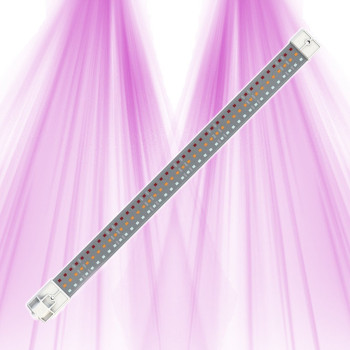
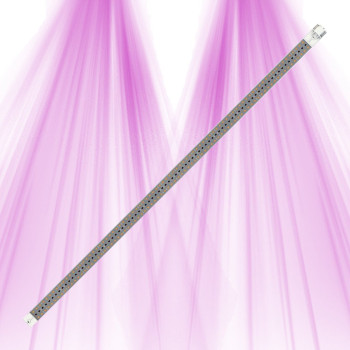
Cosmorrow Infrared LED Bar 40W - 90cm
In stock · Shipped within 24 h
70,00 € or 3× 23,33 €

Product successfully added to your shopping cart
Ça pousse dans le bon sens

52 products
Horticultural LEDs from 0 to 100W represent the ideal entry point into LED lighting for indoor cultivation. This power range perfectly covers the needs of small setups, cloning spaces, and supplemental lighting. Unlike larger panels of 200W and more, these models offer remarkable flexibility to precisely target your growing areas without overheating the space.
This power range offers unique advantages that experienced growers particularly appreciate. First, power consumption remains controlled – a 50W panel actually consumes 50W, unlike older HPS lights that claimed 250W but often drew more. The heat generated remains very manageable, which avoids overheating problems in small grow spaces.
Night lighting for your plants - LED strip - 9W per meter - 1m perfectly illustrates this versatility. This type of LED strip allows for targeted lighting during critical phases, resists the high humidity of grow spaces, and can be easily placed wherever you need it. It's exactly what you need to maintain a stable light cycle without investing in a large system.
Modularity is another major asset. You can combine several small units to create custom lighting, adjust the intensity according to your plants' needs, and even create differentiated lighting zones within the same space. Frankly, that's where it changes everything for growers who want to optimize every square inch.
The choice primarily depends on your growing area and the type of plants cultivated. For a 30x30cm area, a 30-50W panel is more than sufficient. If you're aiming for 60x60cm, opt for 80-100W. The general rule: count about 30-50W per square foot (0.09m²) for effective primary lighting.
The light spectrum deserves special attention in this range. Full spectrum models (380-780nm) offer more versatility, while targeted red/blue spectra are better suited for specific phases. Also check for the presence of UV and infrared – even in small quantities, they significantly improve the final quality.
Heat dissipation remains crucial, even at these moderate power levels. Prioritize models with aluminum heat sinks and passive ventilation. Samsung LM301B LEDs or equivalent guarantee a luminous efficacy greater than 2.5 µmol/J, which translates to less heat and more useful photons.
For 1m² of cultivation, aim for 80-100W of actual LED power in this range, which is equivalent to 2-3 30-40W panels distributed evenly. This power ensures approximately 300-400 µmol/m²/s at plant level, which is the minimum for proper growth. If your budget allows, combine several units rather than a single large panel – the light distribution will be more homogeneous. Remember that 100W of LED is equivalent to about 250W of HPS in terms of light output.
The optimal distance varies depending on the exact power and the growth phase. For a 50W panel, maintain 25-35cm during vegetative growth and 20-30cm during flowering. With 100W, increase to 35-45cm during vegetative growth and 30-40cm during flowering. Monitor for signs of light stress: leaves bleaching or curling upwards. A lux meter or PAR meter will give you precise measurements – aim for 200-400 µmol/m²/s during vegetative growth and 400-600 µmol/m²/s during flowering. Adjust gradually, especially with young plants.
0-100W LEDs generate significantly less heat than equivalent HPS systems – expect about 60-70% of the consumed power to be converted into heat. A 100W actual panel will heat up like a 60-70W heater, which is very manageable. Passive ventilation is often sufficient in this range, but adequate air extraction remains essential. Maintain 5-10cm of free space above the panels for dissipation. In summer, a fan directed towards the LED heat sinks significantly improves their lifespan.
Most LEDs in this range offer fixed full-spectrum options suitable for all phases. If your model has separate channels, prioritize blue (400-500nm) and white during vegetative growth to promote a compact structure. During flowering, increase the proportion of red (660nm) and far-red (730nm) to stimulate production. Models with dimmers allow you to adjust the overall intensity: 40-60% during vegetative growth, 80-100% during flowering. Avoid 100% red/blue spectra, which can be harsh on the eyes – full-spectrum is more practical for daily use.
A quality LED in this range typically has a lifespan of 50,000 operating hours, which is about 5-7 years of intensive use (12-18 hours/day). Light degradation remains gradual – after 30,000 hours, you lose about 10-15% of intensity. Maintenance is limited to monthly dusting of the heat sinks and cleaning the optics with a dry cloth. Regularly check connections and avoid overly frequent on/off cycles, which prematurely wear out drivers. A clean environment and stable temperature significantly extend the lifespan.
Help & advice
About 0 to 100W — click a question to see the answer.
To choose a horticultural LED in this power range, I advise you to first define the precise use: cuttings, seedlings, supplemental lighting, or a small growing area. Then, look at the coverage area announced by the manufacturer and compare it to your space. Finally, prioritize models with a good light spectrum (full spectrum) and high luminous efficacy (PPF/W) to optimize your plants' growth.
For beginners, especially for small areas or specific applications like cloning, a horticultural LED of 20W to 50W is often sufficient. If you're aiming for a small growing area for a few plants, a 75W or 100W can be an excellent starting point. The idea is not to oversize to avoid overheating and unnecessary consumption.
The main difference lies in the emitted light spectrum. A classic LED is optimized for the human eye, with a lot of green. A horticultural LED, on the other hand, is designed for plants, emitting specific wavelengths (primarily blue and red, but also green and far-red in full spectrum) that are essential for photosynthesis. This makes all the difference for plant growth.
A full spectrum horticultural LED is designed to best mimic natural sunlight, providing plants with all the wavelengths they need for each phase of their development, from germination to flowering. This promotes balanced growth, better chlorophyll production, and ultimately, optimal yields. It's a versatile choice that I highly recommend for most crops.
For a small indoor growing area, I recommend a horticultural LED of 50W to 100W, depending on the exact size of your space (for example, an area from 40x40cm to 60x60cm). The important thing is to ensure that the light coverage is uniform across the entire surface. Compact and adjustable models are particularly suitable for optimizing space.
Installation is generally simple. I advise you to hang your LED lamp above your plants using the provided cables and hooks, making sure it's stable. Ensure you have an electrical outlet nearby and, if possible, a timer to automate the light cycles. It's crucial to respect the recommended distance between the lamp and the plants, which I'll explain next.
The ideal distance varies depending on the power of your LED and the growth stage of your plants. For 0 to 100W LEDs, I generally start with a distance of 30 to 45 cm for seedlings and young shoots, then I can reduce it to 20-30 cm for vegetative growth and flowering. Observation is key: if the leaves yellow or curl, the light is too intense; if the plants stretch, it's too far. Don't hesitate to consult the specific recommendations from your lamp's manufacturer.
Yes, a 100W horticultural LED can be perfectly suitable for growing one or two autoflowering plants in a small area. Autoflowers do not need extreme light intensity, and their life cycle is shorter. A well-positioned 100W full spectrum will provide them with enough light for healthy development and a good harvest. To learn more about different technologies, you can consult this article on horticultural LED lighting: Future of Grow Fog.
For cloning, I prefer a horticultural LED with a blue-oriented spectrum, as this color promotes rooting and compact vegetative growth. A power of 20W to 50W is generally ample for a small cloning area. The important thing is to have soft but constant light so as not to stress young shoots. A model with a good light diffuser is a plus for uniform coverage.
Cannot find your answer? 01 88 33 45 52 or by message.