







































































Biobizz
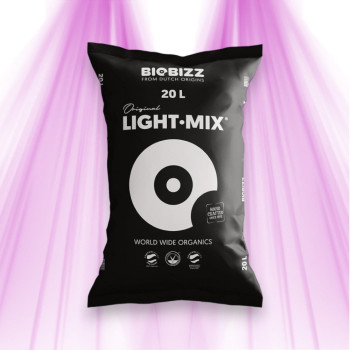
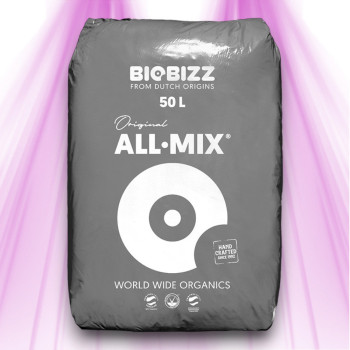
BioBizz All-Mix 20 L – pre-fertilized potting soil
Available in 3 models
In stock · Shipped within 24 h
20,90 €

Product successfully added to your shopping cart
Ça pousse dans le bon sens

74 products
Soil is literally the foundation of your indoor grow. Contrary to popular belief, not all soils are created equal when it comes to growing indoors. From drainage, pH, fertilization, and structure, every parameter counts to obtain vigorous plants and harvests that meet your expectations.
Indoor growing imposes specific constraints that classic garden soils cannot handle. First, drainage: in a pot, stagnant water quickly becomes problematic. A good indoor soil incorporates draining elements like perlite or vermiculite, which allow roots to breathe while retaining necessary moisture.
Then there's the question of pH. Most plants grown indoors prefer a slightly acidic pH, between 6.0 and 6.8. Specialized soils are formulated to maintain this optimal range, unlike universal soils which can drift towards alkalinity.
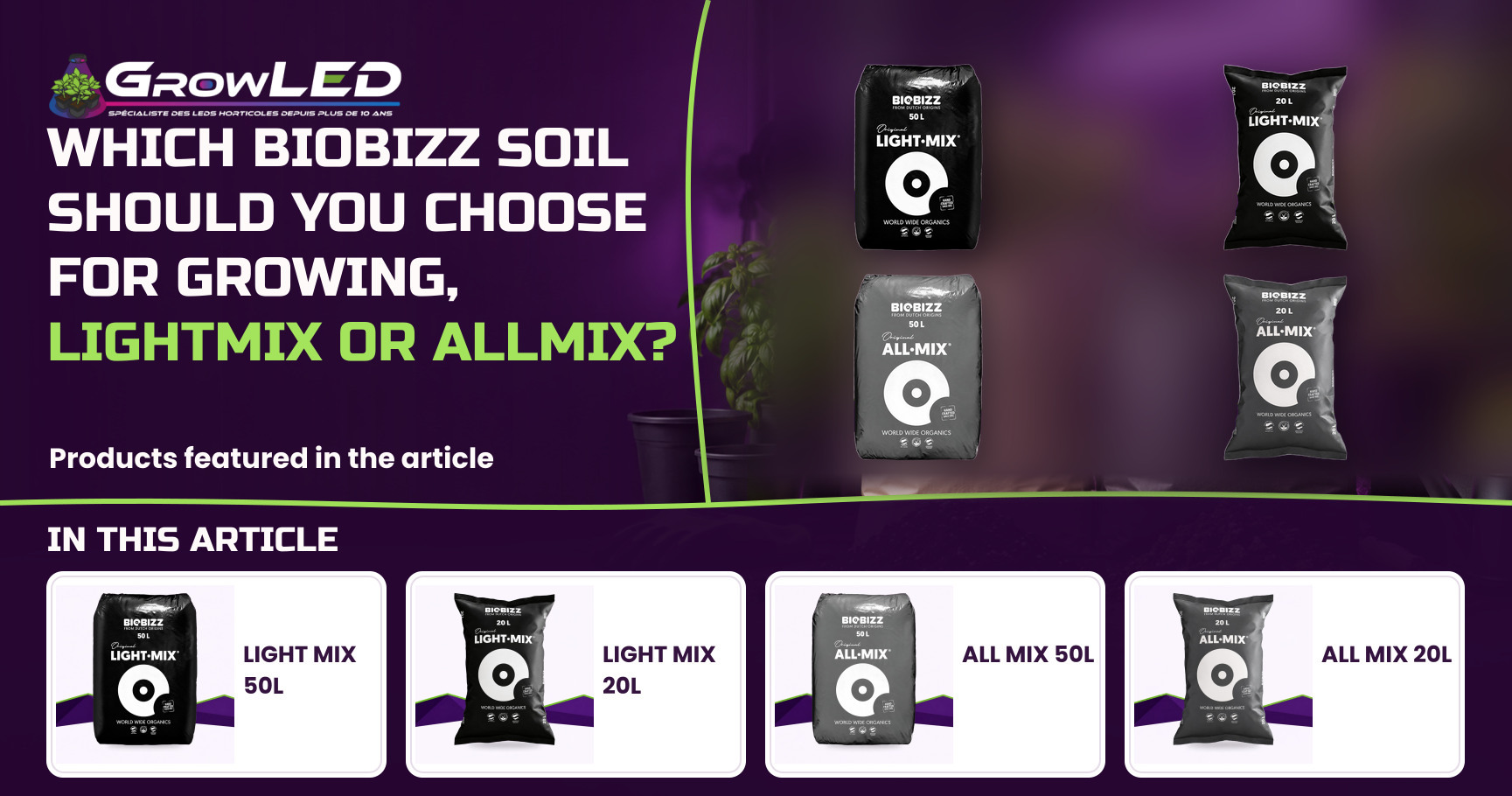
Regarding nutrition, that's where it gets interesting. You have two schools: "Light Mix" soils, lightly fertilized, perfect for precisely controlling your plants' feeding, and pre-fertilized "All Mix" soils that nourish for 4 to 6 weeks. Each approach has its advantages depending on your experience level and growing method.
For beginners, an All Mix soil often represents the best compromise. Pre-fertilized with organic fertilizers, it nourishes plants during their first weeks of life without risk of over-fertilization. The composition is balanced: blond peat, compost, perlite, and a cocktail of organic fertilizers precisely dosed.
More experienced growers often prefer Light Mix. Less loaded with nutrients, they allow total control of feeding from the start. This is particularly useful if you use specific liquid fertilizers or if you want to adapt nutrition according to growth phases.
Regarding texture, look for a soil that remains aerated even after watering. A good mix contains about 20 to 30% perlite or draining elements. Too compact, your soil will retain water and promote root rot. Too draining, you will have to water every day.
For seedlings and cuttings, always prefer a light soil or special seedling soil. Young roots are fragile and do not appreciate high concentrations of fertilizers that can "burn" them.
For seedlings, absolutely avoid All Mix, which is too rich in nutrients for young shoots. A Light Mix or a special seedling soil is essential: these substrates contain just enough nutrients for the first few weeks without risking burning fragile roots. The fertilizer concentration of an All Mix (EC around 1.2-1.4) can literally kill a seedling, whereas a Light Mix peaks at 0.8 EC. Wait until your plants have at least 3-4 sets of true leaves before switching to a richer substrate.
Drainage is 50% of the success in indoor growing. Even with good soil, add 10 to 20% extra perlite if you water often or if your space is humid. At the bottom of your pots, place a 2-3 cm layer of clay pebbles: this prevents the drainage holes from getting clogged with soil. Always check that water drains well after watering – if it stagnates for more than 30 minutes in the saucer, your drainage is not sufficient. Well-drained soil should dry on the surface in 2-3 days maximum.
For beginners, All Mix is safer because it is more forgiving of fertilization errors. For 4 to 6 weeks, you only need to water with plain water, which greatly simplifies management. Light Mix requires more rigor: you have to start fertilizers from the 2nd week and dose them well according to the plant's needs. However, if you want to learn and progress quickly, Light Mix forces you to understand your plants' nutritional needs. It's more technical but more educational in the long run.
With geotextile pots, start by placing them on their final support because they become heavy once filled. Fill in thirds, tamping lightly at each step – not too hard, just to avoid air pockets. Leave 3-4 cm of margin at the top to facilitate watering. The soil will settle naturally with the first waterings, which is normal. The advantage of geotextile pots is that the roots can "breathe" through the fabric, which compensates for slight over-tamping. Water gently the first time to thoroughly moisten the entire volume.
Quality All Mix soil generally nourishes for 4 to 6 weeks, depending on the size of your pots and the growth rate of your plants. The first signs of deficiency appear on the lower leaves: yellowing, then browning of the tips. This is the signal to start liquid fertilization. In 11L pots, count on 6 weeks, in 3L pots, rather 4 weeks – logically, more soil = more nutrient reserves. Always start with low doses (1/4 of the recommended concentration) then gradually increase according to your plants' reaction.
Available in 3 models
Available in 3 models
Available in 3 models
Available in 3 models
Help & advice
About Soils — click a question to see the answer.
I often see beginner gardeners using any potting mix, but in indoor cultivation, a specialized potting mix truly makes all the difference. It's formulated to meet the specific needs of your plants under artificial light, with optimal drainage, good aeration, and a stable pH. This prevents overwatering or deficiency problems that are common with classic potting mixes.
This is a question I get very often! In practice, the main difference lies in their nutrient content. A light potting mix is little to no fertilized, ideal for seedlings or young shoots, giving you total control over nutrient input. Conversely, an enriched potting mix contains nutrients for several weeks, perfect for growth and flowering, but you need to be careful not to over-fertilize.
To choose the best potting mix, I advise you to first consider the development stage of your plants and your fertilization preferences. If you like to control nutrient inputs, a light potting mix is perfect. If you prefer a simpler solution, an enriched potting mix will do the trick. I also look at the composition: a good indoor potting mix often contains perlite or coco fiber for aeration and drainage.
I strongly advise against reusing the same potting mix for multiple crops. After a first use, the potting mix is depleted of nutrients, its structure is degraded, and it may contain salt residues, or even pathogens or insect eggs. To ensure the health and vigor of your new plants, fresh potting mix is always the best option.
The most common mistake I see is overwatering, often linked to a potting mix that is too compact or has poor drainage. Also, avoid using unsuitable garden soil, which can introduce diseases or pests. Finally, don't neglect the pH: a potting mix with an unsuitable pH can block nutrient assimilation by your plants.
For indoor cannabis seedlings, I systematically recommend a light and lightly fertilized potting mix, such as a light potting mix. Young shoots are very sensitive to nutrient excesses. A substrate that is too rich could burn delicate roots. The important thing is to have good drainage and sufficient aeration to promote good initial rooting.
The choice of pots is crucial with potting mix. I strongly advise using pots with good drainage holes to prevent water stagnation, which is a major cause of problems. Fabric pots are an excellent option because they promote root aeration and prevent root circling, but plastic or terracotta pots are also suitable, provided sufficient drainage is ensured.
Cannot find your answer? 01 88 33 45 52 or by message.