






































































Prima Klima
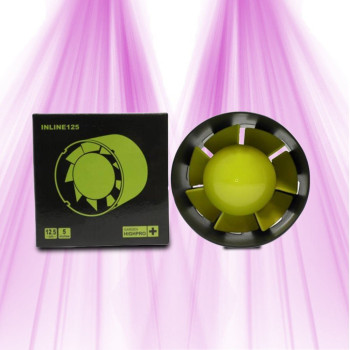
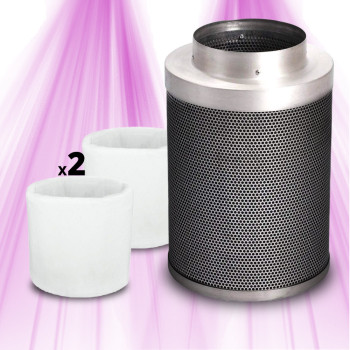
Extraction Pack PK125 -L - PrimaKlima 125 Extractor - 360 m3/h - Combi sheath…
Available in 3 models
Ships within 2 weeks
107,43 € 113,08 € or 3× 35,81 €

Product successfully added to your shopping cart
Ça pousse dans le bon sens

25 products
A 1-speed air extractor is the central element of your indoor grow ventilation system. Unlike variable-speed models, these extractors operate at a constant rate, providing a stable and predictable airflow to refresh the atmosphere of your grow space. They ensure the evacuation of hot, humid air while allowing fresh air in, creating optimal climatic conditions for your plants.
Ease of use is the primary advantage of these extractors. No complicated settings: you plug it in, and it works. The PROFAN 125mm Duct Extractor - Garden HighPro - 190 m3/h perfectly illustrates this approach with its durable copper motor that runs constantly without intervention.
Quiet operation is another major asset. Models like the QuietLINE Silent Air Extractor Ø150mm - 335m3/h - WINFLEX are specifically designed to minimize noise pollution, a crucial point when growing in an apartment or noise-sensitive areas.
In terms of reliability, these extractors excel. Fewer electronic components mean fewer potential breakdowns. They also consume less energy than their variable-speed counterparts, especially when running continuously. For small spaces, the PROFAN 100mm Duct Extractor - Garden HighPro - 107 m3/h offers an excellent performance-to-consumption ratio.
Airflow is the main criterion. Calculate the volume of your space (length × width × height) and multiply by 60 to get the minimum required hourly airflow. For a 1m² grow tent, aim for at least 200 m3/h. The PROFAN 150mm Duct Extractor - Garden HighPro - 305 m3/h is perfect for spaces of 1.2 to 1.5 m².
The connection diameter must match your extraction ducting. Standards are 100mm, 125mm, 150mm, and 160mm. The larger the diameter, the greater the potential airflow. The Prima Klima Extractor - Diam 160 mm - 800 m3/h - 1 speed - 110W with its 800 m3/h is suitable for large setups requiring significant air exchange.
Electrical power directly influences consumption. Ensure your electrical installation can handle the load, especially if you have multiple pieces of equipment. Finally, consider the installation environment: an extractor in an uninsulated attic will experience greater temperature variations than a model installed indoors.
Multiply the volume of your space by 60 to get the basic hourly airflow. For a 120×120×200cm grow tent (2.88 m³), you need a minimum of 173 m3/h. Add 20% if you use a carbon filter, which reduces airflow. Also, add an additional 30% if your extractor needs to push air over more than 3 meters of ducting. In this example, aim for 250-300 m3/h to be safe.
It is strongly advised against with classic asynchronous motor extractors. These motors are designed to operate at their nominal speed, and a speed controller can cause overheating, drastically reduce their lifespan, or even burn them out. If you want to modulate the airflow, opt directly for a variable-speed extractor or use a controller specifically designed for asynchronous motors. Otherwise, install a programmable outlet for on/off cycles.
Not necessarily; it depends on what you're growing and your environment. If you're in an apartment or your neighbors are close, a carbon filter becomes indispensable for neutralizing odors. Be aware that a filter reduces airflow by 15 to 25% depending on its quality and clogging. Therefore, plan for a slightly oversized extractor if you intend to install one. The filter is ideally placed on the intake side, inside the grow space.
Position the extractor high up to evacuate hot air, which naturally rises. Connect it to an extraction duct that leads out of your grow space to the outside or an adjacent room. Install a fresh air intake at the bottom, opposite the outlet, to create a diagonal airflow. Securely fix the extractor to prevent vibrations and use airtight clamps on duct connections. Remember to leave access for maintenance.
Dust the blades every 2-3 months with a brush or vacuum cleaner to maintain balance and prevent vibrations. Check the condition of the bearings by listening for any abnormal noises during operation. Clean the outer casing with a damp cloth; never use water directly on the motor. Check the fastenings and tighten if necessary. If the extractor becomes noisy or loses airflow, it's often a sign of bearing wear, and replacement should be considered.
Available in 3 models
Available in 3 models
Available in 3 models
Available in 3 models
Available in 3 models
Available in 2 models
Available in 3 models
Available in 2 models
Available in 6 models
Available in 6 models
Available in 6 models
Help & advice
About 1 speed air extractor — click a question to see the answer.
As an expert, I can tell you that a 1-speed air extractor is the cornerstone of your ventilation system. Its primary role is to remove hot, humid air generated by your plants and lighting, while introducing fresh, CO2-rich air. This helps maintain optimal temperature and humidity for your crops' growth, and prevents the appearance of mold or diseases. It's an essential element for healthy and productive cultivation.
To calculate the ideal power for your extractor, I recommend a simple formula: Box Volume (L x W x H) x 60. The result will give you the minimum airflow in m³/h needed to renew the air in your space every minute. If you use a carbon filter, I recommend adding a 20 to 30% safety margin because it creates slight resistance. For example, for a 1m x 1m x 2m grow box, you would need at least 1 x 1 x 2 x 60 = 120 m³/h. If you need a powerful extractor, I suggest looking at the Prima Klima Ø250mm - 1050m3/H.
Installation is quite simple but crucial. I recommend placing the extractor at the top of your grow space, as hot air naturally rises. You will connect it to a duct that will vent the air outside the tent, and if you use a carbon filter, it will usually be placed just before the extractor. Make sure the ducts are airtight to prevent air leaks. For small spaces, a PROFAN 100mm Duct Extractor can be an excellent option.
The main difference, as its name suggests, is flexibility. A 1-speed extractor, like the Prima Klima 100 mm - 280m3/h, operates at a constant rate, offering stable airflow. It's simple, efficient, and often more economical. Variable-speed models, on the other hand, allow you to adjust the flow rate according to your plants' needs or climatic conditions, often via a controller. If you're just starting out or have a limited budget, a 1-speed is perfect. For more control and optimization, variable speed is a plus.
The choice will depend mainly on the size of your grow box and the power of your lighting. As I mentioned, calculate the volume of your space and multiply by 60 to get the minimum flow rate. If you have powerful lighting that generates a lot of heat, I advise you to choose a model with a slightly higher flow rate. Don't forget to consider the connection diameter so that it matches your ducts. For a medium-sized box, a Prima Klima 150 mm - 760 m3/h could be an excellent compromise.
As a general rule, I recommend installing the extractor outside the grow tent. This saves valuable space inside, reduces noise in the growing environment, and facilitates maintenance. However, if external space is limited or if you are using a bulky carbon filter, it may be necessary to place it inside, making sure to hang it properly so as not to obstruct the plants. The important thing is that it can effectively draw out hot air.
The combination of an extractor and a carbon filter is essential for odor control. I advise you to connect the carbon filter directly to the extractor's inlet, inside the grow box, with a small duct if necessary. The extractor draws air through the filter, which retains odor particles, then expels the purified air outside. It is crucial to choose a filter whose flow rate matches or is slightly higher than that of your extractor for maximum efficiency. For complete systems, you can look at our duct extractor packs.
If I had to choose between Prima Klima and Garden HighPro for a 1-speed extractor, I would say that both brands offer good options, but with nuances. Prima Klima is renowned for its robustness, durability, and performance, often with more powerful motors and better manufacturing quality, like the Prima Klima Ø200mm - 950m3/H. Garden HighPro, with products like the PROFAN 150mm Duct Extractor, offers more economical and very effective solutions for smaller budgets or beginners. Your choice will depend on your budget and the intended intensity of use.
Cannot find your answer? 01 88 33 45 52 or by message.