



















































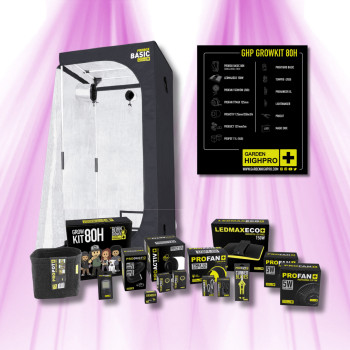


01 — Description
Présentation du produit
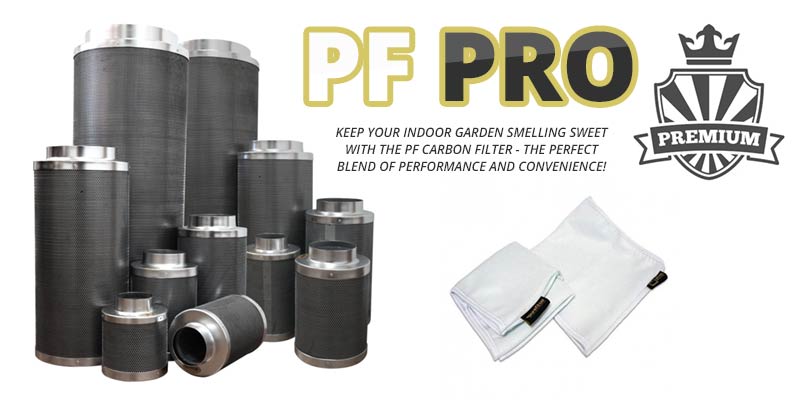
The high-end PF PRO carbon filter
The PF Carbon Filter is a high-end carbon filter for indoor growing. It comes with two pre-filters for optimal air filtration. Available in six different sizes to meet the needs of all growing setups.
The function of this PF PRO carbon filter
Australian virgin carbon RC412 steam activated at high temperatures under reducing conditions provides rapid and efficient absorption of volatile molecules and air pollutants. With a high iodine index and a high contact surface thanks to carefully calibrated granules, this carbon filter ensures high quality filtration for your indoor cultivation. The low water-soluble ash content (<13%) and CTC of 65% guarantee efficient air filtration, while the compact filling ensures 100% filtration.
Why choose anything other than a 1st price carbon filter?
It is important in indoor cultivation to have a quality carbon filter because it filters the air and eliminates unwanted odors. When growing indoors, plants can produce strong, unpleasant odors that can be detected outside the grow room. This can be especially problematic if you live in an urban environment or have neighbors who are sensitive to odors.
A quality carbon filter can eliminate these odors and create a more pleasant environment for you and the people around you. This can also allow you to control the smell of your indoor grow and keep it discreet. Ultimately, a quality carbon filter is an important investment in ensuring the success of your indoor grow by eliminating unwanted odors and creating a more comfortable environment for you and those around you.
Advantages of this PF PRO carbon filter
The PF carbon filter offers many advantages and benefits for your indoor cultivation. It eliminates unwanted odors, thanks to its high performance it promotes the growth of plants and improves their quality. It is also easy to maintain thanks to its two pre-filters and its compact 100% filling.
The PF carbon filter is easy to install and use. It comes with two pre-filters for immediate use. Instructions are provided with the product for optimal use.
Features :
- Australian RC412 virgin coal steam activated at high temperature under reducing conditions
- High iodine index: rapid and effective absorption
- High contact surface: carefully calibrated granules
- Low water-soluble ash content (<13%)
- 65% CTC: retains 65% of its own density in volatile molecules
- Compact filling: 100% filtration
- Comes with two pre-filters
- Available in six different sizes: Ø100 - 20cm length - 300m3/h || Ø125 - 30cm length - 500m3/h || Ø150 - 40cm length - 680m3/h || Ø150 - 60cm length - 900m3/h || Ø160mm - 40cm length - 800m3/h || Ø200 - 60cm length - 1125m3/h
I have been using the PF carbon filter for a few months now and am very pleased with its performance. It eliminates all odors and purifies the air in my grow room in no time!
Frequently asked questions about this product:
How do you know when to replace activated carbon?
It is recommended to replace activated carbon every 12 to 18 months depending on frequency of use and air quality.
How to clean the PF carbon filter?
The PF carbon filter is easy to maintain thanks to its two pre-filters. Simply remove the pre-filters and clean them with water approximately every 3 to 6 months. Activated carbon does not need to be cleaned.
How to install the PF carbon filter?
The PF carbon filter is easy to install. Simply secure it using the supplied hose clamps and connect it to your grow room's air exhaust.
Order it today and enjoy optimal air filtration for healthy plants!
02 — Fiche technique
Caractéristiques détaillées
| Diameter - Ø | 100/125/150/160/200mm |
03 — Avis clients
Customer reviews
Comments All reviews
04 — Questions sur ce produit
Product questions
Your questions about this product
- Hello, I have recently started using a carbon filter in my grow room and I am unsure which size to choose among the many options offered on this PF PRO model. Is there a simple and reliable method to determine the ideal size of the carbon filter based on the volume of my room and the airflow rate of my extractor to optimize odor filtration without compromising ventilation? Thank you in advance for the advice.To choose the ideal size of your PF PRO carbon filter, first calculate the volume of your room (length x width x height in meters). Then calculate the required airflow (volume x 60 to 120 per hour). Select a filter suitable for this airflow and not lower than the flow rate of your extractor to ensure good filtration without restricting ventilation. The PF PRO filter comes in various diameters (100 to 200 mm); choose one compatible with your ventilation system to ensure an optimal balance between efficiency and airflow.
- Is the PF PRO charcoal filter noisy once installed in a bright plant corner or is it discreet enough not to disturb the decor and zen ambiance?The PF PRO charcoal filter is designed to be effective while remaining discreet. It is not known for generating much noise once installed, making it a good solution for a bright plant corner where the zen ambiance is important. For even more tranquility, you can pair this filter with an acoustic sleeve Phonic Trap that reduces the noise generated by the ventilation. This way, you can enjoy purified air without disturbing the decor or serenity of your growing space.
- What size of PF PRO filter do you recommend for a 700 m³/h extractor in a 1m³ space?
For a 700 m³/h extractor, it is important to choose a carbon filter with a maximum flow rate that is at least equal to that of the extractor to avoid any air restriction.
The PF PRO filter Ø150 mm has a maximum flow rate of 680 m³/h, slightly lower than your extractor. The best option would be a larger diameter filter, such as Ø160 mm or Ø200 mm, if their flow rate is indeed greater than 700 m³/h. However, this information is not always clearly indicated in the PF PRO range.
To ensure effective filtration without hindering ventilation, we recommend opting for a larger diameter PF PRO filter (Ø160 or Ø200 mm), ensuring that its flow rate meets your needs. Otherwise, you may consider another range of filters that offer a compatible flow rate.
In all cases, never undersize the filter compared to the extractor to maintain the performance of your system.
- What is the difference in performance and durability between the sizes 150mm 40cm 680m3h and 150mm 60cm 900m3h in terms of filtration and impact on overall electricity consumption?The main difference between the PF PRO 150 mm 40 cm (680 m³/h) and 150 mm 60 cm (900 m³/h) filters lies in their filtration capacity and air flow rate. The 60 cm model offers more efficient filtration due to a larger surface area of activated carbon, which is ideal for larger air volumes or intense ventilation needs.
In terms of durability, the longer filter generally contains more carbon, which can extend its lifespan before replacement. However, this also depends on the quality of the carbon used.
Regarding electricity consumption, a more efficient filter with a higher flow rate may require a more powerful extractor, which could slightly increase overall consumption. Conversely, a filter that is too restrictive (smaller) risks putting more strain on the extractor, also impacting consumption.
In summary, the choice should be made based on the volume of air to be filtered and the power of your extraction system, in order to balance efficiency, durability, and electricity consumption.
- What size of PF PRO carbon filter is best suited for a 2x2 meter grow room with an air extraction of 700 m³/h?
For a 2x2 meter grow room with an air extraction of 700 m³/h, the size of the PF PRO carbon filter should be able to handle this flow rate without restricting the extraction. Diameters 150 mm or 160 mm are generally suitable for this air volume, offering a good compromise between performance and flow rate. A filter that is too small may decrease the system's efficiency, while a filter that is too large would be oversized and costly.
Make sure that the filter is compatible with your ventilation and that the activated carbon is of good quality for effective odor adsorption. At GrowLED, we often recommend the PF PRO 160 mm filter for this type of configuration, ensuring effective filtration without sacrificing airflow.
- What is the performance difference between the sizes Ø150 40cm and Ø150 60cm in terms of filtration and impact on odor management under LED in a compact growing space?
The difference between the PF PRO Ø150 mm charcoal filters 40 cm and 60 cm mainly lies in their filtration capacity and air flow rate. The 40 cm model offers an airflow of 680 m³/h, whereas the 60 cm goes up to over 900 m³/h, thanks to a larger amount of activated carbon.
In a compact LED growing space, the 60 cm filter ensures better odor management as it processes a larger volume of air and filters more efficiently. This helps to maintain a healthy atmosphere for your plants, reducing stress and promoting their growth.
However, it is important to note that this performance gain may require a more powerful extractor, which could slightly increase electricity consumption. Nevertheless, a filter that is too small also forces the extractor, which is not ideal. Between the two, the 60 cm model remains the optimal choice for sustainable odor control in a small space.
- What is the performance difference in terms of filtration capacity and lifespan between the 150mm 40cm and 150mm 60cm models of the PF PRO charcoal filter under LED in SCROG/LST?
The PF PRO charcoal filter 150 mm / 60 cm offers a superior filtration capacity and a longer lifespan compared to the 40 cm model, as it contains more activated carbon. This larger volume allows for a greater airflow and delays the saturation of the filter.
In a SCROG or LST setup under LED, where odor control and optimal air management are essential, the 60 cm model will therefore be more effective in maintaining a healthy environment for a longer time, while placing less strain on the extractor due to better air circulation.
In summary, if your system requires a high air flow, the 60 cm model is to be preferred for its durability and enhanced efficiency.
- What size of PF PRO filter do you recommend for an extraction around 700 m³/h without significant loss of flow, in order to optimize odor filtration in a medium-sized growing room?
For an extraction of around 700 m³/h, it is crucial to choose a PF PRO filter with a nominal flow rate at least equal to that of the extractor, to avoid any significant loss of flow and ensure excellent odor filtration.
The model PF PRO 150 mm is a bit tight with a maximum flow of 680 m³/h. Therefore, we recommend opting for sizes 160 mm or 200 mm, which offer a flow rate above 700 m³/h, provided this information is confirmed in the product's technical data sheet.
In summary, choose a PF PRO filter of at least 160 mm with a certified flow rate ≥ 700 m³/h to optimize filtration without compromising extraction flow.
- Is the PF PRO 125 carbon filter sufficient for a 60x60x140 box with extraction of 350m3/h?
For your 60x60x140 cm box with an extraction of 350 m³/h, a PF PRO 125 mm carbon filter is likely to be insufficient. Indeed, this filter diameter is generally suitable for flows of up to approximately 250 m³/h maximum. Using an undersized filter can reduce the efficiency of filtration and fatigue your extractor.
We recommend that you opt for a filter with a larger diameter, such as a model PF PRO 160 mm or PF PRO 200 mm, which will be more suitable for a flow of 350 m³/h and will ensure good odor management without loss of performance.
- What is the minimum air flow you recommend to maximize the efficiency of this PF PRO carbon filter while limiting energy consumption?
To maximize the efficiency of the PF PRO carbon filter while limiting energy consumption, it is advised to match the air flow to the nominal flow rate of the filter. A minimum of 700 m³/h is recommended for good balance.
For instance, the 160 mm and 200 mm models are better suited for these flow rates, providing optimal filtration without straining the extraction system, thus avoiding unnecessary energy consumption. The 150 mm model, with a maximum flow rate of 680 m³/h, may be a bit tight if the extractor exceeds this value.
Precisely sizing the filter according to your extractor ensures effective filtration and controlled consumption.
- What size of PF PRO carbon filter should I choose based on the airflow of my extractor for optimal indoor cultivation?
To choose the right size of your PF PRO carbon filter suitable for the airflow of your extractor, align the capacity of the filter with the volume of air being moved:
- PF PRO 125 mm: ideal for an airflow of about 500 m³/h, suitable for small to medium spaces.
- PF PRO 150 mm: available in 40 cm for 680 m³/h and 60 cm for > 900 m³/h, perfect for medium to large spaces.
- PF PRO 160 mm: suitable for around 700 m³/h, providing a good compromise between performance and airflow.
- PF PRO 200 mm: to be prioritized for very large volumes or very high flows.
Selecting a carbon filter that matches the airflow of your extractor ensures effective filtration without restricting airflow, thus ensuring optimal odor control in your indoor cultivation.
- What is the real filtration efficiency for a PF PRO 150mm model with a flow rate of 680m3h in actual indoor usage conditions?The PF PRO 150 mm charcoal filter with a flow rate of 680 m³/h operates close to its maximum limit. In real conditions, its filtration efficiency remains very good, generally exceeding 90% under optimal conditions. However, at this high flow rate, efficiency may slightly decrease due to flow constraints and progressive wear of the activated carbon.
- What size of PF PRO carbon filter is most suitable for micro cultivation in a space under 60x60 cm?
For micro cultivation in a space smaller than 60x60 cm, the PF PRO carbon filter 100 mm is the most suitable. This model is designed for low airflow rates, perfectly matching the small volume to filter, ensuring excellent efficiency without overloading your extractor.
A larger filter would be oversized, less effective, and energy-consuming for this type of setup. Just make sure to check that your air extractor can support this diameter to optimize odor filtration.
- What size of PF PRO filter is most suitable for a grow room of less than 1m² with an extraction rate of up to 300m³/h?For a grow room of less than 1 m² with an extraction rate of up to 300 m³/h, the PF PRO carbon filter of Ø125 mm is perfectly suitable. It matches well with the required flow rate (approximately 300 to 425 m³/h), provides effective odor filtration, and easily fits into a small space. Larger filters (160 or 200 mm) would be oversized, less optimal, and cumbersome for this volume and flow rate.
- What is the degree of air flow loss in m³/h declared for each PF PRO charcoal filter model under optimal installation conditions and how does this impact the overall plant extraction efficiency per watt consumed?The PF PRO Ø150 mm filter has a maximum flow rate of 680 m³/h, slightly lower than standard extractors at 700 m³/h, resulting in an air flow loss of about 3% under optimal installation conditions. This moderate resistance to air passage slightly increases the load on the extractor, which may slightly influence electrical consumption or reduce the actual flow rate if the extractor cannot compensate.
- What is the most important criterion for choosing the ideal size of the PF PRO carbon filter based on the volume of my grow room and the flow rate of my extraction system?The essential criterion for choosing the ideal size of the PF PRO carbon filter is the airflow rate of your extraction system, expressed in m³/h. This airflow must match the filtration capacity of the filter to ensure optimal efficiency against odors and avoid premature wear.
Each filter diameter adapts to a specific flow rate: for example, a filter Ø100 mm is suitable for approximately 200 m³/h, Ø125 mm for 400 m³/h, Ø150 mm for 500-800 m³/h, and Ø160 or 200 mm for even higher flow rates.
The volume of your grow room primarily serves to calculate this necessary flow rate, depending on the desired air exchange frequency. Therefore, choose a PF PRO filter whose capacity in m³/h is well suited to the flow rate of your extractor and the diameter of the duct for a perfect mechanical installation.
- Should a larger PF PRO filter size be preferred for an extraction of 700m³/h in a confined space to optimize odor filtration without hindering air circulation?For an air extraction of 700 m³/h in a confined space, it is advisable to choose a PF PRO filter with a diameter of 160 mm or 200 mm. These sizes provide a better active carbon surface suited to this flow rate, ensuring effective odor filtration without restricting air circulation.
An undersized filter, like the 150 mm, would be limiting and could hinder the airflow or impact filtration performance. Opting for a larger diameter thus optimizes the quality of the extracted air while preserving system efficiency.
- What size of PF PRO charcoal filter do you recommend for an extraction of 500 m³/h in a compact growing space?For an extraction of 500 m³/h in a compact growing space, we highly recommend a PF PRO charcoal filter of 160 mm or 200 mm. These models ensure effective odor filtration while being gentle on the extractor. The PF PRO 150 mm, with a maximum flow rate of about 680 m³/h, is a bit tight for continuous use at 500 m³/h. Choosing a larger diameter ensures better performance and increased longevity of your system.
- How to choose the right size of the PF PRO carbon filter based on the volume of my grow room for optimal odor filtration?
To choose the right PF PRO carbon filter, you first need to determine the required airflow, which depends on the volume of your grow room. Calculate this volume (length × width × height) and choose an extractor with a flow rate of about 20 to 30 times this volume in m³/h for effective air exchange.
Next, select a PF PRO filter whose diameter and length correspond to this airflow:
- For a small volume (~8-10 m³) with a flow rate of 200-300 m³/h, a filter of 100 mm (30 cm) is suitable.
- For a medium room (~20 m³), aim for a flow rate between 400-700 m³/h and a filter of 125 to 150 mm (40-60 cm).
- For a large room (>30 m³), with 900-1200 m³/h, choose a filter of 160 to 200 mm (60 cm+).
Important: the filter must withstand the extraction flow without restricting it. A filter that is too small limits airflow and reduces efficiency, while a filter that is too large is unnecessarily expensive. Choosing the right size ensures optimal odor filtration, good longevity, and effective ventilation.
- integrable with home automation monitoring system for remote control of activated carbon saturation and possible automatic pre-filter cleaning
The PF PRO Kohlefilter does not natively integrate a home automation monitoring system for remote control of activated carbon saturation nor an automatic pre-filter cleaning function. Its maintenance relies on simple manual cleaning of the pre-filters every 3 to 6 months and a replacement of the activated carbon approximately every 12 to 18 months depending on use. For remote or automated management, an external complementary solution would need to be considered since the filter does not offer this functionality directly.
- What carbon filter size PF PRO do you recommend for a grow room of 1.5m² with extraction at 600m³/h to ensure optimal odor removal?
For a grow room of 1.5 m² with extraction at 600 m³/h, we recommend a carbon filter PF PRO 150 mm. This diameter is ideal because it can handle a flow rate generally between 680 and 900 m³/h depending on the length (40 cm or 60 cm), ensuring effective odor removal without restricting airflow.
A 40 cm model will be sufficient, but the 60 cm offers even longer filtration capacity. Avoid smaller diameters (125 mm) as they may restrict flow, or larger ones (160/200 mm) which are oversized and more expensive.
This size maintains extractor performance while optimizing the lifespan of the activated carbon, for a healthy and well-ventilated grow.
- What extractor airflow do you recommend to ensure optimal filtration with the PF PRO charcoal filter of 150mm length 40cm in indoor cultivation?For a PF PRO charcoal filter of 150 mm (40 cm in length), the ideal extractor airflow for optimal filtration is approximately 680 m³/h. This airflow corresponds to the maximum recommended capacity without risking a reduction in filter efficiency or straining your extraction system.
If your installation requires a higher airflow, it is advisable to opt for a filter with a larger diameter (160 or 200 mm) to ensure good filtration and harmonious operation of your equipment.
- What is the average pressure drop and the reduction of air flow in m3/h for each model of the PF PRO charcoal filter based on the announced nominal flow rate, in order to optimize the sizing of the extraction system in an indoor growing room?
For the PF PRO charcoal filters with diameters of 100, 125, 150, 160, and 200 mm, the average pressure drop typically ranges between 100 and 250 Pa depending on the flow rate and the degree of clogging. This resistance leads to an estimated reduction in air flow of about 5 to 15 % compared to the nominal fan flow rate.
The approximate nominal flow rate is around 680 m³/h for the Ø150 mm model. For diameters of 160 and 200 mm, it is recommended for flows exceeding 700 m³/h in order to limit the pressure drop. The smaller diameters (100 and 125 mm) cover lower flows, with an intermediate flow of around 480-500 m³/h for Ø125.
PF PRO Model (Ø mm) Approximate nominal flow rate (m³/h) Average pressure drop (Pa) Estimated reduction in flow (%) 100 Not precisely specified 100 - 200 5 - 10 125 ~480 - 500 100 - 250 5 - 15 150 680 120 - 250 5 - 15 160 >700 (estimate) <150 <10 200 >700 (estimate) <150 <10 To optimize ventilation, prefer a filter diameter that is appropriate or slightly larger than the extraction flow. This limits the pressure drop and maintains good air renewal in your growing space.


