



































































Lumatek
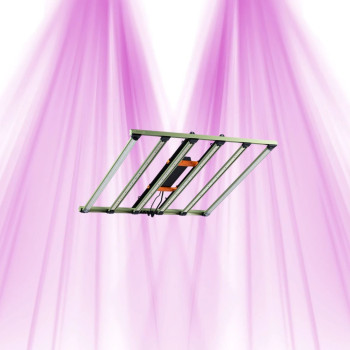
Lumatek Zeus 1000W PRO EVO 3.1 – LED grow light
Available in 5 models
In stock · Shipped within 24 h
1 633,50 € or 3× 544,50 €

Product successfully added to your shopping cart
Ça pousse dans le bon sens

15 products
HPS 1000 Watts and up kits represent the pinnacle of high-intensity lighting for indoor cultivation. These systems deliver exceptional light output, perfect for grow spaces of 150x150cm and larger. With their optimized flowering spectrum and impressive light output, they remain the benchmark for growers aiming for maximum yields.
Raw power is exactly what you get with these systems. A 1000W HPS kit produces approximately 140,000 lumens, almost double that of a 600W. This light intensity allows for deep penetration into the canopy, even on plants 120-150cm tall. The red-orange spectrum of HPS (around 2100K) particularly stimulates flower production and trichome formation.
The advantage of double-ended (DE) versions over single-ended (SE) is notable: better heat distribution, extended lifespan (up to 10,000h vs. 8,000h), and above all, more stable lumen maintenance over time. Modern electronic ballasts also offer soft-start functions that preserve bulb longevity.
For large growing volumes, these kits can effectively illuminate areas of 1.5 to 2m², with a PPFD that can reach 800-1000 µmol/m²/s at the center of the zone. This is particularly interesting for light-hungry varieties that express their full potential under high intensity.
The choice of ballast is crucial. Electronic models offer better efficiency (up to 95% vs. 85% for magnetic) and generate less heat. Check compatibility with DE bulbs if you opt for this technology – not all ballasts are universal.
The reflector determines light distribution. Closed models like cooltubes are essential if you have temperature issues, but they reduce light output by 10-15%. Open reflectors like wing or adjust-a-wing maximize efficiency but require more powerful extraction (minimum 800-1000 m³/h to dissipate heat).
For installation, plan for a ceiling height of at least 2.5m. The recommended distance between the bulb and the canopy varies from 60 to 100cm depending on ventilation. A temperature controller with a remote probe becomes almost mandatory to maintain 24-26°C during flowering.
Double-ended bulbs have connections at both ends, allowing for better heat dissipation and more uniform temperature distribution along the entire length of the tube. The result: superior lifespan (10,000h vs. 8,000h), more stable lumen maintenance (-10% after 8,000h vs. -20% for SE), and a slightly improved spectrum. For a 150x150cm, a 1000W DE kit will be more efficient than an SE, but requires a specific ballast and costs 20-30% more upfront.
Allow a minimum of 70-80cm between the bulb and the top of the plants with standard ventilation. With a closed reflector like a cooltube and 800 m³/h extraction, you can go down to 50-60cm. The hand test is reliable: if you feel uncomfortable heat by holding your hand for 30 seconds at canopy level, it's too close. Use a thermometer with a remote probe to measure the actual temperature at leaf level – it should not exceed 28°C during flowering.
A 1000W HPS produces approximately 1.4 µmol/J compared to 2.2-2.8 µmol/J for a high-end 600W LED. But the HPS delivers 140,000 raw lumens compared to 80,000-100,000 equivalent for the LED. In practice, the 1000W HPS will often yield better results on tall plants (120cm+) due to its superior light penetration. The 600W LED will be more efficient on low and uniform canopies (80-100cm), with the advantage of consuming 40% less electricity and generating less heat.
Place the ballast outside the grow space if possible, on a stable and ventilated surface – it dissipates 100-150W of heat. Use a shielded connection cable of maximum 5m to avoid losses and interference. The reflector must be suspended with adjustable straps and carabiners, never with chains that create stress points. Check that your electrical installation supports 4.5A continuously (minimum 10A circuit breaker) and absolutely use a 30mA residual current device.
Replace the bulb after 3-4 grow cycles (8,000-10,000h) because the light output gradually decreases even if it still lights up. Signs: spectrum shifting towards red, slower ignition, or luxmeter measurement showing a 20% drop. For the reflector, clean it every 2 cycles with isopropyl alcohol and a microfiber cloth – dust can reduce reflectivity by 15-20%. Avoid abrasive products that scratch the reflective surface and permanently reduce efficiency.
Available in 5 models
Available in 3 models
Available in 7 models
Available in 7 models
Available in 2 models
Available in 4 models
Available in 3 models
Help & advice
About 1000 Watts and more — click a question to see the answer.
A 1000 Watt HPS kit is designed to provide intense light and an optimized spectrum, particularly for the flowering phase of your indoor plants. I recommend it for large spaces, generally from 150x150cm (approx. 5x5 ft) and up, where it allows for maximum yields thanks to its exceptional light output.
Absolutely! This is precisely the type of space for which I advise 1000W HPS kits. Their power and light coverage are ideal for a 150x150cm space, or even larger. They ensure deep light penetration, which is essential for the homogeneous development of all your plants and for obtaining abundant harvests.
To choose a 1000 Watt HPS kit, I advise you to look at several key elements. Make sure the ballast (electronic or magnetic) is suitable for the lamp, and opt for an efficient reflector for good light diffusion. Also consider the quality of the HPS lamp itself, as it is the heart of your system and will directly influence the spectrum and light intensity. The choice will also depend on your budget and your specific needs in terms of environmental control.
The main difference, as I see it, lies in the light spectrum and energy efficiency. 1000W HPS systems are powerful, with a warm spectrum, highly valued for flowering, but they generate a lot of heat and consume more electricity. LEDs, on the other hand, offer a more modulable spectrum, are more energy-efficient, and produce less heat, but their initial investment is often higher. If I had to choose for pure flowering and a limited budget, HPS remains a benchmark for its raw power.
Installing a 1000 Watt HPS kit requires precision. I always recommend starting by securely fixing the reflector, then inserting the HPS lamp into it. Next, connect the ballast to the reflector and to the electrical power supply, strictly following the manufacturer's safety instructions. Make sure you have good ventilation to manage the heat generated by the lamp. If you have any doubts, do not hesitate to consult a professional.
With high-power HPS kits, the first mistake to avoid is poor heat management. An insufficient ventilation system can quickly raise the temperature of your grow space to dangerous levels for your plants. I also often see mistakes in lamp-to-plant distance, which can cause burns. Finally, never neglect electrical safety; ensure all connections are properly made and that your installation complies with standards.
Yes, absolutely! This is a strategy I see more and more often and find very interesting. Combining a 1000W HPS with LEDs can allow you to benefit from the penetration power and flowering spectrum of HPS, while adding specific spectra or better energy efficiency thanks to LEDs. This can optimize the quality and quantity of your harvest, providing a more complete spectrum and potentially reducing overall heat if the LEDs are low power.
For flowering, the 1000W HPS is a historical and very high-performing benchmark. Its red-orange spectrum is ideal for stimulating flower and fruit production, and its power ensures excellent light penetration. Modern LEDs have made enormous progress and can also be very effective in flowering, sometimes with better energy efficiency and less heat. If you are looking for raw power and maximum yield at a more affordable initial cost, the 1000W HPS remains an excellent choice for this crucial phase.
Cannot find your answer? 01 88 33 45 52 or by message.