





































































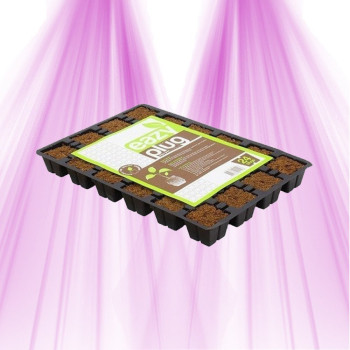








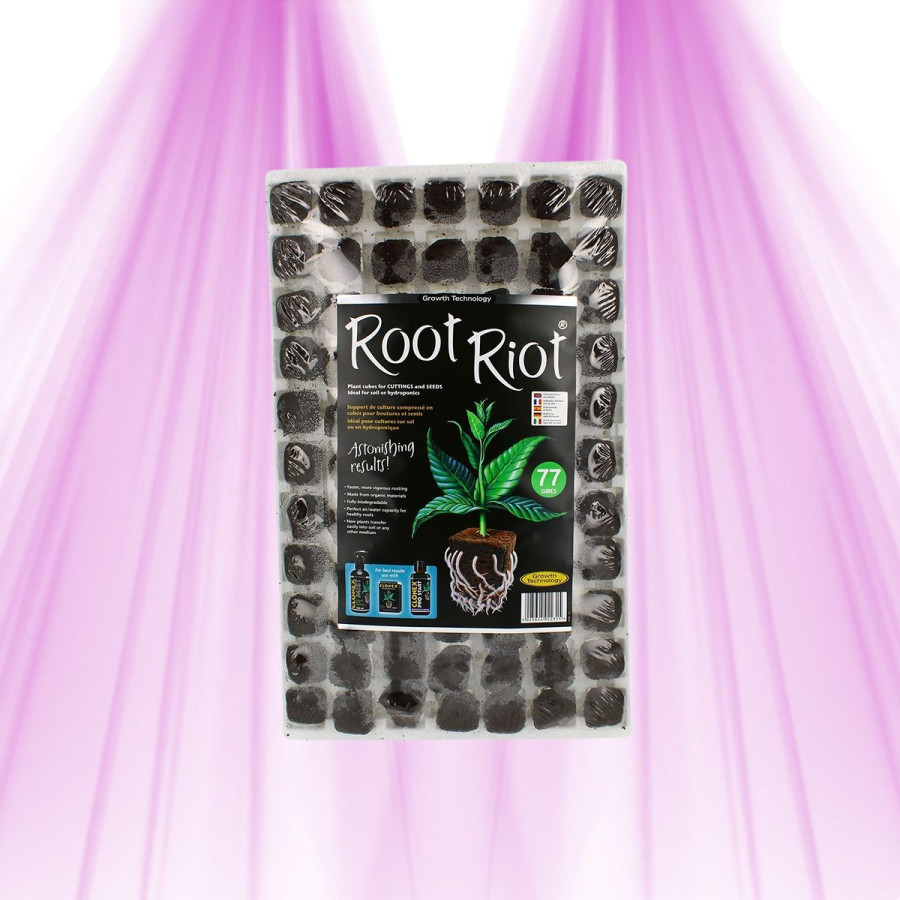
Plateau de Bouturage Root Riot x77 - Croissance Express & Racines Saines
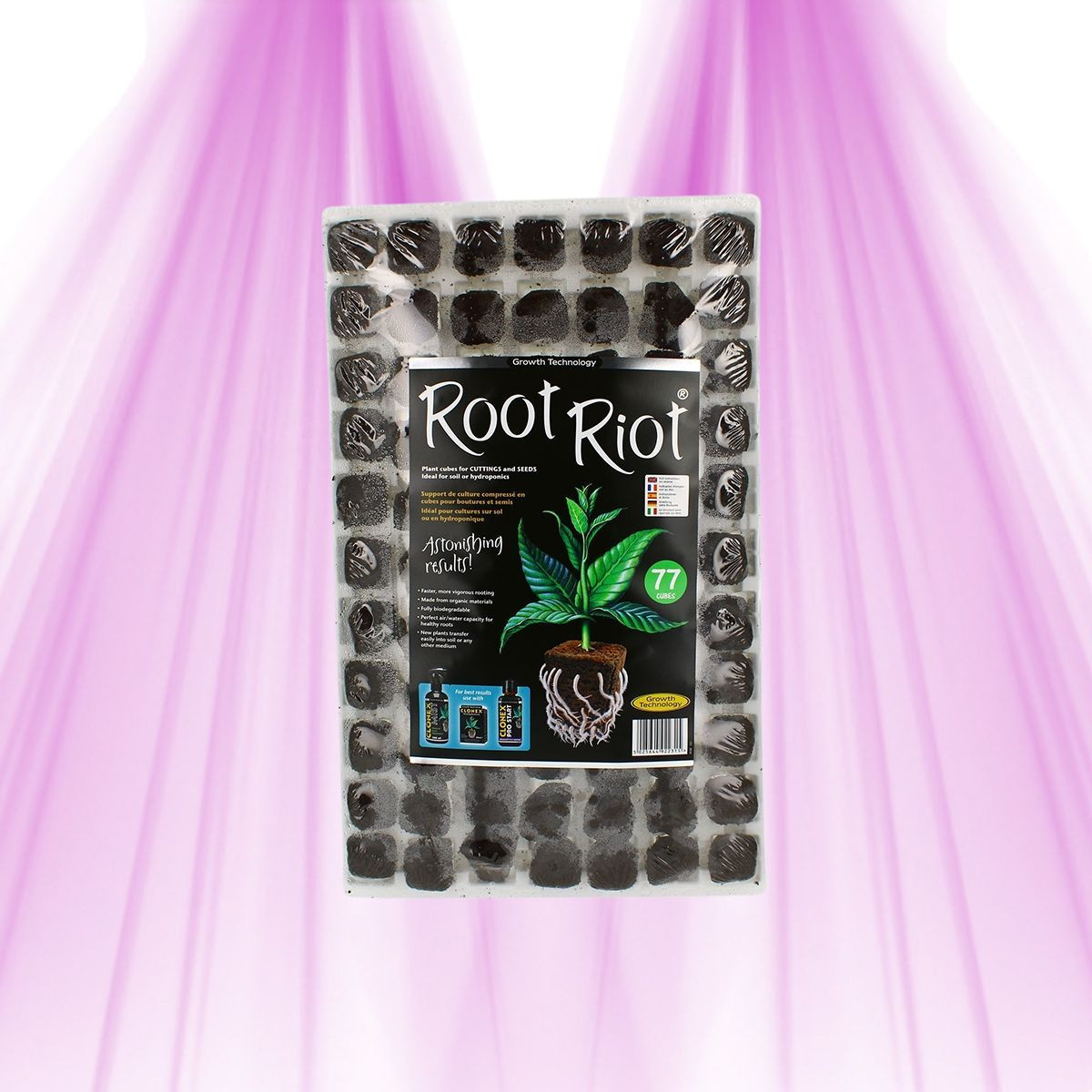
Plateau de Bouturage Root Riot x77 - Croissance Express & Racines Saines
Features detailed
| Type of Use | Bouturage |
|---|---|
| Functions | Bouturage |
| Marque | ROOT IT |
| Composition | micro-nutriments organiques compostés |
| Growing medium compatibility | Tous |
| Dimensions | 3x3x5 |
| Phase d'utilisation | Bouturage |
| Type | Substrat de bouturage |
| EC maximum (mS/cm) | Faible |
| pH recommandé en hydroponique/coco | 6.0 |
| Trous de drainage | Oui |
| Chauffant | Non |
| Nombre de boutures | 77 |
| Biodegradable | oui |
Reviews customers
Soyez le premier à donner votre avis !
Partagez votre expérience avec ce produit.
Your questions
Can Root Riot cubes be reused once the roots have developed, or are they single-use to avoid any risk of contamination or loss of yield?
Is the Root Riot 77 plug tray suitable for starting cuttings of indoor plants that require little light for a nice bright plant corner?
What rehydration frequency is recommended to maintain ideal Root Riot cubes in a greenhouse or grow room?
What difference in root growth or health is observed between the use of the Root Riot propagation tray and a traditional substrate during cuttings?
The Root Riot x77 Propagation Tray promotes faster rooting due to its spongy and aerated structure that provides optimal oxygen and water supply without saturation. This allows for healthy and uniform roots to be observed in just a few days, while traditional substrates may require more time and stricter attention to moisture management to avoid mold and rot.
Furthermore, Root Riot significantly limits the risks of mold thanks to its composition and natural ventilation, thus providing a more stable and less stressful environment for cuttings compared to a traditional substrate that can sometimes retain too much water or encourage root pathologies.
In summary, Root Riot simplifies propagation with a ready-to-use substrate that ensures healthy and rapid root growth, while a traditional substrate often requires more preparation and vigilance to achieve comparable results.
What is the average water consumption per use of the Root Riot 77 cube tray for a complete cutting and germination cycle to optimize yield without waste?
The Root Riot x77 tray optimizes water through its cubes that retain moisture well while allowing the roots to breathe. There is no exact average water consumption published, but for a cutting and germination cycle, it is recommended to keep the cubes consistently moist without saturating them.
In practice, it is important to regularly check the moisture of the cubes and lightly rehydrate them by briefly submerging them in water as soon as they start to dry out. This method avoids waste while promoting rapid and healthy rooting.
The secret to optimizing yield without excess water: maintain a balance between constant moisture and optimal aeration of the cubes.
What rehydration frequency do you recommend to maintain the ideal moisture in Root Riot cubes in hot greenhouse conditions?
For Root Riot x77 cubes in a hot greenhouse, it is recommended to check the moisture every 2 to 3 days. The cubes should remain spongy and moist without being saturated. If they become dry to the touch, a quick dip in warm water effectively rehydrates them. This vigilance ensures an optimal environment for healthy roots and rapid growth, while avoiding the risk of mold.
Does the Root Riot tray guarantee mold resistance and uniform rooting even in hot and humid greenhouse conditions?
The Root Riot Propagation Tray is designed with sphagnum peat cubes that offer an excellent balance between moisture retention and aeration, thus promoting even and rapid rooting. However, even though these cubes are naturally resistant, it remains essential to control humidity to avoid mold formation, especially in hot and humid conditions like those in a greenhouse. Keeping the spongy cubes without excess water ensures an optimal environment for healthy and well-developed roots.
Can Root Riot accelerate the cutting of technical plants compared to a classic substrate like rock wool or coco?
Root Riot offers a real advantage over a classic substrate like rock wool or coco, thanks to its aerated structure that perfectly balances water retention and oxygenation. This design promotes rapid and healthy rooting while limiting the risk of mold, which is often more prevalent in traditional substrates. Its biodegradable organic composition creates an ideal environment for strong roots and rapid growth of cuttings.
Is Root Riot 77 effective for cuttings in a micro space with low power LED lighting?
The Root Riot Cutting Tray x77 is perfectly suitable for cuttings in a micro space with low power LED lighting. Its spongy cubes provide an excellent air/water balance, promoting rapid and healthy root development even under low light conditions.
However, lower light may slow down leaf growth, but for root formation, Root Riot remains very effective. Just ensure to maintain optimal humidity by regularly rehydrating the cubes to maximize results.
What is the ideal duration for using Root Riot cubes before transplanting to ensure optimal root development without risking stress for cuttings or seeds?
What is the optimal duration for storing moist Root Riot cubes before use to ensure effective rooting?
Root Riot cubes are pre-moistened and should be kept in their original sealed packaging to maintain their ideal moisture before use. There is no specific recommended duration, but it is important to use them within a reasonable timeframe after opening to ensure effective rooting.
To optimize rooting, keep them at room temperature and protected from drying out. Once cuttings are placed, regular watering according to ambient moisture will promote their growth.
Does the compostable material of Root Riot cubes hold up well during repotting without crumbling, even after several weeks of continuous moisture?
The Root Riot cubes are made from compostable organic material, providing an ideal sponge-like structure for optimal root development. They generally hold their shape well during repotting, even after several weeks of continuous moisture, provided they are not waterlogged. Their texture remains firm enough to facilitate transfer into a substrate without excessive crumbling.
To ensure this durability, it is advisable to regularly monitor the cube's moisture and avoid prolonged excess water. This way, you will maintain the quality of the cube and promote healthy root growth.
Do Root Riot cubes also adapt to cuttings of deep-rooted plants without risk of constraint for their root development?
Root Riot cubes from the Root Riot x77 propagation tray provide a sponge-like structure ideal for quick and healthy rooting, thanks to a good balance between aeration and water retention, which promotes the growth of strong roots without the risk of rot.
For deep-rooted plant cuttings, these cubes are perfect for the initial rooting phase. However, their standard size limits the space available for prolonged root development. It is therefore advisable, after this first stage, to transplant your young plants into a more spacious substrate to allow the roots to develop fully without constraint.
Thus, Root Riot ensures healthy roots from the start, while allowing for optimal development during a later transplant.
Can we reuse Root Riot cubes after an initial cutting or seeding session, or must we necessarily use new cubes each time to ensure optimal rooting?
Root Riot cubes are specially designed to provide an optimal environment for root growth due to their composition of fine Canadian peat, balanced pH, and enriched with beneficial microorganisms.
After initial use, it is recommended to use new cubes for each new cutting or germination session. Indeed, reuse may compromise rooting as organic residues and potential pathogens remain in the cube, while beneficial microorganisms and the support structure deplete or degrade.
To ensure healthy roots and rapid development, favoring new Root Riot cubes is thus the best practice.
Is Root Riot available in several sizes or only in a tray of 77 plugs?
The Root Riot propagation tray is offered only in the form of a tray containing 77 pre-drilled cubes. This format is designed to provide a practical and effective solution for germination and rooting, packaged in a draining tray that facilitates handling and transplanting. There are no other sizes or smaller packaging commonly marketed.
Is a Root Riot tray compatible with an automatic watering system to maintain ideal humidity continuously?
What is the ideal method to rehydrate Root Riot cubes without disturbing root initiation during cuttings?
What is the average time to achieve complete rooting of cuttings with Root Riot x77 cubes in a controlled indoor environment under LED lights?
The average time for complete rooting of cuttings with Root Riot x77 cubes in indoor conditions under LED lighting is generally 7 to 10 days. This time may vary depending on the temperature, humidity, and light maintained in the environment.
The cubes are specially designed to offer an ideal balance between aeration and water retention, allowing roots to develop quickly and healthily without the risk of rot. To optimize this process, it is important to keep the cubes just moist and, if possible, to use a transparent lid to maintain high humidity around the cuttings.
With stable LED lighting and a well-controlled atmosphere, your cuttings will benefit from the best conditions for quick and effective rooting.
Does the Root Riot tray guarantee resistance to mold in hot and humid greenhouse crops over multiple cutting cycles?
The Root Riot x77 tray offers a relative natural resistance to mold thanks to its cubes made of organic spongy materials that promote good aeration and an optimal balance between air and water. This structure limits mold development compared to traditional substrates.
However, in hot and humid greenhouse conditions, and over multiple cutting cycles, it does not guarantee complete protection against mold. It is essential to strictly control humidity by keeping the cubes moist but never saturated, as well as ensuring effective ventilation around the cuttings to prevent fungal issues.
Viewed recently


