



































































BloomLED
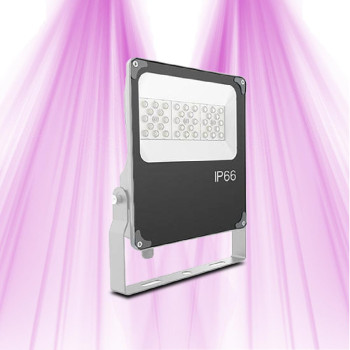
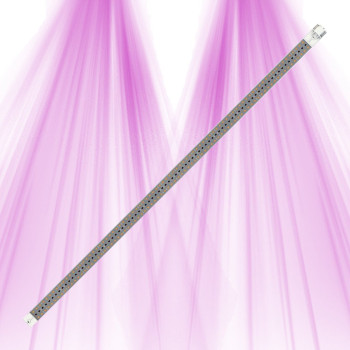
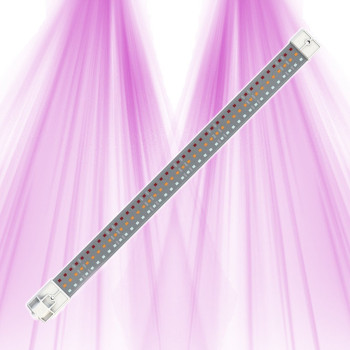
SpectraB.2.G X45 - LED horticultural lamp - 45W 60cm
Available in 2 models
In stock · Shipped within 24 h
139,90 € or 3× 46,63 €

Product successfully added to your shopping cart
Ça pousse dans le bon sens

28 products
HPS and MH bulbs from 0 to 100 watts are the ideal lighting solution for beginner growers or those with limited grow space. This power range is perfectly suited for tents from 60x60 cm up to 80x80 cm, offering a good balance between light performance and controlled power consumption. Unlike LEDs, which can be intimidating at first, these proven technologies, used for decades, allow you to start indoor growing without a fuss.
The main strength of this power range is its ease of use. A 70W HPS bulb produces approximately 6,000 lumens, which is more than enough to effectively light 4 to 6 plants in a confined space. 100W MH bulbs, on the other hand, deliver a perfect blue-white spectrum for the growth phase, with a color temperature around 4200K. The major advantage? The heat produced remains manageable, unlike 250W and higher versions which require robust extraction.
These bulbs work with compatible magnetic or electronic ballasts, which are much cheaper than high-end LED drivers. Honestly, when you're starting out, it's reassuring to have reliable, proven technology. The average lifespan ranges from 10,000 to 24,000 hours depending on the model, and replacement costs a fraction of the price of an equivalent LED panel.
For a 60x60 cm tent, a 70W bulb is more than enough. Allow 50 to 70 watts per m² for adequate lighting. Hanging distance plays a crucial role: 30 to 40 cm minimum for a 100W, 25 to 35 cm for a 70W. The closer you get, the more you risk burning the foliage.
The choice between HPS and MH depends on your grow cycle. MH excels in growth thanks to its blue spectrum, while HPS dominates in flowering with its red-orange light. Some growers use a 100W MH for the first 4 weeks, then switch to a 100W HPS. This is the classic method that works every time.
Regarding the ballast, check compatibility carefully. A 100W ballast can usually power a 70W bulb, but the reverse is not true. Electronic ballasts offer better efficiency and less heat than magnetic ones, but cost more upfront.
For a 60x60 cm tent (0.36 m²), a 70W bulb is the optimal choice. This gives you approximately 194 watts per m², perfect for successful indoor growing. If you want to push it a bit further, a 100W will do the trick, but be careful with thermal management in such a small space. A 70W MH for growth, then a 70W HPS for flowering, is the winning combination to start without breaking the bank.
Maintain a minimum of 35 to 40 cm between your 100W HPS bulb and the top of the plants. This distance helps prevent burns while maintaining adequate light intensity. You can test with your hand: if it's too hot for your skin after 30 seconds, it's too hot for your plants. With good extraction (150 m³/h minimum), you can go down to 30 cm without a problem.
Yes, absolutely. Each bulb requires a ballast adapted to its exact wattage. A 70W ballast for a 70W bulb, a 100W ballast for a 100W bulb. You cannot connect a 100W bulb to a 70W ballast; it will not light up. However, a 70W bulb on a 100W ballast will work, but with reduced lifespan and degraded performance. Modern electronic ballasts often offer multiple switchable power outputs.
Avoid repeated on/off cycles, as this is what wears out HPS bulbs the most. Let it cool down completely before relighting if you need to turn it off during the cycle. Regularly clean the reflector and the bulb with a dry cloth to maintain light efficiency. Replace the bulb every 12 to 18 months maximum, even if it's still working: the spectrum degrades over time, and so do your yields.
For pure growth, the 100W MH wins hands down thanks to its blue-white spectrum (4200K). Your plants will remain compact with tight internodes. The 100W HPS is better suited for flowering with its red-orange spectrum (2100K) which stimulates flower production. If you can only buy one bulb, choose the HPS: it performs well in both phases, even if growth will be slightly more stretched than with an MH.
Available in 2 models
Available in 2 models
Available in 2 models
Available in 2 models
Available in 2 models
Available in 2 models
Available in 2 models
Available in 2 models
Help & advice
About 0 - 100 Watts — click a question to see the answer.
That's an excellent question to start with! In practice, the main difference lies in the light spectrum they emit. MH (Metal Halide) bulbs produce a bluer light, ideal for the vegetative growth of your plants, promoting robust development. HPS (High Pressure Sodium) bulbs, on the other hand, emit a redder/orange light, perfect for flowering and fruiting, stimulating the production of flowers and fruits. I often advise using both if your budget allows, or choosing based on the main cultivation stage you are targeting.
For a 60x60 cm tent, I generally recommend a wattage between 70 and 100 watts. A 70W HPS bulb would be an excellent starting point, offering good coverage and sufficient intensity without overheating your space. If you opt for 100W, make sure you have adequate ventilation, as the heat generated will be slightly higher. This is a good compromise for optimizing your plants' growth in a compact space.
Installation is quite simple but requires precision. You will need a ballast suited to your bulb's wattage, a reflector, and of course, the bulb itself. I advise screwing the bulb into the reflector, then connecting the reflector to the ballast, and finally the ballast to an electrical outlet. Always ensure connections are secure and that the ballast is placed in a ventilated area, as it can get hot. Electrical safety is paramount!
For a beginner, I'd say the choice depends on the primary goal. If you want a simple solution for a full cycle, an HPS bulb is often preferred because it can be used for both growth and flowering, even if it's less optimal for vegetative growth than MH. However, if you have the option to change bulbs, starting with MH for growth and switching to HPS for flowering is ideal. What I often see is that beginners opt for HPS due to its versatility.
With low-wattage HPS/MH, a few common mistakes occur. The first is neglecting ventilation: even at 100W, these bulbs generate heat, and good air circulation is essential for your plants' health and to avoid heat stress. Next, pay attention to the distance between the bulb and the plants; too close, you risk burns, too far, the light intensity will be insufficient. I recommend starting at about 30-40 cm for these wattages and adjusting based on your plants' reaction. Finally, don't forget to regularly check the condition of your ballast and cables.
These bulbs are designed to simulate sunlight and enable photosynthesis for your plants in indoor cultivation. MH bulbs are excellent for the vegetative growth phase, promoting robust stems and dense foliage thanks to their bluer spectrum. HPS bulbs, with their redder light, are champions of flowering and fruiting, stimulating the production of flowers and fruits. In short, they are the luminous heart of your growing space, essential for the development of your plants.
To determine if a 0-100W wattage is suitable, I primarily base it on the surface area of your grow space. This power range is perfect for small tents or closets, typically from 60x60 cm to 80x80 cm. If your space is larger, for example 1m x 1m, you risk lacking light intensity, and I would direct you towards higher wattages. It's an excellent choice for micro-grows or for beginner growers who want to control their consumption and budget.
It's a classic debate! HPS/MH have the advantage of being economical to purchase and their efficiency has been proven for a long time. They are robust and easy for a beginner to understand. However, they generate more heat and consume more electricity for the same light output compared to LEDs. LEDs, on the other hand, are more expensive in initial investment but consume less, generate less heat, and have a longer lifespan. To start with a small budget, low-wattage HPS/MH are an excellent entry point, but LEDs are a more modern and economical option in the long run.
Cannot find your answer? 01 88 33 45 52 or by message.