Aller au contenu principal
817 produits

Growshop

Find in this category, the growshop products to achieve perfect indoor cultivation from A to Z.

Culture box

Grow boxes are essential equipment for growing plants indoors. They allow you to create a controlled environment for the growth of your plants, by offering an optimized and protected growing space. Grow boxes can be equipped with differe...

Find in this category, the growshop products to achieve perfect indoor cultivation from A to Z.

Culture box

Grow boxes are essential equipment for growing plants indoors. They allow you to create a controlled environment for the growth of your plants, by offering an optimized and protected growing space. Grow boxes can be equipped with different elements such as lighting, air filters, watering and irrigation systems, etc.
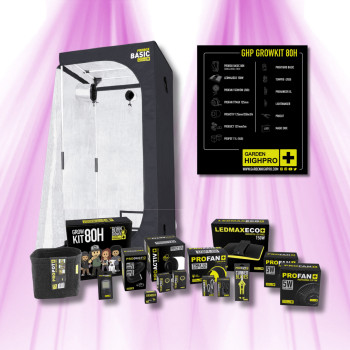
We offer you the best growing rooms in canvas or PVC, mylar or PAR+, with brands like Secret Jardin , Homebox, Probox, G-Tools , Green Cube, Optiroom or even the Gorrila Grow Tent.

Fertilizers and Fertilizers

Fertilizers and fertilizers are essential products for feeding and fertilizing your indoor growing plants. They contain a range of nutrients and minerals essential for plant growth and development, such as nitrogen, phosphorus and potassium. It is important to choose fertilizers and fertilizers adapted to your plants and their specific needs to ensure optimal growth. We have everything you need and with all the brands ( HydroPassion , Atami, Biobizz , Biotabs, GuanoKalong , Hesi , Metrop and Plagron ).

Containers and growing media

Containers and growing media are the supports in which you will plant your seeds or indoor growing plants. It is important to choose containers and substrates adapted to your plants and their specific needs, in order to provide them with a favorable growing environment and ensure optimal growth. The different types of containers and substrates available include pots, trays, grow bags, hydroponic containers, etc.

Climate management

Climate management is a key part of growing plants indoors. It consists of controlling and maintaining the ideal climatic conditions for the growth and development of plants, such as temperature, humidity and ventilation. For this, it is recommended to use climate management equipment such as thermostats, hygrometers, humidifiers, etc.

Odor management

Growing plants indoors can generate odors, especially during flowering. Products such as activated carbon filters can be used to neutralize these odors and ensure good air quality.

Hydroponics

Hydroponics is a growing method that involves growing plants in a watery nutrient medium rather than soil. It allows precise control of nutrients supplied to plants and can be used to grow a wide variety of plants. Equipment such as water tanks, pumps and pipes can be used to set up a hydroponic system.

Watering and irrigation

Watering and irrigation are key parts of growing plants indoors. They provide the water and nutrients necessary for plant growth and can be automated using suitable watering and irrigation systems. Make sure you choose quality products suited to your needs to achieve the best growing results for your plants.

Accessories and miscellaneous

Accessories and miscellaneous are an essential product category for growing plants indoors. They include items such as greenhouses, flashlights, plant alarm clocks, etc. which can help improve the growth and development of your plants.

Showing 73 - 84 of 817 items
How to choose an LED grow light for indoor cultivation?
   

To choose your LED light, I advise you to consider several key factors. First, think about the size of your grow space to determine the necessary power. Then, look at the light spectrum: a full spectrum is ideal for all growth phases. Finally, check the quality of the components and energy efficiency for a lasting investment. Feel free to take a look at our grow tents to find the right setup.

What is the difference between LED and HPS for indoor cultivation?
   

The main difference lies in efficiency and thermal management. LEDs are much more energy-efficient, producing less heat and consuming less electricity for the same light intensity. They also offer a more modulable light spectrum, allowing for precise light adaptation to the plant's needs. HPS lights are often cheaper to buy but generate a lot of heat, requiring more extensive climate management.

What is the purpose of LED horticultural lighting?
   

LED horticultural lighting serves to simulate sunlight to enable photosynthesis for your indoor plants. It provides the necessary light energy for their growth and flowering, delivering the specific wavelengths they need. It is an essential element for any high-performing indoor cultivation, because without adequate light, no plant can develop properly.

What mistakes to avoid with LEDs in indoor cultivation?
   

The most common mistake I see is not respecting the recommended distance between the LED and the plants, which can cause burns or stretching. Another mistake is neglecting the importance of good ventilation, even if LEDs produce less heat than HPS. Finally, underestimating the importance of a good nutrient program with suitable fertilizers is also a common mistake.

What distance between LED and plants?
   

The ideal distance between your LED and your plants varies depending on the power of your fixture and the plant's development stage. Generally, for young seedlings, I start at 60-75 cm. For vegetative growth, I lower it to 45-60 cm, and for flowering, I am often between 30 and 45 cm. It is crucial to observe your plants: if the leaves yellow or curl, the light may be too close or too intense.

Can an LED be used for growth and flowering?
   

Yes, absolutely! This is even one of the great advantages of modern LED lighting. Most quality horticultural LED panels offer a full spectrum or settings that allow it to be adapted. You can thus use the same fixture from germination to harvest, simply by adjusting the intensity and sometimes the spectrum to optimize each phase of your plants' development.

How to adjust the LED light spectrum?
   

Adjusting the LED light spectrum is generally done via buttons or integrated controllers on the fixture, or sometimes via an application. For growth, I favor a spectrum richer in blue, while for flowering, I switch to a redder spectrum. Some advanced systems even allow specific wavelengths to be customized. If your LED does not have spectrum adjustment, a full spectrum is an excellent compromise.

Which LED panel for 1m² of cultivation?
   

For a 1m² surface (approximately 10.7 square feet), I recommend an LED panel with an actual power consumption of about 300 to 500 watts. This will ensure sufficient light coverage and adequate penetration to achieve good yields. Remember that the quality of the diodes and the design of the fixture are as important as the raw power.

Blog navigation

Latest posts

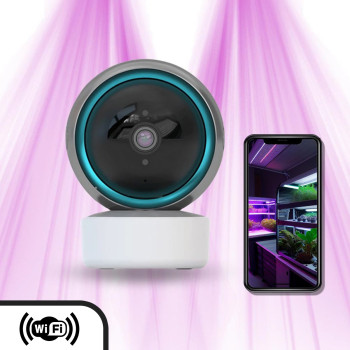
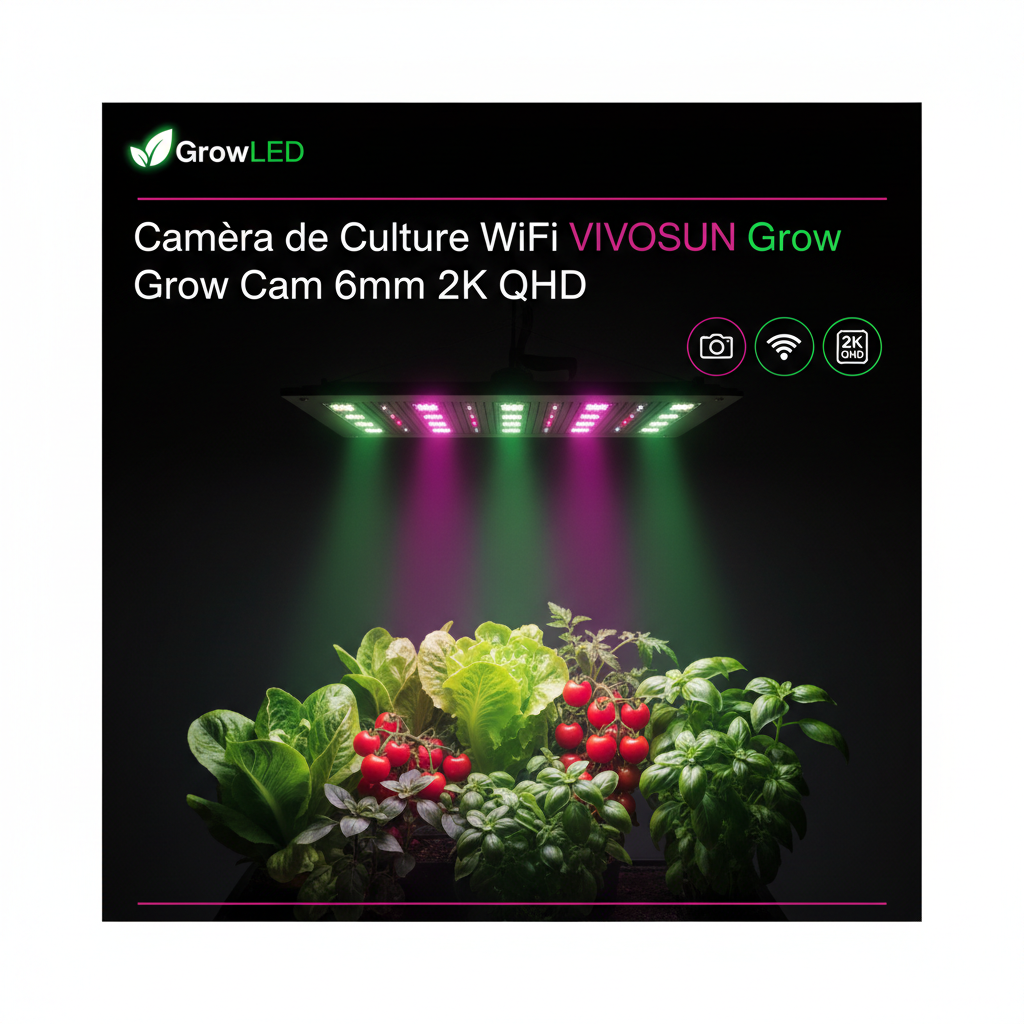
VIVOSUN Grow Cam 6mm 2K QHD WiFi Grow Camera

Tired of anxiety when you're away from your grow? The VIVOSUN Grow Cam 6mm 2K QHD WiFi Grow Camera lets you keep an...

Read more
STOP à la Tourbe ! Découvrez les 4 Meilleurs Substrats Écologiques pour une Culture Indoor Explosive

Le monde du jardinage connaît une transformation silencieuse mais profonde. Face à l'urgence climatique et à la prise...

Read more
Master Pack PRO Advanced Nutrients: Created by GrowLED for demanding growers!

When you're starting out or looking to optimize your indoor growing, the hardest part is often choosing the right...

Read more