




































































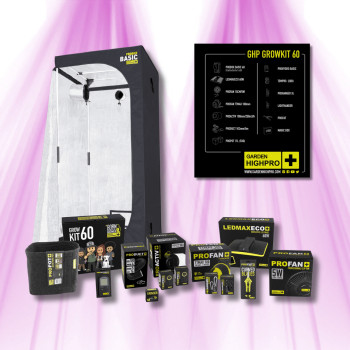
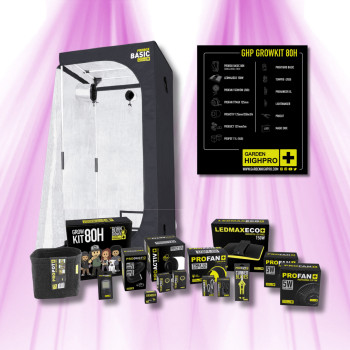

STAR range
0 products
Items you may be interested in
Related posts

Help & advice
Frequently asked questions
About STAR range — click a question to see the answer.
How to choose a Todogrowled STAR Range horticultural LED lamp?
To choose the ideal STAR Range horticultural LED lamp, I advise you to first consider the surface area of your grow space. Then, think about the types of plants you are cultivating and their development stage (growth, flowering). Each model in the STAR Range is designed to optimize specific areas and needs, so I recommend consulting the detailed product sheets to find the appropriate power and spectrum.
What is the difference between horticultural LED and HPS?
The major difference is efficiency and light spectrum. STAR Range horticultural LEDs are much more energy-efficient, consuming up to 50% less than HPS for equivalent, or even superior, yields. Furthermore, our LEDs offer an optimized and precise light spectrum, which allows your plants to better absorb the light necessary for their development, unlike the broader and less targeted spectrum of HPS. In practice, this translates to better growth and more abundant flowering.
What is the purpose of the STAR Range full spectrum?
The STAR Range full spectrum is a true revolution. It is designed to closely mimic natural sunlight, providing your plants with all the wavelengths they need, from germination to flowering. This ensures harmonious and complete development, without having to change bulbs or lighting systems between phases. It's a considerable gain in time and efficiency for the grower.
What power should I choose for the STAR Range in indoor cultivation?
For indoor cultivation, the power to choose depends directly on the size of your grow space. Generally, I recommend aiming for approximately 30 to 50 watts per square foot (0.09 square meter) to achieve optimal results with the STAR Range. For example, for a 1m x 1m space, I would lean towards a model offering between 300 and 500W of actual power. Do not hesitate to consult the specific recommendations for each product for a precise choice.
How to install a Todogrowled STAR Range LED panel?
Installing a STAR Range LED panel is generally very simple. I recommend suspending it securely above your plants, using the provided suspension kits. Make sure the panel is level and that the wiring is secure and away from any moisture sources. I also advise checking the specific instructions for your model, as some may have particularities, especially for connection or settings.
What distance between the STAR Range and the plants?
The ideal distance between your STAR Range and your plants is crucial to avoid light stress and maximize absorption. As a general rule, I advise starting with a distance of approximately 40 to 60 cm for seedlings and vegetative growth, then gradually reducing it to 30-45 cm during flowering, depending on the power of your model and your plants' reaction. Always observe your plants carefully to adjust if necessary, as each species may have slightly different needs. I explain the importance of distance in more detail in this article.
Is the STAR Range suitable for growth and flowering?
Absolutely! This is one of the great advantages of the STAR Range. Thanks to its optimized full spectrum, it is perfectly suited to accompany your plants from germination to harvest, effectively covering both vegetative growth and flowering phases. You don't need to change lighting or adjust complex spectra; the STAR Range takes care of everything, offering you a high-performance all-in-one solution.
What mistakes to avoid with Todogrowled horticultural LEDs?
What I often see as mistakes is mainly an incorrect height adjustment, which can lead to light stress or insufficient growth. You should also avoid neglecting the ventilation of your grow space; even though LEDs heat up less than HPS, good air circulation remains essential. Finally, always ensure you follow the usage instructions and do not expose your equipment to excessive humidity to guarantee its longevity.
What PPFD intensity for the STAR Range?
PPFD (Photosynthetic Photon Flux Density) intensity is a key indicator. For the STAR Range, I recommend aiming for a PPFD of approximately 200-400 µmol/m²/s for seedlings and young plants, then increasing to 400-700 µmol/m²/s for vegetative growth. During flowering, the ideal is between 700 and 1000 µmol/m²/s to maximize yields. These values are averages, and it is always good to consult the specifications of each STAR Range model for more precise data.
Cannot find your answer? 01 88 33 45 52 or by message.


