




































































GrowLED Essentials
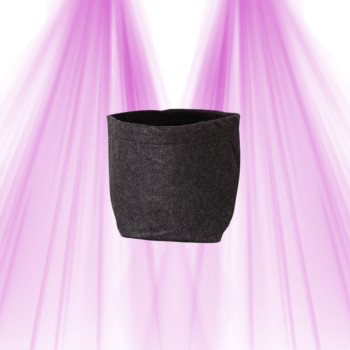
Culture pot 18 L – 30x30 cm
Available in 3 models
In stock · Shipped within 24 h
5,99 €

Product successfully added to your shopping cart
Ça pousse dans le bon sens

24 products
The pot is your roots' home. There's no way around this crucial choice, which will determine the health of your plants throughout their cycle. Between classic plastic pots, revolutionary fabric smart pots for root aeration, or grow trays for large volumes, each type of container has its advantages depending on your setup and goals.
A good pot is primarily about drainage. No more roots sitting in stagnant water, thanks to a well-designed system of holes at the bottom. Fabric pots go even further: their breathable walls allow for natural "air pruning" of the roots. Concretely, when a root reaches the wall, it naturally dries out instead of circling. The result? A denser and more efficient root system.
Size also matters a lot. Too small, and your plants will quickly be cramped, limiting their development. Too large, and you risk water stagnation in the part not colonized by roots. For a plant that will grow to 80cm to 1m20, count on a minimum of 11-15 liters. For larger calibers, you can easily go up to 20-25 liters.
First criterion: the material. Plastic remains a reliable classic, easy to clean, with good moisture retention. Perfect for beginners or growers who water less frequently. Fabric pots require more attention to watering but offer incomparable root aeration.
Regarding dimensions, the rule is simple: 1 liter of substrate for every 10cm of planned final height. A 60cm plant? Minimum 6-liter pot. A 1m20 plant? We're looking at 12-15 liters. For very vigorous varieties or long flowering periods, don't hesitate to go bigger.
Drainage is non-negotiable. Always check for holes at the bottom, their number, and their distribution. Some pots offer double-bottom systems or integrated water reservoirs, practical for extended absences.
For a one-meter plant, opt for a pot of 11 to 15 liters minimum. This size allows for sufficient root development without wasting substrate. If you are growing particularly vigorous varieties or those with a long flowering period (10-12 weeks), go up to 18-20 liters. The idea is for the roots to colonize all available space without being cramped, which would limit growth.
Fabric pots are clearly more tolerant of overwatering due to their lateral evaporation. Excess water naturally evaporates through the breathable walls, reducing the risk of root rot. With plastic, you need to be more rigorous about watering quantities and frequency. However, fabric pots dry out faster, so you need to water more often, especially during hot periods or with powerful extraction.
Pot too small: the plant shows signs of rapid water stress, leaves yellow prematurely, growth slows abruptly. You may also see roots emerging from the drainage holes. Pot too big: the substrate takes a long time to dry, you observe persistent wet areas, sometimes fermentation odors. The ideal is when the substrate dries uniformly in 2-3 days depending on your growing climate.
Absolutely essential! Without drainage, water stagnates at the bottom of the pot and causes root rot. Count on a minimum of 4-6 holes of 5-8mm in diameter for an 11-liter pot. Some growers add a layer of clay pebbles at the bottom to further improve drainage. Pots without holes can only be used in hydroponics with an appropriate water circulation system.
Cleaning is essential to prevent the transmission of pathogens! Start by removing all substrate and root residues. Wash with hot soapy water, then rinse with diluted bleach (1 part bleach to 9 parts water). Let it sit for 10 minutes, then rinse thoroughly. For fabric pots, a machine wash at 60°C will do the trick. Complete drying is mandatory before storage to prevent mold.
Available in 3 models
Available in 8 models
Available in 8 models
Available in 8 models
Available in 8 models
Help & advice
About Jars — click a question to see the answer.
Choosing the right pot size is crucial and directly depends on the desired final size of your plant and the duration of its cycle. For seedlings, I generally start with small biodegradable pots or seed trays. Then, for growth and flowering, I move up in size. A simple rule I use is to allow approximately 1 liter of substrate per week of growth for medium-sized plants, but this can vary.
The difference is fundamental, and it's a point I often address. Plastic pots are economical and retain moisture well, but can lead to root circling. Smart pots, or fabric pots, revolutionize root aeration thanks to their porous material. This allows for air root pruning, which promotes the development of numerous fine roots and better nutrient absorption. I explain the advantages of fabric pots in more detail in this article.
For indoor growing, I always prioritize pots that promote good root aeration and excellent drainage. For this reason, fabric smart pots are often my first choice. If you opt for plastic pots, make sure they have plenty of drainage holes and don't hesitate to elevate the pot to prevent water stagnation. Air pots are also an excellent option for maximum aeration.
An air pot or a smart pot primarily serves to optimize the health and root development of your plants. Thanks to their design, they allow for air root pruning: when roots reach the pot walls, they are exposed to air and stop growing in a spiral. This stimulates the creation of new fine roots within the substrate, thereby increasing the surface area for nutrient and water absorption. In practice, I find that this leads to more vigorous plants and improved yields.
To check if your pot drains well, I recommend a simple test. After watering, water should drain quickly through the drainage holes, usually within a few seconds to a minute. If water stagnates on the surface for several minutes, or if it drains very slowly, it's a sign that drainage is insufficient. Good drainage is essential to prevent root asphyxiation and diseases.
Yes, repotting is often a necessary step in indoor cultivation, especially if you start with small pots. I repot my plants when I see roots starting to emerge from the drainage holes or when growth slows down. This provides more space for roots to develop, brings fresh nutrient-rich substrate, and prevents root circling. Repotting is generally done one to two times during the plant's life cycle, gradually moving to larger pots.
For seedlings and young plants, I recommend starting with small containers. Biodegradable pots are an excellent option because they allow for repotting without shock to the plant, as the pot decomposes directly in the larger substrate. Plastic seed trays or peat pellets are also very practical. The idea is not to drown the young plant in too large a volume of substrate, which could lead to excess moisture.
Cannot find your answer? 01 88 33 45 52 or by message.